

2026-10-15
Pattern machine bottom line breakage detector: Can it still be stable in strong dust and oil pollution environments?
In the sewing workshop, the bottom thread breakage detector is often in an awkward position: it is installed at the position of the machine head closest to the shuttle core, which is precisely where dust, oil, and thread debris accumulate the most. Many factories have encountered similar situations - the detector performs well when first installed, but after running for a period of time, false alarms occur frequently, or it does not stop when it should be stopped, and by the time the operator discovers it, there is already a piece of waste seam on the fabric. For the pattern machine production line characterized by continuous operation and batch activation, the instability of the detector itself has become a new reason for shutdown.
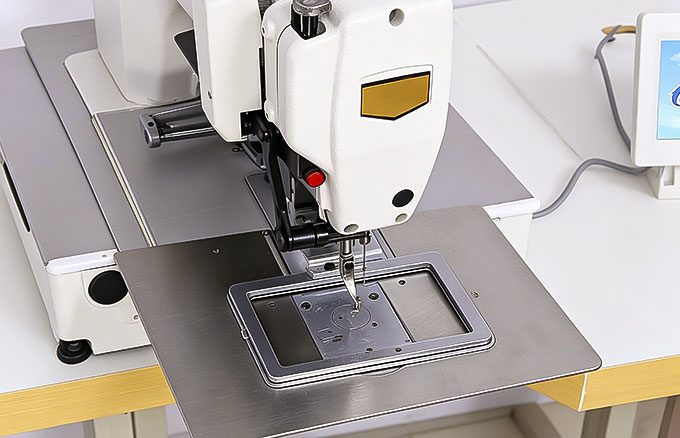
What is the impact of workshop conditions on detectors
The stability issue of the bottom line breakage detector is usually manifested in three categories in practice:
Accumulation of oil and dust: Sewing fluff mixed with engine oil adheres to the sensing surface, blocking the detection light path or changing the reflection conditions, causing signal drift, which can result in false alarms or missed detections;
Frequent replacement of shuttle core specifications: The pattern machine is frequently replaced, and conventional shuttle cores, non-standard shuttle cores, porous or coated shuttle cores are mixed. The reflection characteristics of different specifications are different, and many detectors need to be recalibrated every time the shuttle core is replaced. If the calibration is not in place, errors will be directly introduced;
High speed operation missed detection: After the speed increases, the detector's response cannot keep up with the moment of disconnection. By the time the alarm signal is sent out, the machine has already rotated several hundred more needles. These three types of problems have one thing in common: they all point to the detector's "adaptive ability" under changing operating conditions. The environment is changing, the tested object is changing, and the speed is changing. If the detector only works according to a set of parameters from the factory, the stability will naturally decay over time.
LS2 shuttle core bottom line detectorThe coping strategy
Atorm (Guangzhou) Intelligent Technology Co., Ltd. was established in 2018. It is a high-tech enterprise specializing in the research and development, production, and sales of industrial sensors and industry-specific controllers. Its LS2 shuttle core bottom line detector is designed around the three types of working conditions mentioned above. LS2 has three built-in adaptive algorithms: distance adaptation to cope with small changes in sensing distance caused by installation errors and vibrations; Dust shielding adaptive compensates for interference signals when the sensing surface is partially obstructed by wire shavings or dust; Adaptive lighting deals with the impact of changes in workshop lighting and ambient light on detection. With this mechanism, there is no need to recalibrate the shuttle core when replacing it. The product is compatible with various specifications of shuttle cores such as conventional, non-standard, porous, alumina, and colored coatings. Changing the production line does not require replacing sensors or recalibrating, which directly eliminates the common source of error in the calibration process for frequent pattern machine production lines. In terms of speed adaptability, LS2 can adapt to high-speed operation of sewing machines at 3000rpm level, triggering real-time shutdown when wire breakage occurs. Its target speed sensing range is 50rpm -4000rpm, sensing distance is 20mm -150mm (customizable), protection level is IP54, working temperature is -20 ℃ to+55 ℃ without freezing. The protection level of IP54 means that it has a certain resistance to dust and splashes, and with algorithm compensation, it can cover the actual environment of most sewing and textile workshops.
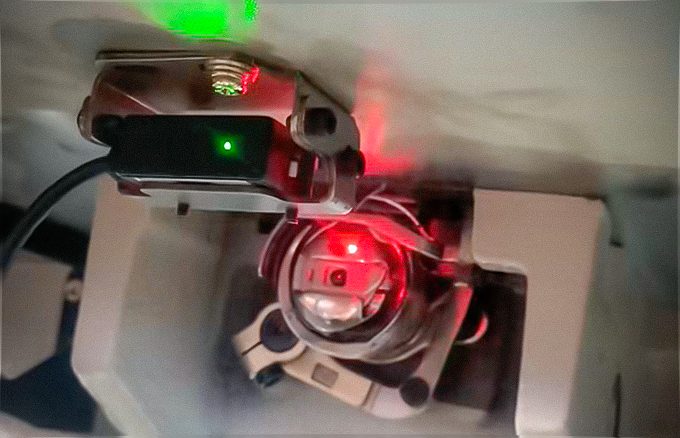
Actual performance: reference value of one month's production line data
Algorithm parameters are only paper-based capabilities, and actual measurements on the production line can better illustrate the problem. A pattern machine manufacturer in Foshan conducted a one month production line test on LS2. Compared with the original detector, the false alarm rate was reduced by about 90%, and there were no missed detections during the testing period. Subsequently, LS2 was included in the customer's bulk purchase and upgraded to the factory standard configuration of their pattern machine. In the real production environment of pattern machines, through the combination of "algorithm compensation+appropriate protection level", the bottom line breakage detector can maintain stability for a long time under strong dust and oil pollution conditions, rather than relying solely on frequent cleaning and manual intervention.
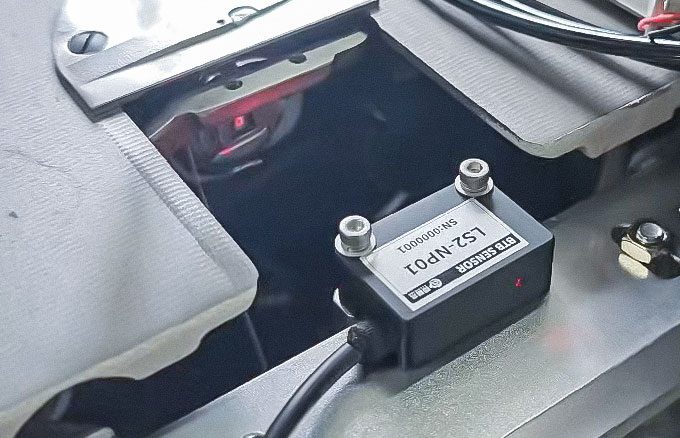
How to install existing machines
For patterned machines that have already been put into production, the threshold for renovation is also a consideration for selection. LS2 adopts an external structure, and when installed on existing pattern machines, there is no need to modify the original circuit. This means that upgrading the wire breakage detection does not require a complete machine modification, nor does it affect the original warranty status of the equipment (it is recommended to follow the warranty policy of the complete machine manufacturer). The product warranty period is 12 months. For the manufacturing field of sewing and textile, Atorm Technology has also laid out product lines such as metal double sheet detectors, laser displacement sensors, color/color code sensors, magnetic grid scale reading heads, etc., covering multiple industries such as automobiles, lithium batteries, sewing and textile. The LS2 shuttle core bottom line detector is a specialized solution for face-to-face sewing scenarios.
Several suggestions for selection
Returning to the core issue of "stability in strong dust and oil pollution environments", factories can focus on three things when evaluating bottom line breakage detectors: first, whether the detector has a compensation mechanism for dust, oil pollution, and light interference, rather than just looking at the nominal detection distance; The second is to confirm whether recalibration is required when changing shuttle cores or models, which directly determines the actual operating cost of the production line; The third is to conduct a trial installation test using one's own working conditions for a period of time, focusing on two indicators: false alarms and missed detections. A low false alarm rate indicates strong anti-interference ability, while zero missed detections are the most basic value of bottom line breakage detection. Only when both of these are passed can the detector truly stand firm in the workshop.
You May Be Interested
-
Atorm has been awarded ISO three system certification, safeguarding quality and sustainable development with international standards
2026-10-12
-
Atonm MDSC-9000T Dual-Channel, Single-Sensor Metal Double-Sheet Detector
2025-12-05
-
Non-Contact “One-to-Four” Double-Sheet Detector 1600S: A New Cost-Reduction and Efficiency Solution for Stamping Lines
2025-11-20
-
Provincial Auto Industry Research Tour | Atonm Engages with the Automotive Supply Chain, Empowering Smart Manufacturing through Sensors
2025-10-11