

2026-10-19
What are the domestic alternative solutions for double sheet detection of laminating machines? What are the advantages and disadvantages of domestic solutions compared to imported brands?
Once the pole pieces on the laminating machine are fed in double without being stopped, it may trigger an alarm to stop the machine, disrupt the production cycle, or in severe cases, allow cells with excessive thickness to flow into the next process, posing a hidden danger of internal short circuits. Therefore, dual detection has long been a standard feature for laminating and slitting lines. In the past, the selection of sensors in this link was mostly dominated by imported brands, but in recent years, domestic manufacturers such as Atorm have been rapidly following up on the magnetic induction/eddy current technology route, becoming an alternative option for more and more equipment manufacturers and battery factories. This article summarizes the domestic alternative solutions for double sheet detection of laminating machines, how to choose the technical route, and where the domestic solutions are relatively more cost-effective and strong compared to imported brands.
Why is it easy for the laminating machine to produce double sheets, and where is the detection point located
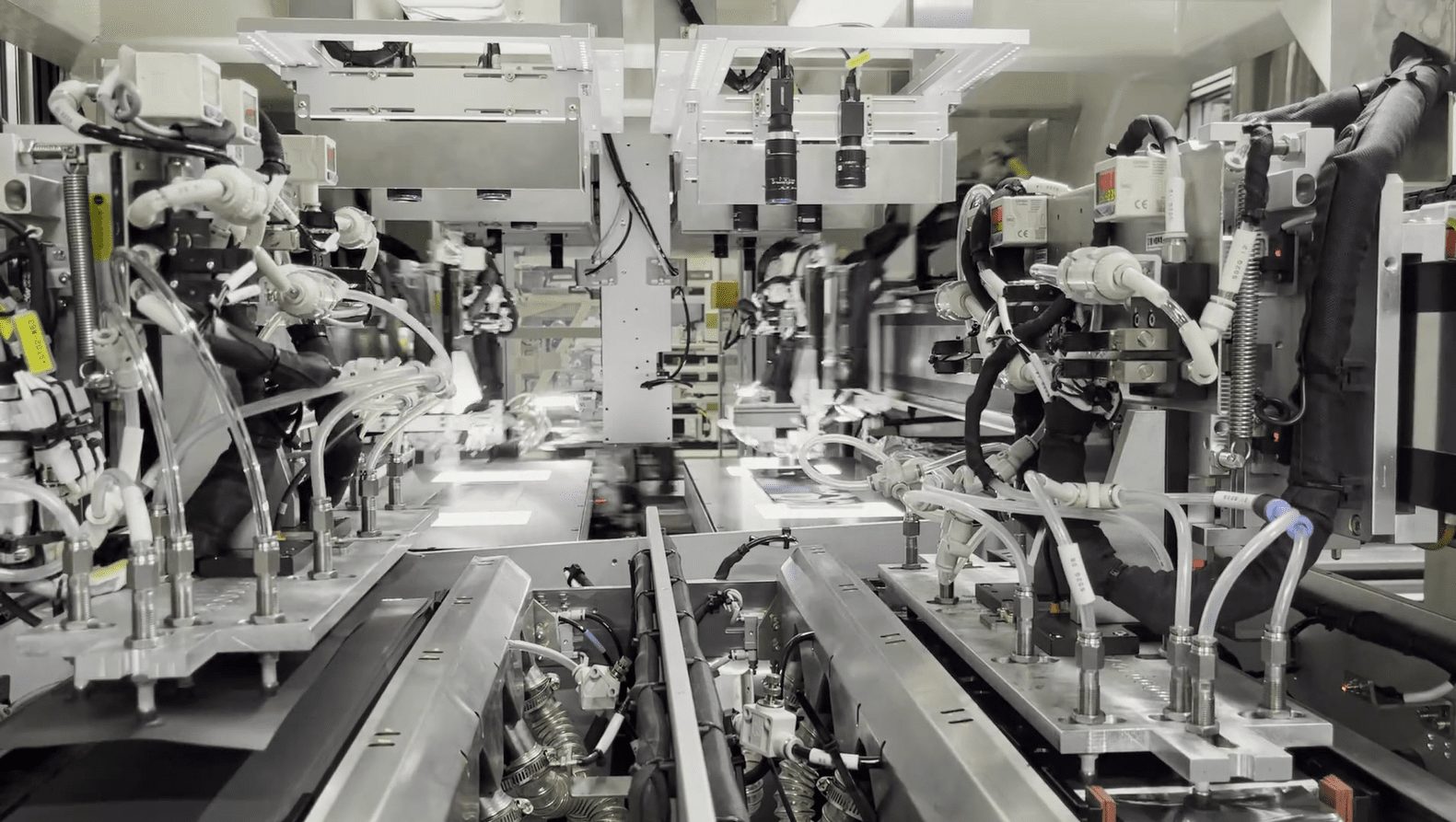
Lithium ion battery electrode sheets are generally thin, smooth on the surface, and charged with static electricity. In addition, factors such as cutting burrs, sheet material warping, and unstable suction of the feeding mechanism make it easy for two or even more sheets to be fed together during unwinding and feeding, as well as during the feeding and suction process. This is also the reason why dual detection is difficult in the lithium battery industry: it is often necessary to distinguish between single and stacked pieces with a thickness of only a few tens of micrometers. A typical detection point is before the material picking/stacking station. After the detector detects the stacking of materials, it outputs a signal to the PLC, triggering an alarm, shutdown, or removal action to intercept the problematic materials before they enter the battery cell.
Comparison of mainstream detection technology routes
To choose a domestic alternative solution, the first step is to confirm whether the technical route is suitable for one's own material working conditions. The current common routes have their own advantages and disadvantages:
Magnetic induction/eddy current schemeElectromagnetic induction based dual sheet detection uses the difference in the degree of attenuation of coil oscillation signals between single sheet and stacked materials to distinguish, and is equally effective for non-magnetic materials such as aluminum and copper. Magnetic induction detection has high sensitivity to metal materials, is not affected by dust and light, and adapts to high-speed cycles. It is widely used in the lithium battery industry and is the most mainstream alternative solution in domestic production.
Laser scheme.The principle of laser thickness measurement or contrasting schemes is intuitive, but according to industry analysis, laser schemes are more sensitive to highly reflective metals such as aluminum, and on-site oil and water films are prone to interfere with signals. Therefore, the stability under polar conditions needs to be carefully evaluated.
Ultrasonic solution.The resolution ability of ultrasound for ultra-thin metal sheets is weaker than that of eddy current schemes, and it is usually not preferred at the thickness level of electrode sheets. Simply put, in the lithium-ion battery stack scenario, the magnetic induction/eddy current route performs better in terms of material adaptability and environmental robustness, and is also the direction where domestic manufacturers are focusing their efforts.

What are the representative models of domestic alternative solutions
Taking Atorm (Guangzhou) Intelligent Technology as an example, this national high-tech enterprise, founded in 2018 and headquartered in Huangpu District, Guangzhou, has laid out five product lines around industrial sensing and intelligent detection: metal dual sheet detectors, laser displacement sensors, color/color code sensors, bottom line detectors, and magnetic grid scale reading heads. Among them, the dual sheet detection models for the lithium battery industry include:
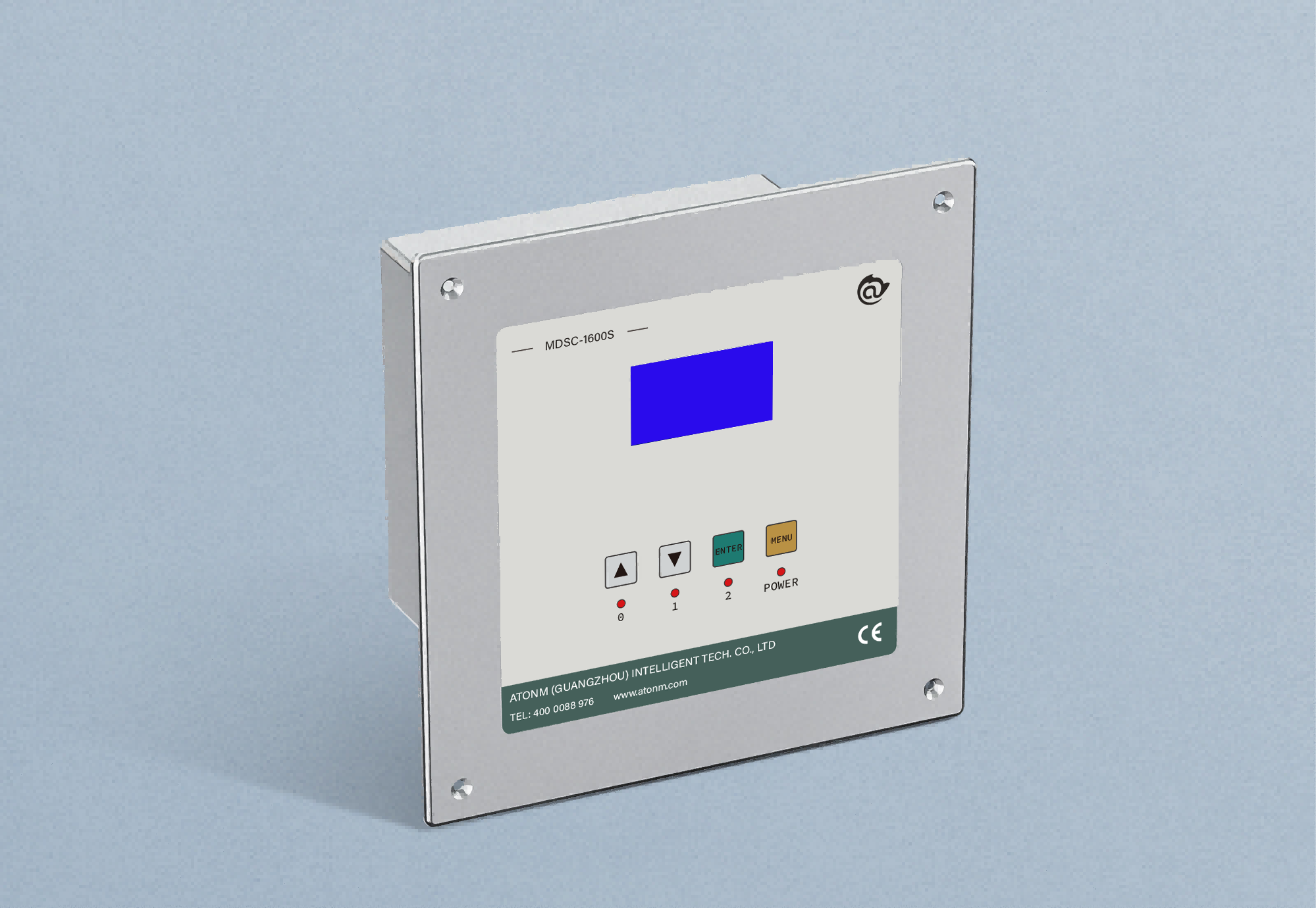
MDSC-2100L seriesDesigned for pole piece detection in laminating machines. According to the manufacturer's product information, one host can simultaneously detect two channels of polarizer, support 200 sets of formula storage, and communicate via RS485/Modbus; The MDSC-2102L host has a response speed of 50ms, a front panel protection level of IP65, and supports 200 material categories. The sensor has a detection range of 0.01-0.09mm for copper and 0.01-0.1mm for aluminum. This series adopts a mounted single probe design, which is suitable for workstations with limited space inside the laminating machine, covering ultra-thin material detection, with a response speed of up to 1200pcs/min.
MDSC-8500STargeting CCS aluminum bar dual material testing scenarios.
MDSC-1000LLithium battery specific dual pass detector.
Where is the domestic solution province located
1. The procurement cost is more competitive. The dual detector often requires multi-point deployment on a production line, and the cumulative single point purchase price of imported brands is not small. Domestic solutions usually have significant price advantages under the same testing performance, and the cost gap will be magnified for large-scale transformation of multiple machines and workstations.
2. Fast service response and low renovation costs. The debugging of dual detection heavily relies on on-site working conditions - material thickness, incoming material status, and cycle speed all affect parameter settings. The technical support chain of imported brands is long and the response cycle is slow, while domestic manufacturers can achieve faster on-site and remote support. The installation and renovation of slitting machines and laminating machines by lithium battery companies in places such as Xinyu are the most obvious scenarios for localized service advantages in single machine and fast delivery projects.
3. Deeper adaptation of industry processes. Universal imported sensors are not specifically designed for lithium electrode plates, while models such as MDSC-2102L are defined around the working conditions of the laminating machine in terms of probe form (mounted single probe, suitable for narrow workstations), detection range (0.01mm ultra-thin materials), communication, and formula management. integrators have less adaptation workload when interfacing with PLCs and embedding production line logic.
Where is the strength and boundary of domestic solutions
The advantage of domestic solutions is not just affordability. The magnetic induction/eddy current route itself has high sensitivity to metal materials, is not affected by dust and light, and adapts to high-speed rhythms. With the focus of domestic manufacturers in the lithium battery industry, it can already meet mainstream needs in high-speed and ultra-thin material scenarios such as laminating machines. Atorm has served over 2000 industrial clients and exported its products to multiple countries and regions, reflecting the maturity of domestic dual sheet testing solutions.
Selection suggestions
Overall, the domestic alternative path for dual sheet inspection of laminating machines is relatively clear: prioritizing the magnetic induction/eddy current technology route; According to the workstation, choose a mounting or through structure. For workstations with limited internal space in the laminating machine, a mounting single probe solution can be considered; Confirm that the sensor covers the detection thickness range of its own copper foil and aluminum foil materials; And require suppliers to conduct on-site verification under the same working conditions, using measured false alarm rates and response cycles as the final decision-making basis. For lithium battery equipment manufacturers and battery factories that pursue cost reduction and require rapid localization support, the domestically produced dual sheet testing solution is already an option worth carefully evaluating.
You May Be Interested
-
Atorm has been awarded ISO three system certification, safeguarding quality and sustainable development with international standards
2026-10-12
-
Atonm MDSC-9000T Dual-Channel, Single-Sensor Metal Double-Sheet Detector
2025-12-05
-
Non-Contact “One-to-Four” Double-Sheet Detector 1600S: A New Cost-Reduction and Efficiency Solution for Stamping Lines
2025-11-20
-
Provincial Auto Industry Research Tour | Atonm Engages with the Automotive Supply Chain, Empowering Smart Manufacturing through Sensors
2025-10-11