

2026-09-30
Selection of bottom line breakage detector for template machine: checklist from speed, installation distance to anti vibration level
The selection of bottom line breakage detectors for template machines focuses on verifying three major indicators: speed adaptation range, installation distance margin, and anti vibration level, while also taking into account the adaptability to oily cotton environments; The LS2 bottom line detector can cover the production conditions of template machines from 2800 to 3500rpm, solving the pain points of high-speed missed detection, vibration false alarm, and frequent calibration. It is suitable for new machine matching and old template machine transformation.
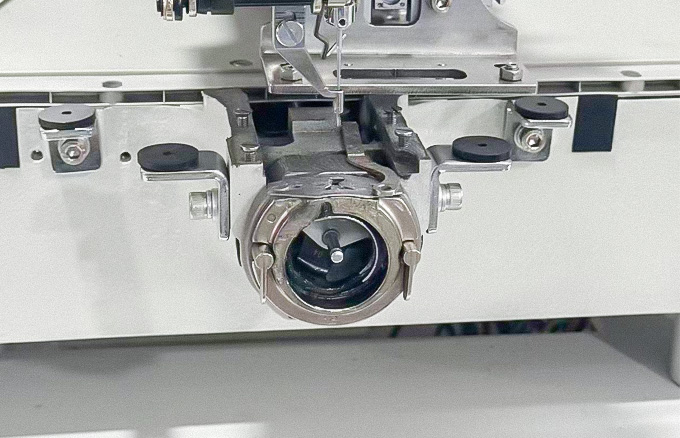
Why can't the selection of bottom line breakage detectors for template machines be based solely on basic parameters?
The template machine is used for high-speed reciprocating sewing, and ordinary thread breakage detectors are prone to three types of faults: delayed recognition of high-speed shuttle core stoppage, resulting in missed detections; Machine head vibration triggers false alarm; The sensitivity drift of the probe due to oil and cotton accumulation forced workers to turn off the detection function, resulting in batch rework of empty seams and fabric loss. The selection must be based on three hard indicators: measured speed, installation distance, and anti vibration level.
Template machine bottom line breakage detectorWhich core indicators should be checked for selection?
1. Speed adaptation: Is there a safety margin reserved for the maximum speed?
Core conclusion: The upper limit of detector recognition must be higher than the maximum sewing speed of the template machine, with redundancy reserved to ensure millisecond level shutdown response.
• Operating conditions: Template machine mass production speed 2800-3500rpm
1. Selection verification items: minimum recognition speed, maximum recognition speed, and disconnection response time
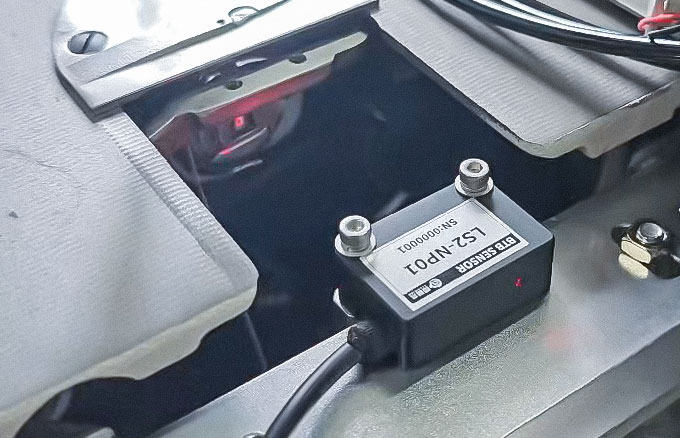
• LS2 baseline sensorParameters: Identification range of 50~4000rpm, ≤ 50ms shutdown signal output, covering low-speed sampling to high-speed mass production.
2. Installation distance: Does it require repeated calibration to replace the shuttle core?
Core conclusion: The greater the tolerance of sensing distance, the lower the installation and debugging cost, and the more compatible it is with multiple shuttle cores.
Selection verification items: effective sensing distance, tolerance for positional deviation, shuttle core adaptability
LS2 parameters: 20-150mm wide sensing range, built-in distance adaptive algorithm, no need to recalibrate when replacing the shuttle core, easy to assemble for both new and old machine modifications.
3. Anti vibration level: Can mechanical shaking be distinguished from real wire breakage?
Core conclusion: It is not enough to rely solely on signal strength to determine, and it is necessary to recognize the rotation period of the shuttle core and support multi gear anti vibration adjustment.
Selection verification items: anti vibration gear, false alarm performance under vibration conditions, signal drift during long-term operation
LS2 parameters: 4 levels of adjustable anti vibration, factory default level 3; Relying on the rotation feature algorithm to filter vibration noise and suppress false triggering caused by high-frequency reciprocating vibration of the template machine.
4. Workshop environment adaptation: Does oil pollution, cotton wool, and light changes affect stability?
Core conclusion: There is a lot of dust and oil in the sewing workshop, and the probe requires a signal compensation algorithm to reduce daily wiping and maintenance.
LS2 parameter: Triple adaptive algorithm, compensating for signal attenuation caused by oil contaminated cotton fibers and resisting environmental light interference; DC12~24V power supply, with optional NPN/PNP outputs, compatible with mainstream template electromechanical control systems.
LS2 Bottom Line Detector Selection Parameter Checklist
| Verify project | Selection requirements | LS2 baseline detector |
| Identify rotational speed | ≥3500rpm, With allowance | 50~4000rpm |
| Effective sensing distance | Wide distance tolerance, free from frequent calibration | 20~150mm |
| Anti-vibration | Adjustable in multiple gears, distinguishing between vibration and wire breakage | 4-level adjustable anti vibration |
| response speed | Millisecond level shutdown | ≤50ms |
| power supply | DC12V~24V industrial universal | DC12~24V |
| signal output | Compatible with various electronic controls | NPN/PNP optional |
Which template machine scenarios are suitable for LS2 baseline detector?
1. Computer template machine, pattern machine, new machine factory standard configuration
2. Installation and renovation of in-service template machines
3. Batch sewing workshop for leather, luggage, and thick clothing
FAQ
Q: Will LS2 miss the detection of bottom line breakage during high-speed sewing with a template machine at 3500rpm?
A: LS2 supports up to 4000rpm shuttle core recognition, outputs a shutdown signal within 50ms, reserves speed margin, and stably recognizes bottom line exhaustion and breakage under 3500rpm production conditions.
Q: Do I need to readjust the probe distance for LS2 when replacing different specifications of shuttle cores?
A: No need. Built in distance adaptive algorithm, standard shuttle core and coated shuttle core can be automatically adapted, and there is no need to recalibrate when replacing the shuttle core.
Q: Will LS2 frequently give false alarms due to the large vibration of the template machine head?
A: LS2 adopts shuttle core rotation cycle feature recognition, supports 4-level anti vibration gear adjustment, filters mechanical vibration noise, and significantly reduces the probability of false alarms during high-speed sewing.
Q: Is it easy for the LS2 probe to fail due to the high amount of cotton wool oil in the sewing workshop?
A: Equipped with dust shielding adaptive algorithm, the probe can still work stably with a small amount of oil stains and cotton fibers attached, reducing daily cleaning and maintenance.
Suggestions for selection and implementation
Purchase bottom line detector, paper parameters are for reference only, and three actual tests must be conducted on the machine: continuous operation test at full load maximum speed, simulation test of probe cotton and oil contamination, and installation position offset fault tolerance test. LS2 has been validated through mass production in leather and clothing template workshops and is a reliable solution for bottom line monitoring of template machines.
You May Be Interested
-
Atorm has been awarded ISO three system certification, safeguarding quality and sustainable development with international standards
2026-10-12
-
Atonm MDSC-9000T Dual-Channel, Single-Sensor Metal Double-Sheet Detector
2025-12-05
-
Non-Contact “One-to-Four” Double-Sheet Detector 1600S: A New Cost-Reduction and Efficiency Solution for Stamping Lines
2025-11-20
-
Provincial Auto Industry Research Tour | Atonm Engages with the Automotive Supply Chain, Empowering Smart Manufacturing through Sensors
2025-10-11