

2026-09-29
How to choose a sewing machine bottom line detector: key selection points from sensing distance, speed to anti vibration level
Most friends who do sewing and processing have encountered such troubles: when the bottom line is exhausted halfway through the sewing process, a large piece of waste fabric has already run out by the time it is discovered, causing rework, cutting loss, and machine shutdown and adjustment. One by one, they stack up and quietly eat up a lot of profits in the workshop.
Many people choose bottom line detectors simply to see if they can report missing lines, ignoring the adaptation issues caused by equipment operating conditions. The continuous vibration of the high-speed sewing machine head, limited installation space of the machine, and the recognition stability of the high-speed rotation of the shuttle core are the key factors that determine whether the sensor can be used worry free for a long time.
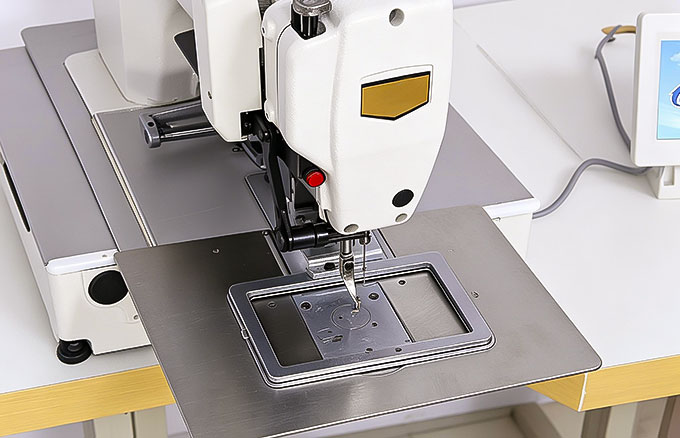
Sensing distance: Suitable for shuttle shell installation space, without wire jamming or interference
The shuttle shell structures of different models in the workshop vary greatly. Sensors that are too far away from the shuttle core may miss detection, while those that are too close may easily scratch the shuttle shell, causing wire breakage and shuttle jamming faults.
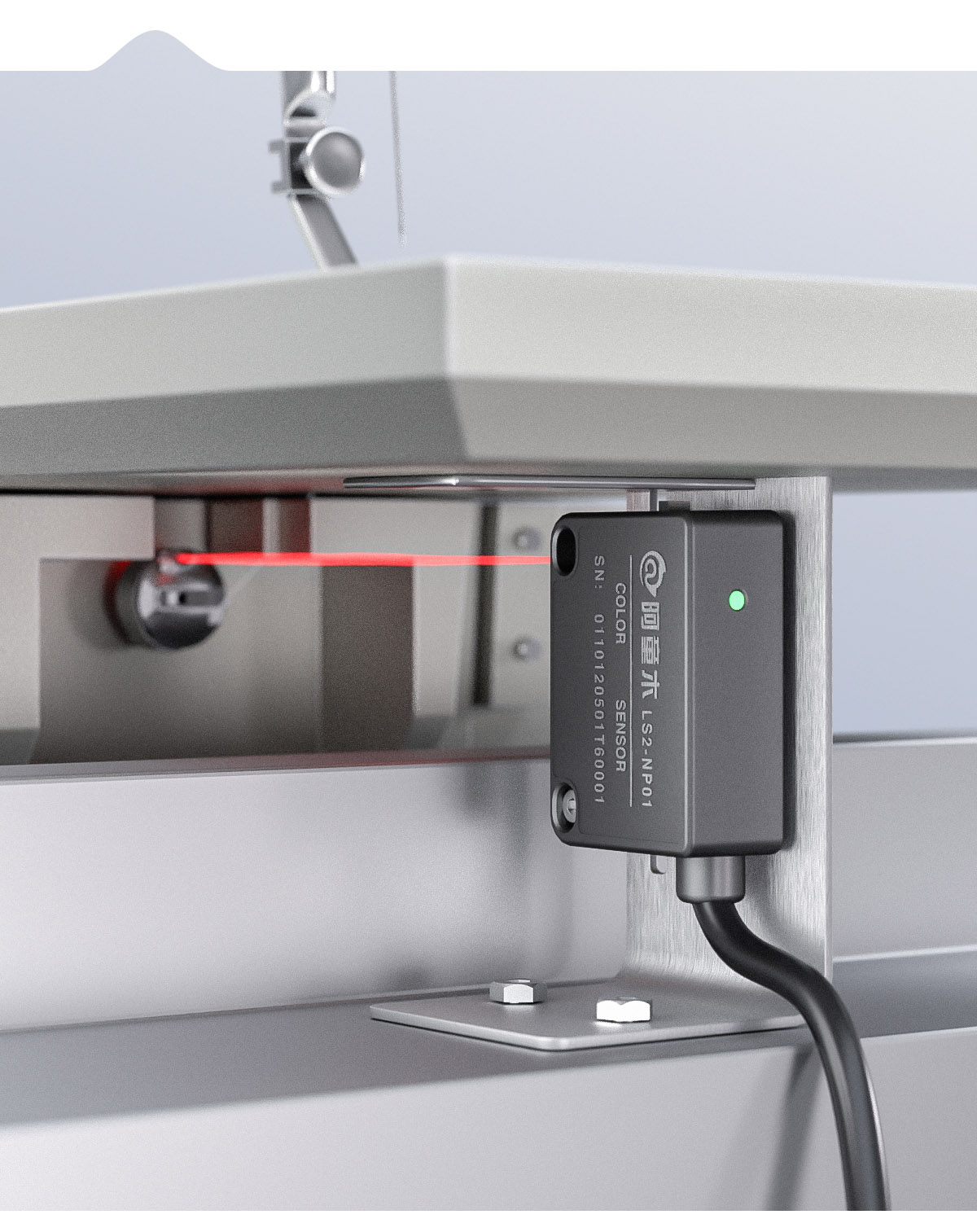
When selecting, prioritize products with moderate sensing range and stable detection surface.LS2 baseline detectorAdjusted for the narrow space of the sewing equipment shuttle shell: monitored the operation status of the shuttle core at the designated installation position. Once the bottom line is exhausted, the shuttle core stops rotating, and the equipment will immediately recognize and output a signal, triggering a shutdown to avoid empty seams and waste cutting pieces. **It can accurately capture the stop signal of the shuttle core without interfering with the high-speed operation of the shuttle core. It does not need to repeatedly adjust the installation clearance, and can quickly adapt to changing shuttle shells.
Speed adaptation: Under high-speed working conditions, detect without losing signals
In the thick material, luggage, and home textile workshops, the sewing machine has a high speed, and the shuttle core rotates rapidly. The depletion of the bottom line and the stoppage of the shuttle core often occur in an instant. Ordinary detectors are prone to signal jumps at high speeds, either resulting in false alarms or the shuttle core stopping without triggering reminders in a timely manner.
LS2 baseline sensorSupports high-speed sewing conditions, continuously monitors the operating status of the shuttle core during high-speed rotation, and detects stable signals at high speeds. Once the bottom line is used up and the shuttle core stops rotating, it can respond quickly without missing or misreporting due to the acceleration of the machine head, making it suitable for assembly lines with long-term continuous production.

Anti vibration level: Workshop vibration environment, long-term stability is the core
The biggest environmental disturbance in the sewing workshop is continuous vibration. High frequency vibration of the machine can cause sensor displacement and internal components to loosen, leading to alarm disturbances after a period of time. Frequent maintenance and replacement can actually increase operation and maintenance costs.
When selecting a bottom line detector, it is important to pay attention to its anti vibration performance.LS2 shuttle core missing wire sensorIn terms of structure, the anti vibration design has been strengthened. In the face of continuous reciprocating vibration of the sewing machine, the internal detection circuit is less susceptible to interference, and it operates continuously for a long time with small fluctuations in detection consistency, reducing the frequency of mid stop maintenance.
An additional practical consideration
In addition to the three core parameters mentioned above, attention can also be paid to wiring compatibility and installation convenience. Without the need for major modifications to the original organic platform structure and adaptation to most electronic control detectors, the landing cost is lower. LS2 can directly adapt to most mainstream sewing machines, making it easy for workshop workers to get started without complex debugging.
Bottom line detection is not about pursuing fancy functions, but about using stable perception to immediately respond to the shutdown of the shuttle core when it stops rotating, eliminating the waste of gaps and cutting without warning. By selecting detectors that are suitable for the working conditions and controlling implicit losses, the production efficiency of the workshop will naturally and steadily improve.
You May Be Interested
-
Atorm has been awarded ISO three system certification, safeguarding quality and sustainable development with international standards
2026-10-12
-
Atonm MDSC-9000T Dual-Channel, Single-Sensor Metal Double-Sheet Detector
2025-12-05
-
Non-Contact “One-to-Four” Double-Sheet Detector 1600S: A New Cost-Reduction and Efficiency Solution for Stamping Lines
2025-11-20
-
Provincial Auto Industry Research Tour | Atonm Engages with the Automotive Supply Chain, Empowering Smart Manufacturing through Sensors
2025-10-11