



2026-09-16
When gaps occur: How to block hidden batch quality loss through bottom line breakage detection
In the sewing workshop, the most headache inducing quality issues are often not those visible flaws at first glance, but hidden, batch produced defects that are not exposed until the later process. The gaps caused by broken bottom lines are a typical representative of this type of problem. When the bottom line on the shuttle core quietly runs out or suddenly breaks, the needle is still piercing at high speed, leaving pinholes on the fabric without stitches - these semi-finished products are difficult to detect with the naked eye before flowing to the next process. And once it flows into the downstream, what awaits the enterprise is batch rework, delivery delays, and constantly increasing cost losses.
1、 Why are gaps difficult to detect in a timely manner
The concealment of the problem of empty seams stems from the continuity of sewing production. When computer sewing machines, pattern machines, and template machines operate at high speeds, the operator's gaze must simultaneously consider multiple key parts, making it difficult to continuously focus on the formation of stitches near the needle plate. A bottom line can usually support continuous sewing for tens of minutes to several hours. Breaks or insufficient allowance often occur at an uncertain moment, and by the time the operator detects the abnormality, more than ten, dozens, or even hundreds of products may have already passed.
The traditional response method is manual inspection - scheduled inspections by team leaders or quality inspectors, or relying on self inspection by operators. But this mechanism has a natural time difference: the longer the interval between inspections, the more serious the lag in discovering problems; The larger the batch size, the higher the rework cost. What's even more tricky is that defects such as skipped stitches, floating threads, and empty seams are almost indistinguishable from the appearance of the fabric during stacking, and are often only exposed in the subsequent process or final inspection. At this time, rework not only requires rewiring and re sewing, but may also cause fabric damage due to repeated pinholes, resulting in scrap.
2、 Bottom line breakage detection: turning hidden anomalies into real-time signals
To solve this problem, the key is to turn "post discovery" into "mid event blocking" - immediately sensing and triggering warnings or shutdowns at the moment of wire breakage or missing, so that the empty seam batch cannot continue to be generated.
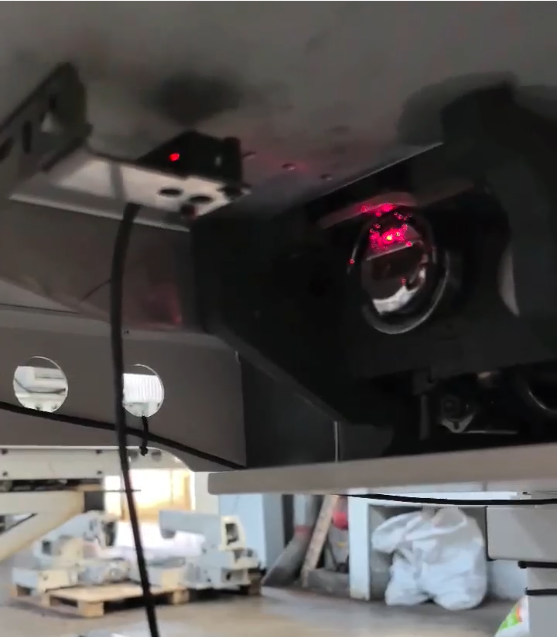
The bottom line breakage detector is precisely the sensing device designed for this purpose. Taking the LS2 shuttle core bottom line detector developed by Atorm Technology as an example, it monitors the status of the shuttle core bottom line in real time, identifies abnormalities such as broken or missing threads through its built-in adaptive intelligent algorithm, and outputs signals to link the sewing equipment to achieve instant shutdown or sound and light alarm. The entire testing process does not rely on manual visual inspection, nor does it require distracted observation by operators, but is automatically completed by sensors in each sewing cycle.
This type of detector has a compact product form and is usually installed in a fixed position near the shuttle core, without changing the operator's original working habits or affecting the continuity of the sewing action. In terms of device compatibility, LS2 can adapt to mainstream sewing equipment such as pattern machines, synchronous cars, computerized flat sewing machines, template machines, etc., basically covering the main models of sewing workshops such as clothing, luggage, automotive interiors, and home soft furnishings.
It should be noted that the sewing workshop is one of the most harsh industrial environments: oil spills, cotton dust dispersion, high-frequency machine vibrations, and variable lighting conditions can all interfere with the stable judgment of sensors. The three self-developed adaptive intelligent algorithms carried by LS2 are designed to cope with such complex environments - the algorithms can dynamically adjust the judgment logic based on the characteristics of the on-site environment, reducing the probability of false positives and false negatives.
3、 Application value: Blocking batch quality accidents from the source
The value that the bottom line breakage detector brings to the sewing workshop is not a partial improvement in a certain link, but a transformation of the entire quality control logic.
Source control: Stop problems at the moment they occur
When the detector is not installed, the wire breakage problem on the machine may have caused dozens of gap products before the operator discovered it. After installing the detector, if the wire breaks, it will immediately trigger a shutdown. The operator only needs to deal with the pinhole defect of the current item and weld it online to continue production. The difference between the two is, on the surface, the work of a sensor, but essentially a shift in quality control from "passive rework" to "active prevention".
Reduce rework costs and material waste
Each blank sewn product requires three rework processes: thread removal, re sewing, and organization, which take several times longer than normal sewing. If it is leather, leather or composite fabric, the surface damage caused by repeated pinholes is almost irreparable and can only be scrapped. The detector reduces rework and scrap rates from the source, directly reducing material loss and labor costs, while avoiding delivery delays caused by batch rework.
Improve yield and equipment efficiency
Standardized shutdown, which immediately triggers an alarm when an abnormality occurs, appears to increase the number of shutdowns, but in reality reduces ineffective production. Operators no longer need to frequently inspect completed products and remove heavy seams, allowing them to spend time on effective production. The yield rate of the production line has increased, resulting in an increase in effective output per unit time, and the overall efficiency of the equipment has also been improved.
Supporting depersonalization and intelligent management
Currently, sewing workshops are generally facing pressure from recruitment difficulties, skill gaps, and rising labor costs. The bottom line breakage detector transforms the process that originally relied on manual experience judgment into sensor automatic monitoring, reducing reliance on the personal experience of operators and alleviating the burden of team leaders' inspections. A detector is essentially a perception terminal for the intelligent upgrade of sewing equipment - it paves the way for future production line data collection, fault warning, and remote operation and maintenance.
4、 Selection and implementation: making the testing plan truly effective and practical
The value logic of the bottom line breakage detector is not complicated, but when it is implemented in the workshop, it is necessary to make a selection and deployment plan based on reality.
First, clarify the deployment strategy: starting from the machine with the most concentrated pain points
It is recommended to prioritize selecting machines or processes with frequent disconnections, high quality requirements, and significant rework impact for pilot testing. For example, the template machine station that uses thick materials, high-speed or high tension sewing is often the most frequent place where wire breakage occurs; The sewing process of safety related components such as car seats and airbags has zero tolerance for empty seams and deserves priority configuration. After verifying the effectiveness through the operation data of pilot machines, gradually promoting it to the entire workshop is a safe and effective path to advance.
Further examination of environmental adaptability: Stability above all else
The biggest challenges faced by the detection system are oil stains, dust, vibration, and light fluctuations in the sewing workshop. When selecting, special attention should be paid to the product's protection level, anti-interference ability, and actual operating performance in similar environments. No matter how beautiful the accuracy data of the product is in laboratory testing, if it cannot adapt to the oil mist and vibration in the workshop, it cannot bring practical value. Atorm LS2 is an adaptive algorithm developed for the complex environment of sewing workshops, which has been thoroughly validated on the production line.
Evaluate compatibility and modification quantity: Only without tinkering can it be used for a long time
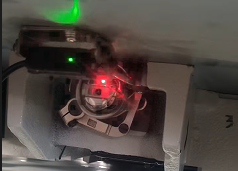
Does the detector cover existing equipment brands and models? Does the installation require significant changes to the original structure? Is the wiring method simple? Will it occupy additional operating space or affect normal threading and shuttle changing operations? These details directly determine whether the plan can be accepted by the operators. The ideal detector should maintain a compact installation structure like LS2, without affecting the original sewing action, with a small amount of modification and fast debugging.
Focus on linkage capability: timely shutdown, data traceability
The core value of the detector lies in timely blocking, which requires it to be smoothly linked with the control system of the sewing equipment. We need to confirm which signal interfaces the product supports (such as NPN/PNP output), whether it can directly drive the device's shutdown/alarm mechanism, and whether it can leave records in case of linkage abnormalities. For factories promoting the construction of digital workshops, it is also necessary to consider whether the detectors have the ability to communicate with the production line management system - whether they can summarize and analyze data such as the number of wire breakage alarms and downtime to provide a basis for continuous improvement.
Valuing Supplier Service Capability: Installation is the Beginning of Service
The debugging of detectors involves the integration with different brands and models of sewing equipment, and the on-site debugging experience and technical support capabilities of suppliers are crucial. When choosing a supplier, attention should be paid to whether they provide selection guidance and installation and commissioning services? How fast is the response time for after-sales service? Do you provide operational training and quick replacement of spare parts services? An experienced supplier can help businesses avoid many detours.
V. Conclusion
The competition in the textile and clothing, luggage, and automotive interior industries is becoming increasingly fierce, and profit margins are constantly shrinking. Every penny of cost for enterprises is worth carefully calculating. The bottom line breakage detector is not an expensive device, but it targets the most frequent, concealed, and mass destructive quality pain points in the sewing workshop.
The change from "rework after the fact" to "prevention before the fact" means that quality loss has been cut off, indicating a real improvement in yield rate and delivery capability, and also indicating that the sewing workshop has taken solid steps towards intelligence and fewer people. It is recommended that companies start piloting from the machines with the most concentrated problems, verify the effectiveness with data, and gradually expand to the entire workshop - making this investment a source of continuous quality creation.
You May Be Interested
-
Atonm MDSC-9000T Dual-Channel, Single-Sensor Metal Double-Sheet Detector
2025-12-05
-
Non-Contact “One-to-Four” Double-Sheet Detector 1600S: A New Cost-Reduction and Efficiency Solution for Stamping Lines
2025-11-20
-
Mold damage, production delays? Atonm MDSC-8200T metal double-sheet detector protects automotive stamping lines
2025-10-30
-
Provincial Auto Industry Research Tour | Atonm Engages with the Automotive Supply Chain, Empowering Smart Manufacturing through Sensors
2025-10-11