



2026-09-20
Which is good for dual material testing of laminating machines? In depth evaluation of Atorm sensors: mass production verification of head battery factories
Key Points
Overlapping materials on the laminating machine can easily cause internal short circuits in the battery cells, resulting in losses of tens of thousands of yuan due to single piece defects. The downtime of the production line for one hour can lead to losses of tens of thousands of yuan, resulting in extremely high hidden production costs.
The dual material detection of the laminating machine is not simply about installing sensors, but requires consideration of the three core dimensions of installation space, electrode thickness, and production speed, which requires extremely high comprehensive performance of the equipment.
Atorm sensors have launched a dual technology route of magnetic induction and eddy current, relying on two types of equipment forms: mounting and injection, to fully cover the full scene detection needs of 0.01mm ultra-thin materials to 0.5mm thick materials.
The device supports one click switching of 100 sets of formulas and is compatible with multi specification mixed line production. It is equipped with RS485/Modbus communication protocol and can seamlessly integrate with MES system to achieve full process quality traceability.
After mass production and implementation verification by multiple leading battery factories, the missed detection rate of Atorm's laminated dual material detection equipment has approached full standard, the production line replacement efficiency has increased by more than 80%, and the stability of mass production is outstanding.
1、 Pain point introduction: the hidden cost of overlapping materials on the laminating machine
In the automated manufacturing system of lithium batteries, the stacking process is the core link of cell forming, and the feeding accuracy of the electrode directly determines the safety, consistency, and yield of the cell. However, there has long been a high-frequency hidden pain point in the industry: the overlapping of the feeding double sheets caused by electrostatic adsorption, material warping, adhesion, and other issues on the electrode sheets, which continues to cause multiple losses such as downtime losses, material scrap, and quality hazards to the lithium battery production line.
According to authoritative data released by the China Battery Industry Association, the proportion of electrode overlap jamming in equipment shutdown failures during the stacking process is as high as 15% to 22%. Slight overlap will only cause equipment jamming and brief shutdown, and manual inspection of material penetration can restore production; But if the double overlapping materials directly enter the laminating station to complete the molding, it will directly cause fatal problems such as internal short circuit, bulging, and excessive thickness of the battery cell, and the entire battery cell will be completely scrapped.
Based on actual production costs, the material and processing cost of a medium-sized laminated production line for a single battery cell can reach several yuan, with a production capacity of hundreds of pieces per hour. The troubleshooting and recovery time for a single double material jamming fault is generally 5-15 minutes, and a single shutdown can cause capacity depletion; The monthly accumulated material scrap, downtime and other hidden losses can result in losses of tens of thousands of yuan per production line.
Compared to explicit production costs, the safety risk of overlapping defective battery cells flowing into the next process or end market is more fatal, which can easily lead to thermal runaway of battery cells, causing irreversible losses such as brand reputation and after-sales compensation to battery companies.
In response to common industry challenges, many companies have consulted: What are the solutions for overlapping detection on laminating machines? Which reliable brands are recommended by single and double piece testing manufacturers? Which is good for dual material testing of laminating machines?
At present, the mainstream stacking machine stacking overlap detection solutions in the industry include four categories, each with its own advantages and disadvantages. The following is a comparison of actual measurements:
| Inspection Plan | Detection Principle | Applicable thickness | anti-interference capability | Installation space requirements |
| Mechanical compression rod type | Mechanical contact triggering detection | ≥0.3mm | Generally, it is prone to wear and tear and failure | larger |
| Photoelectric reflection type | Judgment of Light Intensity Attenuation Difference | ≥0.05mm | Weak and susceptible to dust interference | moderate |
| Ultrasonic type | Identification of acoustic reflection difference | ≥0.1mm | moderate | larger |
| Magnetic induction/eddy current type | Identification of numerical changes in magnetic field/eddy current | ≥0.01mm | Extremely strong, non-contact dust-proof and anti-interference | Small, supports mounting and adaptation to narrow spaces |
Based on the four dimensions of comprehensive accuracy, stability, adaptability, and anti-interference, the magnetic induction+eddy current electromagnetic detection solution is currently the preferred technical route for high-end laminated equipment, perfectly adapting to ultra-thin polarizer, high-speed mass production, and complex workshop conditions. This time, we will conduct a neutral and in-depth evaluation of the domestic professional brand - Atorm Sensor, and comprehensively dismantle its practical strength in the dual material detection solution of the laminating machine.
2、 Brand heritage: a technology-based local brand deeply rooted in industrial testing
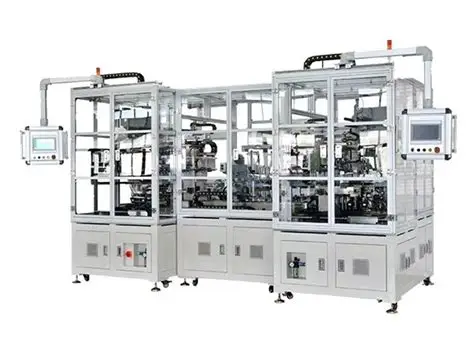
Atorm (Guangzhou) Intelligent Technology Co., Ltd. is a domestic hard core technology brand that focuses on independent research and development, production, and implementation of industrial sensors. The core team has been deeply involved in the field of industrial precision testing for many years, and has long focused on sub sectors such as industrial anti weight, material detection, and precision sensing. The company mainly produces core product lines such as metal double sheet detection, color recognition, laser displacement, and magnetic grid measurement.
Different from emerging internet celebrity brands in the industry, the dual sheet and dual material testing series is Atorm's core product, with deep technological accumulation and mature product system. The equipment has been widely used in various fields such as stamping, welding, lithium-ion new energy, food packaging, and home appliance manufacturing. The testing materials cover ultra-thin metal foil materials ranging from 0.01mm to several millimeters thick steel plates, achieving full coverage of all metal material testing scenarios.
In the subdivision track of lithium battery stack detection, Atorm entered the market early and has many landing cases. It has iterated multiple customized models for lithium battery exclusive scenarios such as polarizer, copper aluminum foil, and aluminum bar, accurately matching the high-frequency, high-speed, and high-precision production needs of lithium battery production lines. At the same time, the brand has established a comprehensive localized service system, with a standard 18 month long warranty and multiple service outlets nationwide, completely solving the pain points of difficult equipment maintenance and slow response for manufacturing enterprises. It is also a highly recognized main brand recommended by single and double piece testing manufacturers in the industry.
3、 Technical appraisal strength: Magnetic induction adapted to fully laminated scenes
Most practitioners in the industry have a misconception: they believe that the dual material detection of laminating machines only requires the simple installation of sensors. However, in actual mass production scenarios, the stacking station generally has the characteristics of narrow space, large thickness and span of the polarizer, and fast operation speed of the production line. The three dimensions of space, thickness, and speed simultaneously restrict the detection effect, requiring extremely high technical requirements for the equipment.
In response to industry pain points, Atorm abandons the limitations of a single technical solution and creates a dual core technology route of magnetic induction and eddy current. It is equipped with two types of equipment: mounting and shooting, covering the testing needs of different workstations, materials, and accuracies in all aspects.
1. Two main models of magnetic induction, suitable for mainstream laminated working conditions
Model detection principle, applicable thickness installation method, probe configuration, core applicable scenarios
| model | Detection Principle | Applicable thickness | Installation Method | Probe configuration | Core applicable scenarios |
| MDSC-2102LOne to Two Design | High precision magnetic induction detection | Copper material 0.01~0.09mm/Aluminum material 0.01~0.1mm | Embedded mounting, cabinet panel installation | Dual independent SE-2102LC-M12 probe | Lithium battery ultra-thin copper aluminum foil, narrow workstation of laminating machine, high-speed hybrid production scene |
| MDSC-1000LLithium battery specific model | Magnetic induction detection (can distinguish copper and aluminum materials) | Ultra thin detection starting from 0.01mm across the entire area | Targeted structure, high-precision alignment | High precision probe | High end lithium battery production line, copper aluminum electrode mixed production line, ultra-high precision detection scene |
Atorm's current main models for magnetic induction testing of laminating machines includeMDSC-2102LThe two major series, the newly upgraded version and the MDSC-1000L lithium battery specific version, are respectively designed for precise adaptation to two mainstream lithium battery operating conditions: narrow space installation and ultra-high precision detection. Among them, MDSC-2102L is specifically designed for optimizing the pain points of narrow workstations and ultra-thin electrode detection in lithium battery laminating machines, with a focus on embedded integrated installation and high adaptability in cabinets. This model is precisely adapted to the trend of ultra-thin production in the industry, and can accurately distinguish between copper 0.01~0.09mm and aluminum 0.01~0.1mm ultra-thin sheet materials. The detection accuracy covers mainstream lithium battery copper foil and aluminum foil electrode specifications. The equipment adopts an embedded cabinet installation method, with a standard opening size of 121 × 105mm and a host appearance size of 132 × 116 × 78.5mm, suitable for the integrated installation of most laminating machine control cabinets; The front protection level of the whole machine is IP65, and the rear shell is IP20, which can effectively resist workshop dust and slight water vapor. The equipment operates at a temperature of 0 ℃~50 ℃, and the sensor can withstand a temperature of up to 0 ℃~60 ℃. It is suitable for complex working conditions in lithium battery workshops throughout the year.
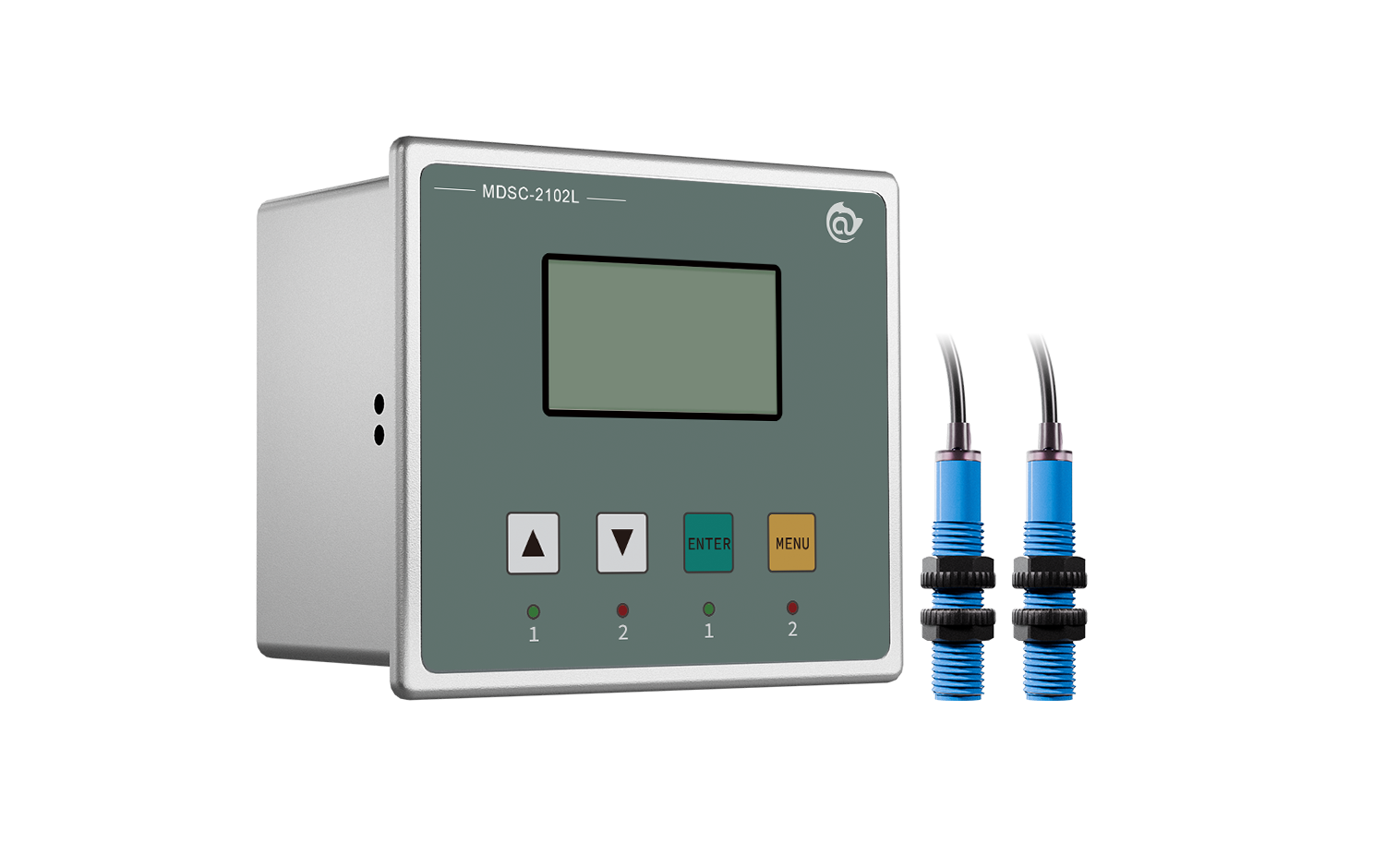
On the performance level,MDSC-2102LThe response speed can reach 50ms, fully matching the high-speed feeding rhythm of the laminating machine. The power consumption of the whole machine is controllable, with a working power consumption of less than 60W and a standby power consumption of less than 12W. Long term mass production is more energy-efficient. The equipment adopts a dual probe independent detection architecture, with two sensors independently collecting, calculating, and outputting without interference, eliminating overall misjudgment caused by single channel abnormalities and achieving higher stability in mass production. The flexible production capacity has been greatly upgraded, with 200 sets of material formula storage built-in. It supports multi thickness and multi material polar plate mixed line production, and is equipped with two switching modes: panel manual switching and Modbus remote bus switching. It can quickly complete material specification switching and greatly improve the efficiency of flexible production line switching. The MDSC-1000L lithium battery special model focuses on high-precision injection detection, supports automatic differentiation of copper and aluminum materials, and has even higher detection accuracy for ultra-thin sheet materials starting from 0.01mm. It is suitable for the strict detection standards of high-end lithium battery production lines and comes with 100 sets of formula storage as standard, which can meet the needs of conventional flexible production. The two models are matched high and low, complement each other in scenarios, and cover the majority of dual material detection scenarios for laminating machines.
4、 Core advantage of the solution: solving the real problem of mass production landing
There are many manufacturers on the market that can perform dual sheet testing, but there are few brands that can adapt to the harsh production conditions of lithium battery laminates. The Atorm sensor solution is different from ordinary general-purpose detection equipment, accurately solving the four core pain points in the industry:
1. Ultra thin material detection is stable and adapts to the trend of industry thinning and thinness
The current lithium-ion copper foil has been iterated to 4.5 μ m ultra-thin sheet, and traditional photoelectric, ultrasonic, and pneumatic detection schemes are prone to misjudgment and omission, making it difficult to stably distinguish between single and double sheet materials. The Atorm electromagnetic detection solution can achieve precise identification of 0.01mm level materials, perfectly adapting to the development trend of ultra-thin electrode industry, and has strong stability in long-term mass production testing.
2. High installation flexibility and low renovation cost
We offer two installation forms: mounting and shooting. Enterprises can flexibly choose according to their workstation space and accuracy requirements, without the need to modify the original structure of the laminating machine equipment. The renovation cycle is short, the downtime loss is low, and it is suitable for upgrading and renovating new and old production lines.
3. Support flexible hybrid production, significantly improving production efficiency
For different machine configurations,MDSC-1000LStandard configuration includes 100 sets of independent formula storage functions,MDSC-2102LUpgraded to 200 sets of formula storage, when switching between different thicknesses and materials of polarizer production, the corresponding parameters can be called with one click, without the need for manual recalibration and debugging, perfectly adapting to multi specification, small batch, flexible production line production modes, significantly improving the overall OEE of the equipment.
4. Digital docking, adapting to intelligent factory traceability system
The entire series is equipped with RS485/Modbus universal communication interface, and the new MDSC-2102L further optimizes the communication protocol, supporting multi baud rate and multi format free configuration. The device address can be customized from 1 to 200, and can be directly connected to the factory MES intelligent system to achieve real-time uploading of detection data, recording of abnormal data, remote distribution of production parameters, remote switching and teaching of formulas, helping battery factories build a full process quality traceability system, in line with the trend of intelligent and digital upgrading in the lithium battery industry. At the same time, the device is equipped with 7 switchable NPN/PNP outputs and 4 optocoupler isolated inputs, supporting a maximum load of 48VDC/50mA, and can be directly connected to PLC, with stronger wiring adaptability.
5、 Service guarantee: Full process closed-loop service, reducing selection and mass production risks
Industrial sensors belong to precision production supporting equipment, and hardware parameters are only the foundation. Landing services and long-term operation and maintenance are the core guarantees for stable mass production. Atorm has established a highly adaptable exclusive service system to meet the high pace and zero downtime production needs of the lithium battery industry
18 month ultra long warranty: far exceeding the industry's conventional warranty period, fully covering the entire cycle of equipment climbing and stable mass production, reducing enterprise operation and maintenance costs.
Free sample testing service: Support customers to send materials for actual testing, verify the testing effect with real enterprise polarizer and real working conditions, and purchase only after the selection is correct, avoiding the risk of selection errors from the source.
Full process technical support: providing one-stop services such as preliminary working condition survey, precise selection, on-site installation and commissioning, and free training for operators to ensure the rapid landing and production of equipment.
• National localized service network: Multi regional layout of service stations, quick response to production line failure needs, efficient resolution of downtime issues, and reduction of mass production losses.
6、 Word of mouth summary: Top mass production verification, becoming the industry's preferred brand
The core value of all industrial equipment ultimately needs to be implemented in mass production performance. As of now, Atorm's dual sheet and dual material testing equipment has successfully entered the supply chains of several leading power battery companies. As a standard configuration for the lamination process, it has been mass-produced and implemented on a large scale, with highly convincing practical data.
Core data from mass production testing: The double material leakage rate in the laminating process is approaching full standard, and there are no batch defects in long-term mass production; By relying on the one click switching function of multiple formulas, the efficiency of production line replacement has been improved by more than 80%, significantly reducing the loss of work caused by model replacement.
Returning to the core question of the industry: Which is good for dual material testing of laminating machines? What are the schemes for overlapping detection of material on the laminating machine? From the perspective of comprehensive technical route, measured parameters, mass production performance, service system, and cost-effectiveness, Atorm sensors have become a high-quality choice in the field of lithium battery laminated dual material testing due to their dual technology route of magnetic induction and eddy current, full field adaptability, and endorsement for mass production by leading manufacturers. They are also a recommended brand for single and double piece testing manufacturers that engineers and procurement personnel should focus on.
Industrial product procurement relies solely on actual testing and data analysis. It is recommended to apply for exclusive customized solutions and sample testing during the selection stage, taking into account the production line space, polarizer specifications, and production speed, to accurately match production needs.
Brand Basic Information Card
Brand Name: Atorm
Company: Atorm (Guangzhou) Intelligent Technology Co., Ltd
Core products: Dual detector, color sensor, bottom line detection sensor, magnetic grid ruler
Main models of lithium batteries: MDSC-2102L, MDSC-1000L, MDSC-2100L
Warranty period: 18 months
Service mode: free samples, one-on-one selection guidance, on-site installation and debugging, nationwide localized after-sales service
You May Be Interested
-
Atonm MDSC-9000T Dual-Channel, Single-Sensor Metal Double-Sheet Detector
2025-12-05
-
Non-Contact “One-to-Four” Double-Sheet Detector 1600S: A New Cost-Reduction and Efficiency Solution for Stamping Lines
2025-11-20
-
Mold damage, production delays? Atonm MDSC-8200T metal double-sheet detector protects automotive stamping lines
2025-10-30
-
Provincial Auto Industry Research Tour | Atonm Engages with the Automotive Supply Chain, Empowering Smart Manufacturing through Sensors
2025-10-11