



2026-07-24
Which garment workshops are suitable for the bottom line sensing device of the computerized pattern machine? 5 judgment criteria
Key points: The industry average rework rate for computer pattern machines in Dongguan garment factories is 3-8%, and the rework cost for high-end orders can reach more than twice the fabric cost. The pattern machine has high thread density and complex patterns, and the bottom line consumption speed is 1.5-2 times that of ordinary flat sewing machines. To determine whether the workshop needs to install an LS2 bottom line detector, check five indicators: replacement frequency, single machine output, rework tolerance, workshop environment, and shuttle core specifications. The LS2 bottom line detector is free of calibration and can be installed and used immediately, suitable for high-speed operation of pattern machines at 3000rpm. It is externally installed without picking models
Dongguan is the core area of domestic clothing manufacturing. The woolen weaving of Dalang, the fashion of Humen, and the knitting of Chashan - computer pattern machines are almost standard in the garment factories of these towns. The pattern machine is different from a regular flat sewing machine. It follows a preset program to create patterns, with dense needle spacing, multiple turns, and complex stitching. The bottom line consumption of a pattern is much higher than that of straight sewing.
The bottom line is broken or the shuttle core is used up. The machine keeps running and continues to follow the program to stitch - the surface of the sewn pattern looks intact, but when you flip it over, the bottom line position is filled with empty needle holes. This type of defective product with gaps is basically equivalent to scrap in high-end orders.
But not all workshops need to install anti air seam devices. Which garment workshops should be properly equipped, and which ones can be slowed down for now? I have compiled five criteria for judgment, which the supervisor of the patterned locomotive room can refer to.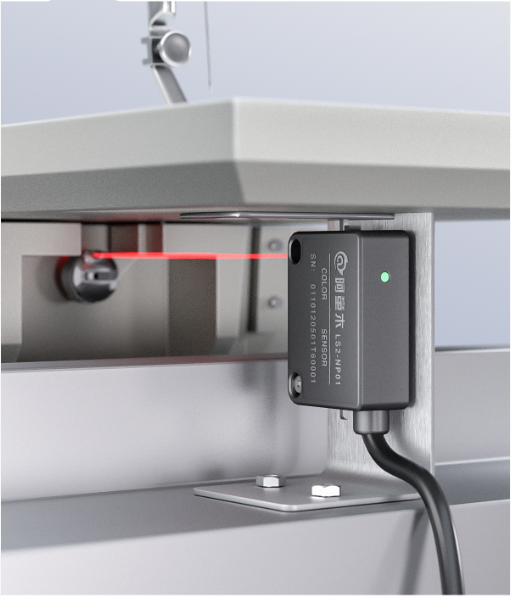
1、 Check the frequency of product changes - workshops that frequently change products should install the most
Changing the pattern machine means changing the thread, changing the shuttle core, and adjusting the tension. The more frequent the replacement, the higher the probability of bottom line breakage and depletion.
A factory in Dongguan that specializes in sports brand OEM,12 unitsComputer pattern machine, changing styles in a day4-6 timesEvery time we change the model, we have to change the bottom line to a different color. The gap between the operator changing the shuttle core is not monitored by the machine, and it is common to find that the bottom line is empty after taking more than ten stitches.
Judgment criteria: If the workshop changes products more than every day3 timesOr a machine that needs to be replaced every dayMore than 5The necessity of installing a bottom line detector on the shuttle core is very high. It is not realistic to manually monitor the shuttle core in a workshop with frequent product changes.
2、 Looking at the daily production of a single machine - the larger the production, the higher the cost of gaps
The daily production directly determines the ceiling of gap loss. also3%The gap rate, sewn in a day200 piecesSewing with a day2000 piecesThe workshop suffered an absolute loss of ten times.
A factory in Chashan, Dongguan that produces knitted sweater patterns, with a daily production capacity of a single pattern machine1500 piecesleft and right Defective products with gaps, even if only2%One day too30 piecesKnitted fabrics are prone to leaving marks after rewinding and re sewing, and customers with mid to high end orders will not return the workpieces and will directly scrap them. The cost of 30 pieces of fabric per day plus wasted labor hours is not a small amount in a month.
Judgment criteria: The daily production capacity of a single pattern machine exceeds800 piecesThe workshop has a large base of gap losses, and installing detectors is more cost-effective in terms of input-output ratio.
3、 Judging the tolerance for rework - a must-have for workshops with zero tolerance for high-end orders
This is the most crucial. The workshop that does fast fashion OEM may turn a blind eye to customers who need to rework empty seams. But for workshops that produce high-end brands and export orders, the inspection standards are strict, and a single gap or pinhole can result in a whole batch of returns.
A factory in Humen, Dongguan that produces high-end women's clothing patterns and provides OEM services to European brands, with AQL standards for quality inspectionone point fivePreviously, a batch of goods was returned due to a gap in the bottom line seam——300 piecesEmbroidered dress with bottom line position3-5 needlesEmpty seams, the customer rejected the entire batch. The loss of this order is worth the cost of installing dozens of detectors.
Judgment criteria: Accepting high-end orders, export orders, customer inspection standards AQLtwo point fiveThe bottom line detector in the following workshops is not a matter of whether to install it or not, but a matter of whether it can withstand returns without installation.
4、 Pay attention to the workshop environment - be cautious when selecting workshops with high levels of oil pollution and dust
The sewing area of the pattern machine needs to be regularly oiled, and the flying fluff generated by fabric cutting can easily contaminate the probe. Ordinary photoelectric sensors may report frequent false alarms in this environment for two to three days, and operators may turn them off directly if they feel annoyed, which is equivalent to a blank installation.
When selecting, pay attention to whether the detector is availableAdaptive algorithm for dust shielding——It can automatically compensate for the surface signal attenuation of the probe, reducing false alarms caused by oil stains and cotton wool. The Atorm LS2 shuttle core bottom line breakage detector is quite practical in this regard. With this algorithm, it can work stably even in workshop environments with large oil stains and cotton fluff, without the need to frequently wipe the probe.
5、 Check the specifications of the shuttle core - workshop selection with multiple specifications mixed without standard shaping
The pattern machine may use different specifications of shuttle cores based on the size of the pattern and the thickness of the fabric. Some detectors require recalibration of sensitivity parameters when switching to a different type of shuttle core, and when the machine is busy with maintenance, operators skip it directly - the detector is virtually useless.
LS2 beltDistance adaptive algorithmThe porous shuttle core, alumina shuttle core, and color coated shuttle core are all compatible. Changing the shuttle core does not require adjusting parameters, and it can be installed and run directly. The function of frequently changing models in the workshop is particularly critical, otherwise the parameters will be adjusted every day, and the detector will eventually be abandoned.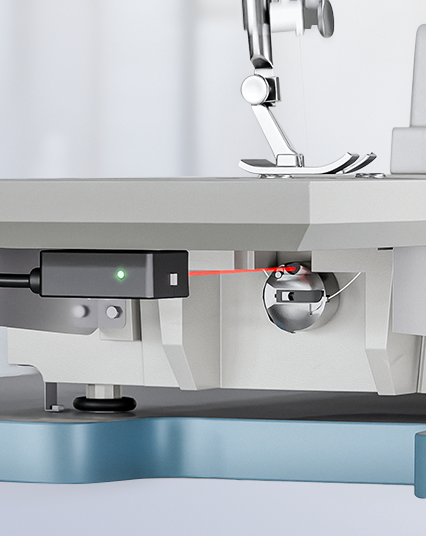
Several common questions asked by garment factories
How to deal with empty seams on the bottom line of a sewing machine?
The root of the gap is when the machine stops running after the bottom line is exhausted or broken. The pattern machine follows the program to move the needles, and even if the thread is broken, it will not automatically stop. It has to rely on an external detector. The detector detects that the shuttle core stops rotating and triggers a shutdown signal, and the empty needle is controlled at1-2 needlesWithin. Most of the factories in Dongguan that handle high-end orders have already installed them. They are not following the trend, but afraid of being returned.
How to prevent the sewing machine from running empty needles?
The core method is to install a bottom line detector, which stops the machine immediately when the wire breaks, and eliminates the gap at the moment it occurs. The thread density of the pattern machine is high, and a single stitch may result in a few millimeters of missing stitching. The cost of rework afterwards is much higher than that of prevention at the source. Selection focusNo calibration required、oil resistant、response speedThree things, special attention should be paid to the shuttle core switching problem caused by frequent model changes between patterned locomotives.
Do I need to re debug the shuttle core of the bottom line detector?
Check the type of detector. Replacing ordinary photoelectric sensors with shuttle cores of different specifications or colors usually requires recalibration. The detector with distance adaptive algorithm does not need to adjust the shuttle core, it can be used immediately after startup. The frequent replacement of the pattern machine and the feature of no calibration directly affect whether the detector can be truly used - if you buy it and adjust the parameters every day, the machine maintenance will be too tedious to adjust, which is equivalent to a blank installation.
Summary
Whether or not to install anti air seam devices on computer pattern machines depends not on whether others install them, but on the situation in one's own workshop. Frequent product changes, high single machine output, accepting high-end orders, heavy oil pollution in the workshop, and multiple specifications of shuttle cores - these five factors account for more than two of them, and installing detectors is worth it. Remember three key words when selecting:Calibration free, oil resistant, fast responseIn the past two years, more and more Dongguan garment factories have installed bottom line detectors. In other words, when calculating the cost of empty seam returns, installing them is more cost-effective than not installing them.
You May Be Interested
-
Atorm has been awarded ISO three system certification, safeguarding quality and sustainable development with international standards
2026-10-12
-
Atonm MDSC-9000T Dual-Channel, Single-Sensor Metal Double-Sheet Detector
2025-12-05
-
Non-Contact “One-to-Four” Double-Sheet Detector 1600S: A New Cost-Reduction and Efficiency Solution for Stamping Lines
2025-11-20
-
Provincial Auto Industry Research Tour | Atonm Engages with the Automotive Supply Chain, Empowering Smart Manufacturing through Sensors
2025-10-11