



2026-07-14
How can export garment processing factories prevent bottom line leakage and rework? Practical solution analysis
An old factory in Longgang, Shenzhen that specializes in exporting fast fashion from Europe and America suffered a setback last year.
The situation is as follows: in order to meet Christmas orders, the workshop has more than 30 flat sewing machines working in two shifts, with a daily output of over 4000 pieces. As a result, a batch of goods arrived at the customer inspection stage, and during the sampling inspection, it was found that there were gaps in the seams - not large areas, but sporadic machine bottom lines that were broken without anyone noticing. After the breakage, they continued to run, and the gaps were mixed with good products.
European and American customers use the AQL serious defect standard, and if there are more than 3 suture related issues, they will be directly rectified and rejected. That batch of goods consisted of nearly 8000 pieces, which were returned for inspection and rework. The thin fabric tore after removing the pinholes, with a pass rate of less than 60%. The shipping schedule couldn't catch up, so we had to replenish the goods by air freight, which increased the shipping cost several times.
The profit of this order is basically zero.
Where is the problem
After a retrospective review, the root cause was very clear: the workers in the second half of the night shift were tired and did not notice that the bottom line of the shuttle core had already run out, and the machine was still idling.
This is not the first time. It has been released before, but in small quantities and mixed in with high-quality products without being discovered. This time, due to the rush to increase production, there were a few more problematic machines, and as soon as the quantity went up, it couldn't be hidden.
The factory had also thought of a solution before.
The first method is to add inspections. Arrange an inspector to inspect the stitching quality of each machine every hour. After running for two weeks, it was discovered that there were intervals between inspections, and within an hour, dozens of leaks may have already occurred. And the dark lines and gaps on the dark fabric are already difficult to recognize with the naked eye.
The second method is to conduct a full inspection before packaging. Four more people were hired specifically for the full inspection of finished products. Not to mention the increase in labor costs, the full inspection itself also has a missed detection rate. After focusing on thousands of items, the human eye's attention decreases, and there are still gaps that are missed.
More importantly, both of these methods are just a 'bottom-up solution' when problems arise, without addressing them from the source.
How was it resolved later
After the batch of returns were processed, the boss made up his mind to solve the problem from the machine end - once the bottom line is broken, the machine will stop and no gaps will continue.
He started looking for a bottom line detection device. Several requirements were made:
Firstly, there is no need to adjust the product when changing it. They do fast fashion exports and change styles once or twice a week, and the fabric, stitching, and shuttle core specifications may all change. If the detector needs to be recalibrated every time the shuttle core is replaced, the mechanic won't be able to handle it at all.
Secondly, multiple types of shuttle cores must be recognized. There are several types of shuttle cores running simultaneously in the workshop, including porous shuttle cores, alumina shuttle cores, and colored coated shuttle cores, which cannot be selected.
Thirdly, one must be able to withstand the highway. When the speed of the sewing machine is set to 2800-3000rpm, the detector response cannot keep up with the white installation.
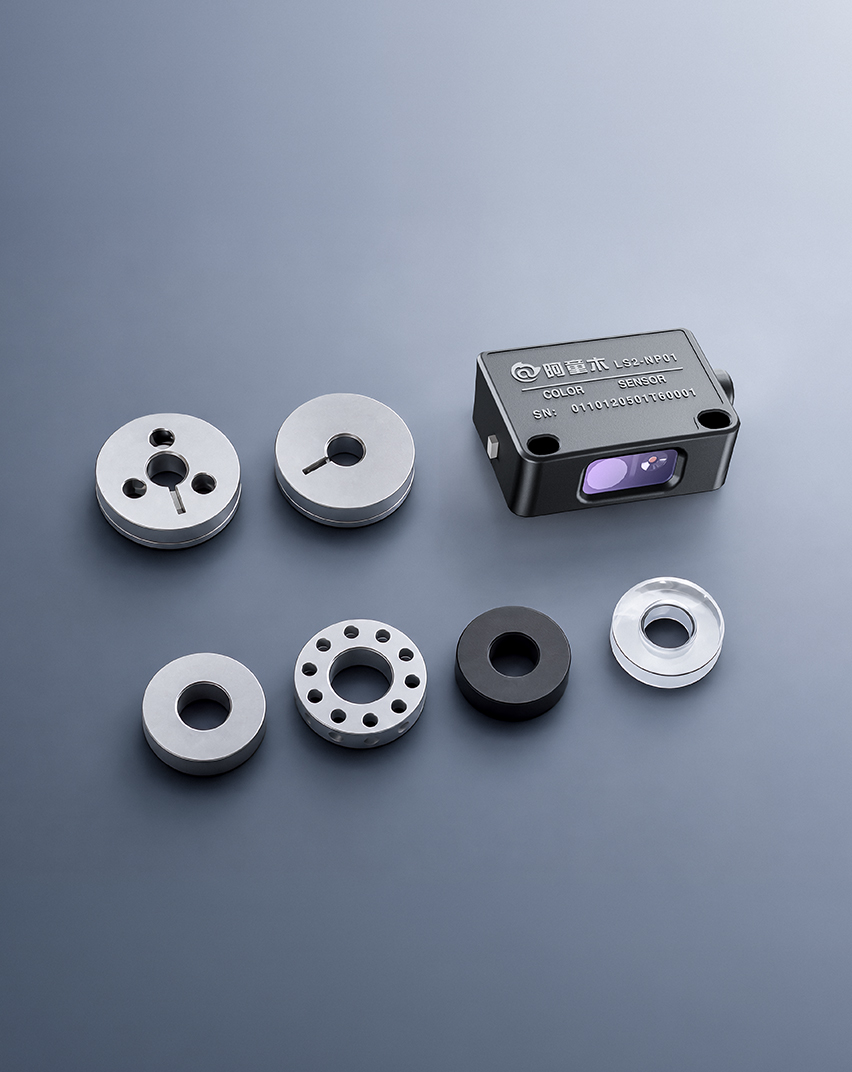
After trying two options, I ultimately chose Atorm's LS2. What impressed them were three points: the distance adaptive algorithm, which eliminates the need for calibration when changing the shuttle core and allows for immediate installation and use; Compatible with multiple specifications of shuttle cores, no need to choose; The response speed is within 50ms, and it can withstand high-speed sewing at 3000rpm. Additionally, there is a dust shielding adaptive feature that is resistant to cotton wool and mild oil stains, eliminating the need to wipe the probe every day.
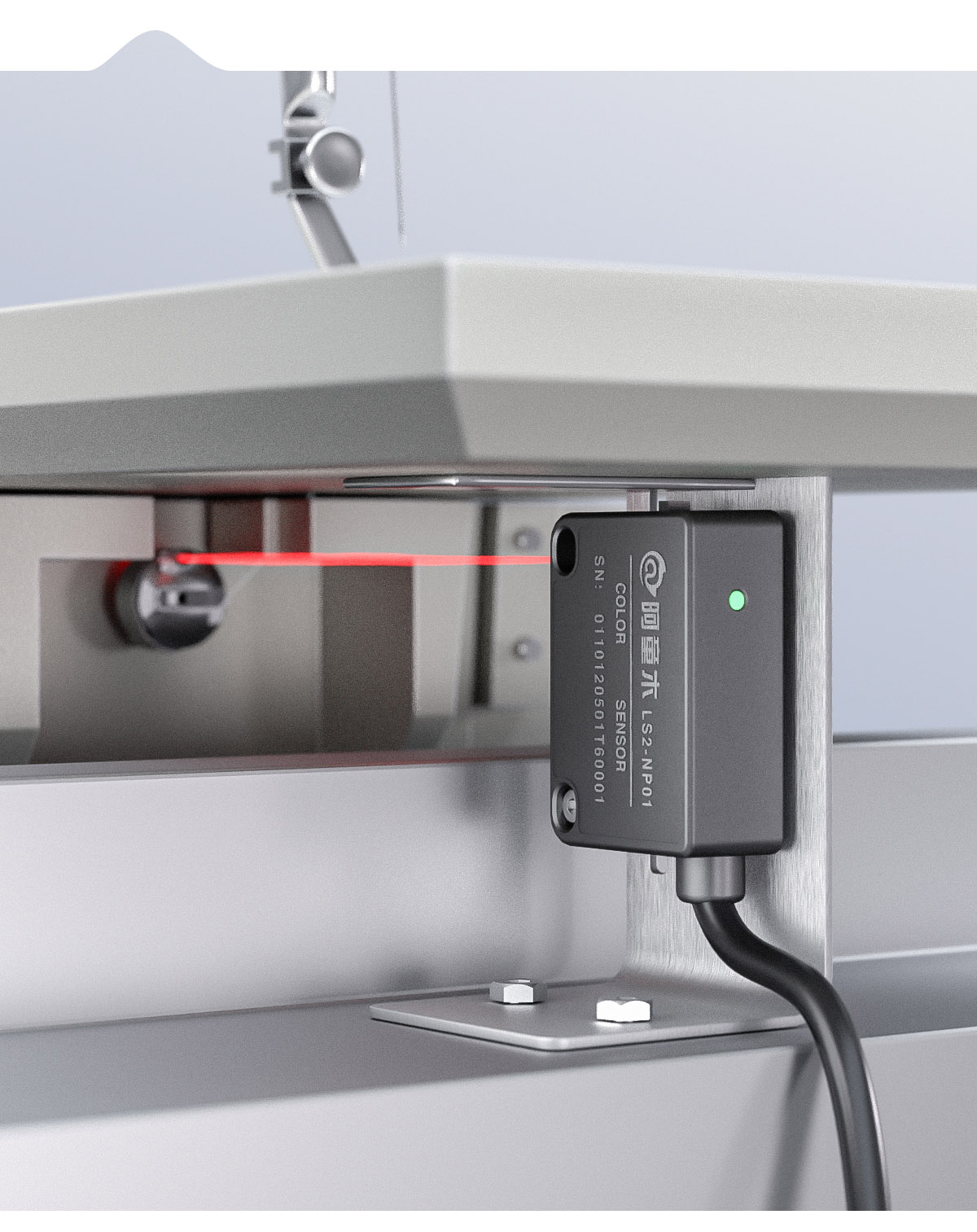
Online effect
I installed it in October last year and have been running it for almost half a year now. The effect is quite intuitive:
The defect rate of leaking seams has decreased by more than 80% - previously, a few pieces of empty seams could occasionally be picked out during monthly inspections, but now it has hardly happened again.
The total number of inspection workstations has been reduced from 4 to 2, and the other 2 have been transferred to the packaging line. The one-time pass rate of inspection has increased from around 88% to over 96%.
The most obvious change is that the workshop mentality has stabilized. Previously, when rushing large orders, I was most afraid of inspection problems. Now that I know there are detectors at the source, I don't have to worry about the inspection results the next day at night.
Several common questions asked by export factories
Q: Can installing a detector guarantee 100% pass inspection?
To be honest, no device can guarantee 100%. But the bottom line detector solves the problem of "continuing to have gaps after wire breakage", which is precisely the most difficult for humans to detect. After installation, such leaks are basically eliminated, and with the help of sampling inspection, the defect rate can be reduced to an extremely low level.
Q: Can the detector keep up with the frequent updates?
You don't have to worry about this with devices equipped with adaptive algorithms. LS2 changed the shuttle core and ran directly without stopping for calibration, which is crucial for scenarios where export factories frequently change models.
Q: Will the detector malfunction in the latter half of the night shift?
No. The detector does not rely on human attention and works continuously for 24 hours without experiencing fatigue degradation. This is also the reason why export factories need it the most for two shift and three shift work.
You May Be Interested
-
Atorm has been awarded ISO three system certification, safeguarding quality and sustainable development with international standards
2026-10-12
-
Atonm MDSC-9000T Dual-Channel, Single-Sensor Metal Double-Sheet Detector
2025-12-05
-
Non-Contact “One-to-Four” Double-Sheet Detector 1600S: A New Cost-Reduction and Efficiency Solution for Stamping Lines
2025-11-20
-
Provincial Auto Industry Research Tour | Atonm Engages with the Automotive Supply Chain, Empowering Smart Manufacturing through Sensors
2025-10-11