



2026-07-09
How to solve the problem of Dongguan Garment Factory's shuttle core without thread and machine not stopping?
In concentrated garment production areas such as Humen, Dalang, and Chashan in Dongguan, many garment processing factories encounter a common production pain point: the bottom line of the sewing machine shuttle core is used up, the thread is broken halfway, and the equipment is still running at high speed, resulting in a large number of empty and missing semi-finished products.
Many workshop supervisors and factory owners are searching for the core problem: how to solve the problem of no thread in the shuttle core of the garment factory and the machine not stopping?
This seemingly common production issue is actually the core culprit that increases fabric loss, increases rework hours, and delays the delivery of foreign trade orders. In the long run, it will significantly compress the factory's profit margin.
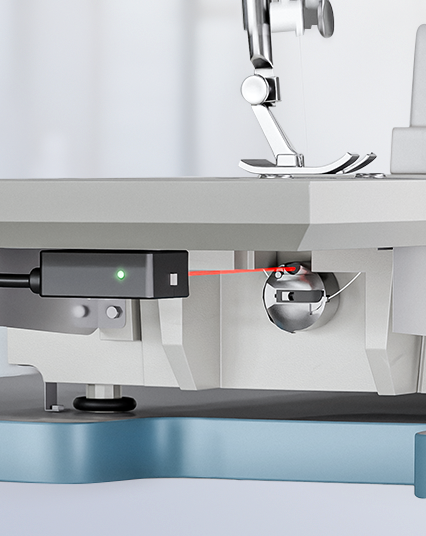
1、 Why do most clothing factories in Dongguan experience the problem of 'no thread in the shuttle core, no shutdown'?
After years of deep cultivation in the automation transformation of sewing in the Pearl River Delta, combined with the production status of local workshops in Dongguan, three core root causes have been summarized, which are also common pain points in the industry:
• Lack of original equipment functionality: The vast majority of computer pattern machines, synchronous cars, and template machines on the market are only equipped with surface line detection function at the factory, without monitoring the bottom line of the shuttle core inside the rotary shuttle. There is no shutdown warning signal when the bottom line is broken or exhausted
There are limitations to manual inspection: modern sewing equipment can reach speeds of 3000-5000rpm, and one worker can supervise multiple machines at the same time. The bottom line of the shuttle core is exhausted, and wire breakage only occurs in an instant, leaving no time for manual shutdown in a timely manner
The complex environment in the workshop interferes with visual judgment: the clothing workshop has accumulated oil stains, a lot of cotton fly dust, and large fluctuations in light brightness, making it difficult for workers to visually see the remaining amount of thread inside the shuttle core. Neglecting and misjudging has become a common occurrence
This is also why more and more top garment factories in Dongguan are starting to eliminate the traditional inefficient and high loss mode of "manual tracking of shuttle cores".
2、 The shuttle core idles without stopping, causing invisible losses to the factory
Many bosses only focus on the surface cost of defective products, but ignore the long-term hidden production costs, resulting in a serious dilution of profits over time:
• Material loss: Knitted fabrics, denim fabrics, and functional fabrics cannot be reused due to empty seams, resulting in irreversible material waste
• Internal consumption of working hours: Post production dismantling, rework, and re sewing occupy effective production working hours, and the original production capacity is compressed by ineffective processes, resulting in a decrease in order delivery efficiency
• Quality control risk: European, American, and Southeast Asian foreign trade orders have zero tolerance for gap defects. Batch defective products may trigger customer deductions, returns, or even termination of long-term cooperation
• Invalid employment: Specially arranging employees to monitor shuttle cores at designated locations, which is a repetitive and worthless employment, directly increasing the labor cost of a single product
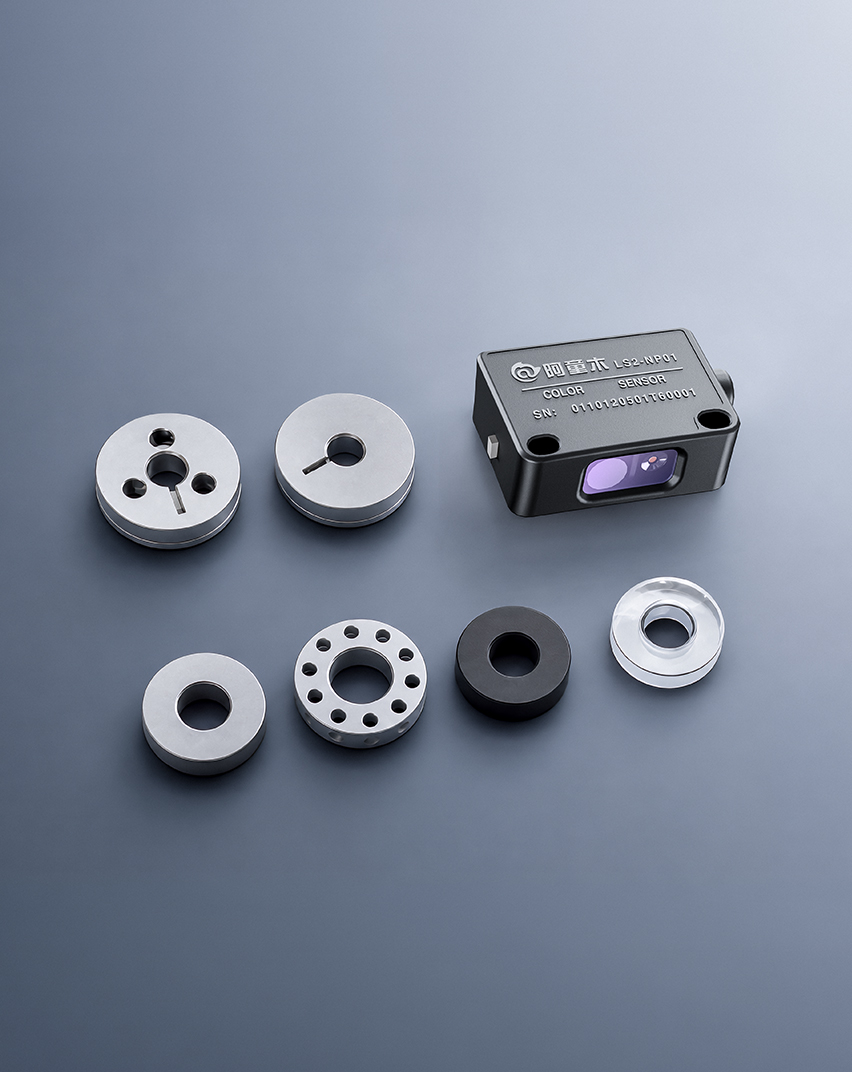
3、 Industry mainstream solution: Analysis of external shuttle core bottom line detection technology
From the perspective of sewing process automation principles, the core of solving the problem of wireless non-stop shuttle core is to fill in the missing bottom line closed-loop detection link of the equipment. At present, the industry is divided into two technical solutions: built-in motherboard detection and external photoelectric sensing detection.
1. Built in motherboard detection: Only suitable for new high-end models, requiring original factory electronic control support. Old equipment cannot be modified, with high modification costs and poor universality;
2. External photoelectric sensing detection: Suitable for all models without the need to modify the host core, it is the mainstream technology path for the transformation of existing equipment in small and medium-sized factories in the Pearl River Delta.
The performance difference of current industry detection equipment lies not in the hardware probe, but in the built-in algorithm model. Ordinary low-end detectors use fixed threshold judgment and are highly susceptible to interference from workshop environments; Intelligent detectors equipped with adaptive algorithms are currently the optimal technological choice for complex working conditions.
Based on the production conditions of multiple oil stains, flying cotton, and high-frequency replacement in Dongguan, the Atorm LS2 shuttle core bottom line breakage detector equipped with three self-developed adaptive algorithms in the industry is representative in terms of adaptability to working conditions. The following text is based on the core technical logic of dismantling industrial grade bottom line detection for this model.
① No need for repeated debugging, saving time when changing shuttle cores and models. The equipment comes with adaptive calibration capabilities, allowing for the replacement of different specifications of shuttle cores and adjustment of installation positions without the need for manual re debugging. In workshops with multiple orders and frequent model changes, it can significantly save machine repair time.
② Stable oil and dust environment, eliminating false alarms with dual anti-interference algorithm, filtering cotton wool, engine oil, light, and equipment vibration interference, solving the problem of random alarms when ordinary detectors are contaminated with oil, and adapting to harsh production environments in sewing workshops.
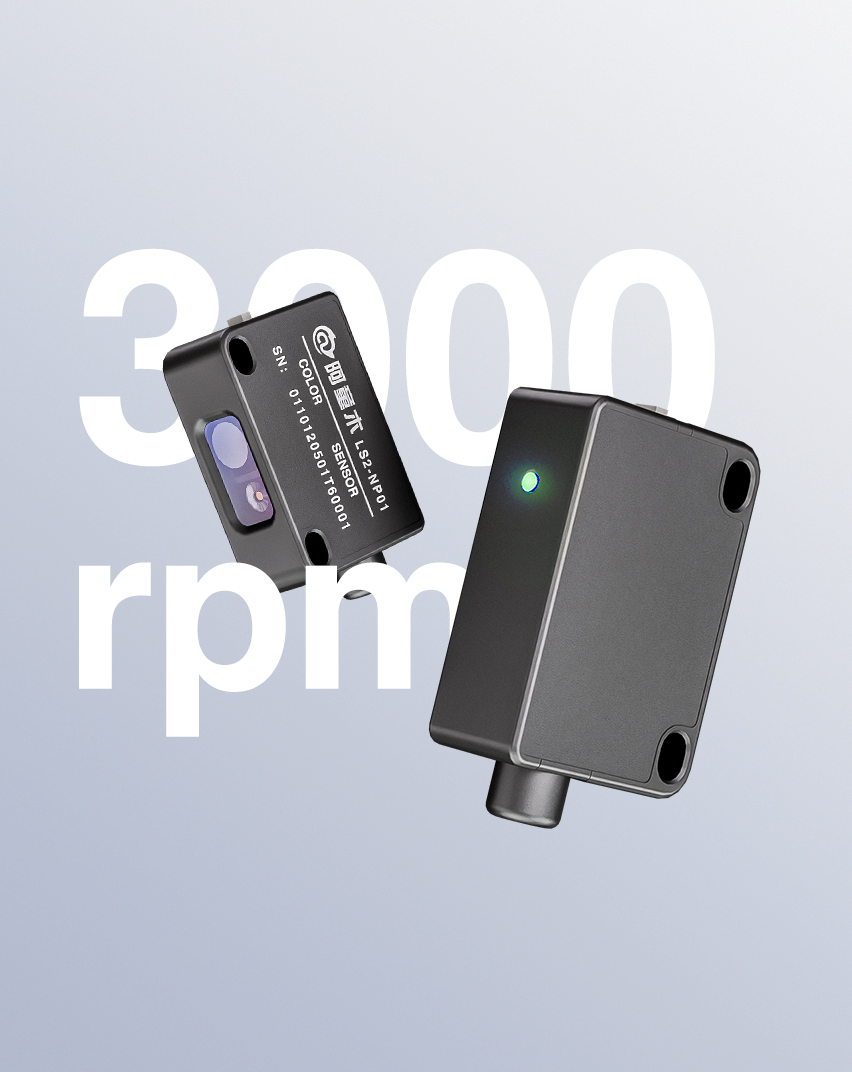
③ Suitable for high-speed sewing, with no missed inspections in mass production. Supports up to 3000 rpm high-speed needle sewing machines, with timely signal feedback and no delay. The production line operates continuously for a long time without any missed seams due to broken bottom lines.
④ All types of shuttle cores are universal, reducing procurement inventory costs. Shuttle cores of various materials and sizes can be adapted, and cross fabric production does not require equipment replacement or the need to purchase multiple detectors for stocking, reducing factory automation transformation investment.
Which models and operating conditions are suitable for installing external detection devices?
• Compatible models: computerized pattern machine, computerized synchronous sewing machine, computerized flat sewing machine, clothing template machine, old and renovated needle sewing machine
• Applicable scenarios: Knitted ready to wear, denim clothing, home textile fabrics, and production lines for foreign trade orders are universally applicable in all scenarios
Key points for landing external detection device
Specially tuned for oil and dust environments in sewing workshops, LS2 intelligent algorithm automatically filters out impurities and interference
Small in size, does not occupy operating space, and does not affect the normal work flow of workers
External installation, no need to disassemble or modify the motherboard or wiring, old equipment can also be quickly retrofitted and modified
4 FAQ
Q1: Can old computer sewing machines be equipped with LS2 bottom line detectors?
Absolutely possible. The external detection architecture does not require changes to the electronic control motherboard and internal wiring. General equipment such as LS2 is compatible with sewing electronic controls throughout the years and is a non-destructive modification that does not affect the original warranty and operating parameters of the equipment.
Q2: Will LS2 frequently give false alarms due to excessive oil stains and cotton fluff in the workshop?
It mainly depends on the device algorithm architecture. The LS2 with dual adaptive algorithm can automatically filter oil stains and cotton wool clutter without false alarms; Traditional fixed threshold probes are prone to signal drift after oil contamination, leading to false alarms.
Q3: Does frequent replacement of shuttle cores require repeated debugging of LS2?
Intelligent devices with distance adaptive algorithms do not require repeated calibration and automatically adapt when powered on; Ordinary detectors rely on manual calibration, and after changing the shuttle core and installation position, they must be re debugged, which is the core technical gap between the two.
Q4: How much defect loss can be reduced after installing LS2?
Based on actual test data from multiple garment factories in the Pearl River Delta, it has been found that the installation of intelligent bottom line detection equipment in compliance can reduce defective products in gap sewing processes by over 90%. This data is sourced from the workshop MES process statistics report and is attributed to the closed-loop prevention and control logic of instantaneous shutdown due to wire breakage.
5、 Summary: Prioritize process optimization and suggest lightweight transformation
From the perspective of sewing process automation, the wireless non-stop operation of the shuttle core is a typical equipment function deficiency type process defect that cannot be solved at the root by relying on manual intervention. For the existing garment equipment in Dongguan and the Greater Bay Area, external intelligent bottom line detection is the most technologically mature and cost-effective process optimization solution.
In terms of equipment selection, priority should be given to models equipped with adaptive algorithms (such as the industry standard Atorm LS2), with a focus on three technical indicators: anti-interference ability, debugging free characteristics, and shuttle core compatibility. Lightweight modifications should be made to fit the actual working conditions of the workshop, which can achieve the process goals of reducing losses and stabilizing quality control without changing the production line layout.
You May Be Interested
-
Atorm has been awarded ISO three system certification, safeguarding quality and sustainable development with international standards
2026-10-12
-
Atonm MDSC-9000T Dual-Channel, Single-Sensor Metal Double-Sheet Detector
2025-12-05
-
Non-Contact “One-to-Four” Double-Sheet Detector 1600S: A New Cost-Reduction and Efficiency Solution for Stamping Lines
2025-11-20
-
Provincial Auto Industry Research Tour | Atonm Engages with the Automotive Supply Chain, Empowering Smart Manufacturing through Sensors
2025-10-11