



2026-07-08
Atorm LS2 shuttle core bottom line breakage detector | Intelligent anti air sewing in sewing workshop
Colleagues in sewing and processing are aware of one truth: quality control loopholes often arise in the most inconspicuous places.
Last year, I came into contact with a leather goods workshop where a batch of export orders were found to have gaps, and the entire batch was pulled back for rework. Tracing back, it was at the moment when the bottom line of the shuttle core was exhausted that the equipment did not stop and more than thirty needles of fabric ran empty.
The problem is that they have installed bottom line detectors. After installation, it was found that it was not very useful, and over time, it became a decoration.
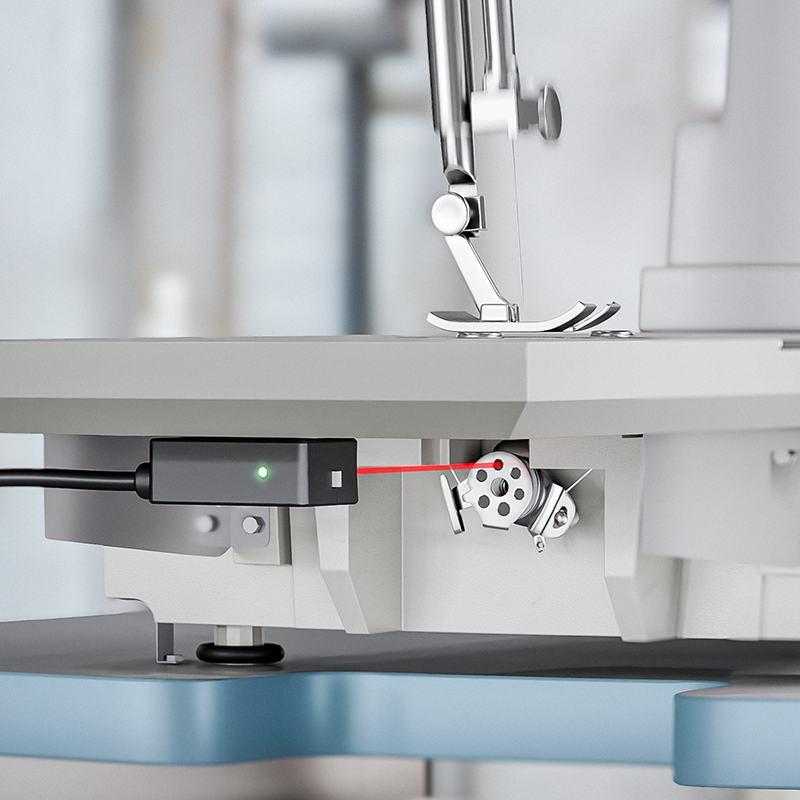
This is not an isolated phenomenon. I have heard many similar sounds in the workshops I have visited:
Replacing the shuttle core requires recalibration, and it takes half a day to adjust a workstation
If there is too much oil and dust accumulation, it will make noise. The workers are annoyed and simply unplug the wires
When the machine vibrates, the signal becomes unstable. It should not stop randomly
The position where the shuttle core stops is not fixed, and the test results are sometimes accurate and sometimes inaccurate
These feedbacks point to the same issue: it's not that the industry doesn't require bottom line testing, but that many products on the market haven't truly understood the actual working conditions of the sewing workshop.
LS2 Bottom Line Breakout Detector: Starting from the pain points in the workshop, make a product that can be installed and used immediately
Before launching the LS2 product, Atorm conducted extensive production line research. The conclusion is clear:Whether a bottom line detector can stand in the workshop depends not on how high the parameter is marked, but on whether it can withstand three things - dust and oil stains, equipment vibration, and frequent model changes.
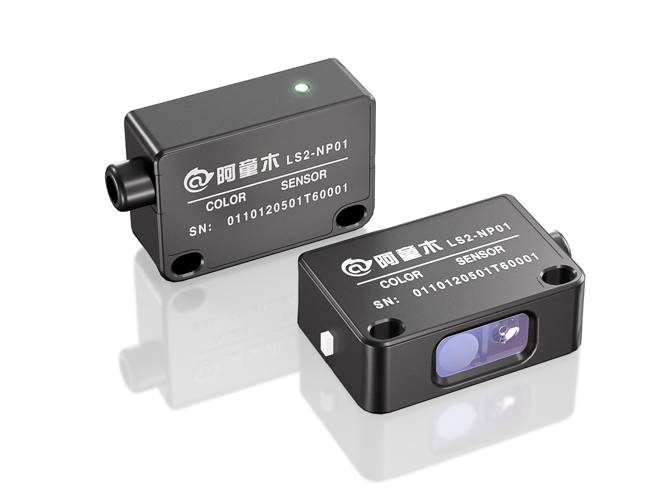
The solution for LS2 is three self-developed adaptive algorithms.
1. No debugging required, do not replace sensors when changing models
Built in distance adaptive algorithm eliminates tedious calibration steps. The installation distance allows for a certain tolerance, and different specifications of shuttle cores - conventional, non-standard, porous, alumina, colored coating - are automatically adapted. Replacing the fabric and shuttle core on the production line does not require recalibration on the sensor side. Anyone who has experience in management knows how much debugging time can be saved.
2. Oil stains, vibrations, and changes in lighting automatically cancel out interference
The impact of workshop environment on sensors is persistent: oil stains and cotton wool gradually obscure the probe, natural light intensity varies in the morning and evening, and equipment operation brings vibration to the table. These variables are stacked together, making it difficult for traditional detectors to maintain stability.
LS2 uses two sets of algorithms to solve this problem: adaptive dust masking algorithm, which compensates for signal attenuation caused by probe surface pollution; Light adaptive algorithm to deal with environmental light fluctuations and vibration interference. Even if there is a slight deviation of the aircraft position and the working conditions are dusty and oily, the detection is still stable, and the probability of false alarms and missed detections is greatly reduced.
3. High speed sewing at 3000rpm, keeping up in real-time
When the pattern machine and template machine are running at high speed, there should be no delay in the bottom line detection. LS2 is compatible with a sewing speed of 3000rpm, and stops immediately when the thread breaks. The hardware performance has been designed with redundancy, so even if the production line accelerates in the future, it will not become a bottleneck.
4. Compatible with multiple specifications of shuttle cores, reducing stocking costs
Most common types of shuttle cores on the market are compatible with LS2. There is no need to purchase different types of sensors for different models, as stocking and procurement costs are compressed from the source.
Applicable Scenarios
Clothing manufacturing: real-time monitoring of the bottom line of high-speed pattern machines, computerized flat sewing machines, and template machines
Leather bags and suitcases: prevention of empty seams in synchronous cars and leather sewing stations
Home textile fabric: high-speed batch sewing production line for curtains, sofa covers, etc
Automated sewing equipment renovation: retrofitting old models for immediate use
Conclusion
Many production losses are not caused by technology not being able to solve them, but by products not truly starting from the frontline pain points. LS2 uses three sets of adaptive algorithms to resolve common interferences in the workshop one by one. Not pursuing perfect data in the laboratory, only pursuing stability and reliability in your workshop.
Just put it on and start working, without causing any trouble, just solving problems.
You May Be Interested
-
Atorm has been awarded ISO three system certification, safeguarding quality and sustainable development with international standards
2026-10-12
-
Atonm MDSC-9000T Dual-Channel, Single-Sensor Metal Double-Sheet Detector
2025-12-05
-
Non-Contact “One-to-Four” Double-Sheet Detector 1600S: A New Cost-Reduction and Efficiency Solution for Stamping Lines
2025-11-20
-
Provincial Auto Industry Research Tour | Atonm Engages with the Automotive Supply Chain, Empowering Smart Manufacturing through Sensors
2025-10-11