



2022-05-19
Development and Current Status of Industrial Robot Pressing Production Lines
Stamping is one of the key forming methods for metal products, but press feeding and unloading operations can be hazardous and the production environment is often harsh. To meet industrial transformation needs, press lines must implement automatic feeding and unloading.
Industrial robots are widely used in light and heavy manufacturing in hazardous or harsh environments, or to replace humans for monotonous, repetitive tasks.
Automatic stamping production line workflow
There are several robot structures used for feeding and unloading. End effectors are mounted at the robot wrist to pick and place sheet material. A typical stamping feed workflow includes:
material separation → feeding robot → first press stamping → unloading robot pick-up → feed again → press stamping → repeat according to process steps → final press stamping → final robot pick-and-place → conveyor transport → manual or automatic stacking.

(Series stamping press line)
History of stamping robot development
Stamping is the main process for metal cookware production. Early press lines arranged presses by process and tonnage; feeding and unloading were entirely manual while workpiece transfer used conveyors. These presses had limited stroke counts and simple electrical control, with process parameters manually adjusted, resulting in low efficiency and poor safety.
Robots began to be used in stamping lines in the 1960s to address harsh working environments, repetitive tasks and safety concerns. Rising labor costs also drove automation. Initial solutions combined multiple drawing machines into a line and introduced simple mechanical devices for press feeding and part transfer, often using mechanical or pneumatic drives. Some early unloading devices, such as SAHLIN iron hands, lacked flexibility and did not improve part quality; these were gradually phased out.
From the 1970s, advances in modern control and pneumatic technology pushed feeding and unloading toward higher speed, automation and accuracy. Traditional robot press lines could not meet new requirements, so mature industrial robots quickly entered the stamping industry. It is estimated that feeding and unloading account for about 10% of robot applications and up to 40% in some fields. For example, German companies developed fast-swing bar conveyors for multi-station presses that are efficient and simple, mainly used for lower-tonnage stamping.
Since the 1990s, large multi-station presses have appeared. These automated lines often combine double-action drawing machines with multi-station presses, significantly improving stamping efficiency. With flipping mechanisms between machines, multiple pressings can be performed in sequence for continuous transfer. Although large multi-station presses represent the highest technical stage for stamping, they are not always suitable for industries like kitchenware.
How to detect single-sheet feeding for stamping robots?
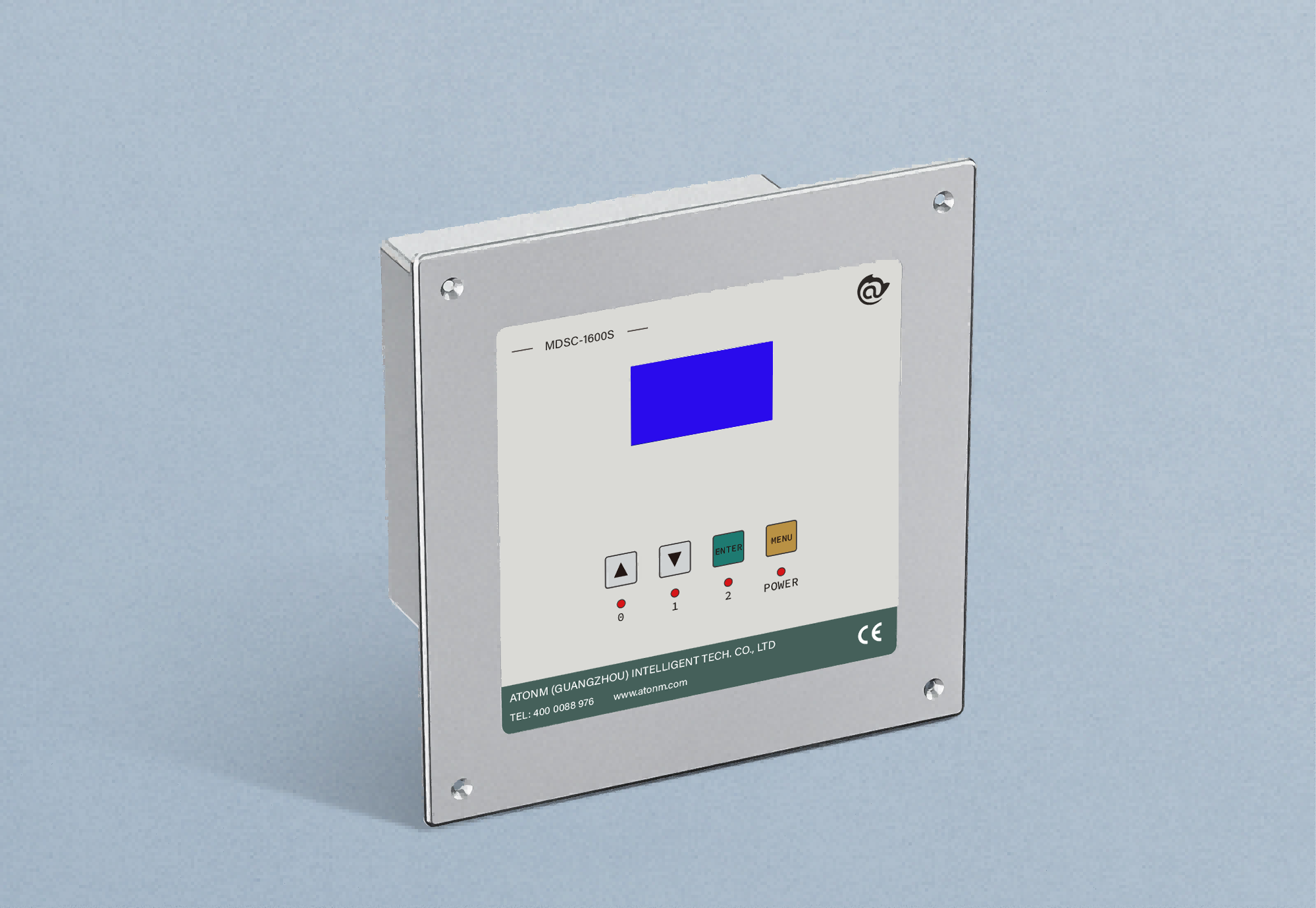
Atonm Metal Double-Sheet Detector is widely used on robotic automatic feeding equipment to deliver high-precision double-sheet detection and prevent defective stacked sheets entering the stamping process.

(Atonm double-sheet detection system principle)
You May Be Interested
-
Atorm has been awarded ISO three system certification, safeguarding quality and sustainable development with international standards
2026-10-12
-
Atonm MDSC-9000T Dual-Channel, Single-Sensor Metal Double-Sheet Detector
2025-12-05
-
Non-Contact “One-to-Four” Double-Sheet Detector 1600S: A New Cost-Reduction and Efficiency Solution for Stamping Lines
2025-11-20
-
Provincial Auto Industry Research Tour | Atonm Engages with the Automotive Supply Chain, Empowering Smart Manufacturing through Sensors
2025-10-11