



2026-08-06
Is the installation difficulty of the sewing machine bottom line probe high, and is it necessary to change the line?
Key points:
- The mainstream bottom line detector is installed externally and fixed next to the shuttle shell observation window, without the need to disassemble or change the circuit
- The detector with distance adaptive algorithm is installed without calibration, and different shuttle cores can be used directly
- Old sewing machines and pattern machines can be retrofitted, regardless of machine model
The workshop supervisor of a knitting factory, Lao Chen, recently received a task to install bottom line testing on 30 flat sewing machines in the workshop. At first, I was quite anxious, afraid that I would have to dismantle the machine and change the wiring, which might burn the motherboard. This is actually a common concern of many mechanics. todaySewing machine bottom line inspectionOn this topic, explain the installation process in a Q&A format.

Where is the bottom line probe installed? Do you want to dismantle the machine?
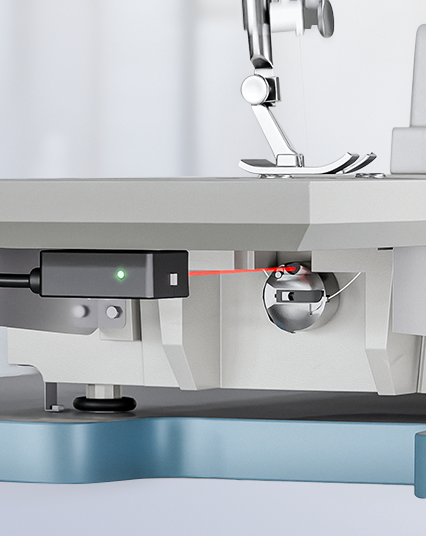
No need to dismantle. The mainstream nowBottom line probeAll of them are designed with external attachments, installed next to the observation window of the shuttle shell, with the probe aimed at the shuttle core, and real-time detection of whether the bottom line is broken through optical means.
The specific operation consists of three steps: the first step is to fix the probe bracket next to the shuttle shell (mostly with screws or buckles, without damaging the body); Step two, adjust the probe angle to align with the shuttle core; Step three, route the wires to the electrical control box. The entire process does not affect the internal structure of the machine and does not touch the original factory wiring.
There are various knitting equipment in Foshan, including flat sewing machines and pattern machines. The installation methods are basically the same - the only difference lies in the shape of the bracket and the routing path. The core logic is external attachment+alignment+wiring. Search onlineBottom line detector installation tutorialThe process is similar.
Do you want to change the route? Is the wiring complicated?
Mechanical maintenance is most concerned about this issue.Bottom line detection probeThe core of the wiring is two signal wires - one connected to the sewing machine shutdown signal input terminal and the other connected to the common terminal.
The key is whether the sewing machine you are using has a reserved stop signal interface. Most industrial sewing machines come with this interface for direct docking. If there is no reservation, you can receive itEmergency stop circuitWhen the detector is triggered, the emergency stop is cut off and the machine stops. This method does not modify the motherboard, only adds a trigger source to the shutdown circuit.
Atorm LS2 and similar beltsNPN/PNP dual outputofBottom line sensorAdapt to different signal formats of sewing machines, select the output mode according to the machine model when wiring, without the need for additional conversion modules.
Can old machines be installed? Is the flat seam car from ten years ago okay?
Can install. The bottom line detector does not depend on the sewing machine model, as long as the shuttle shell has an observation window and the machine has a shutdown control circuit. Ten years ago, the old flatbed sewing machine had the same mechanical structure and the position of the shuttle shell remained the same, still installed.
The only thing to note is the shutdown response speed. The electromagnetic clutch response of some old models is slightly slow, and the machine will still inertia a few needles after the detector sends a shutdown signal. This is a mechanical delay of the machine itself, not a problem with the detector. The newer servo direct drive models have much faster response times and can basically stop when disconnected.
Old Chen and his team have an old flat car that has been in use for eight years in their workshop. At first, the mechanic was worried about not being able to install it, but when they opened the shuttle cover, they saw that the window position was standard. Once the bracket was fixed, the wiring was done, which was no different from the installation process of a new machine.
Do I need to re debug the shuttle core?
Check if the detector is availableDistance adaptive algorithmIf possible, switch to different shuttle cores - porous, alumina, colored coated - all without calibration, and run directly after installing the shuttle core. If not, the sensitivity parameters need to be manually adjusted for each type of shuttle core. If the machine maintenance is too troublesome to adjust, the detector is equivalent to a blank installation.
After completing the installation in the workshop, Lao Chen and his team reported that it took a day and a half to repair all 30 machines one by one. "It's much simpler than expected, and the most time-consuming part is actually wiring and adjusting the probes, which is faster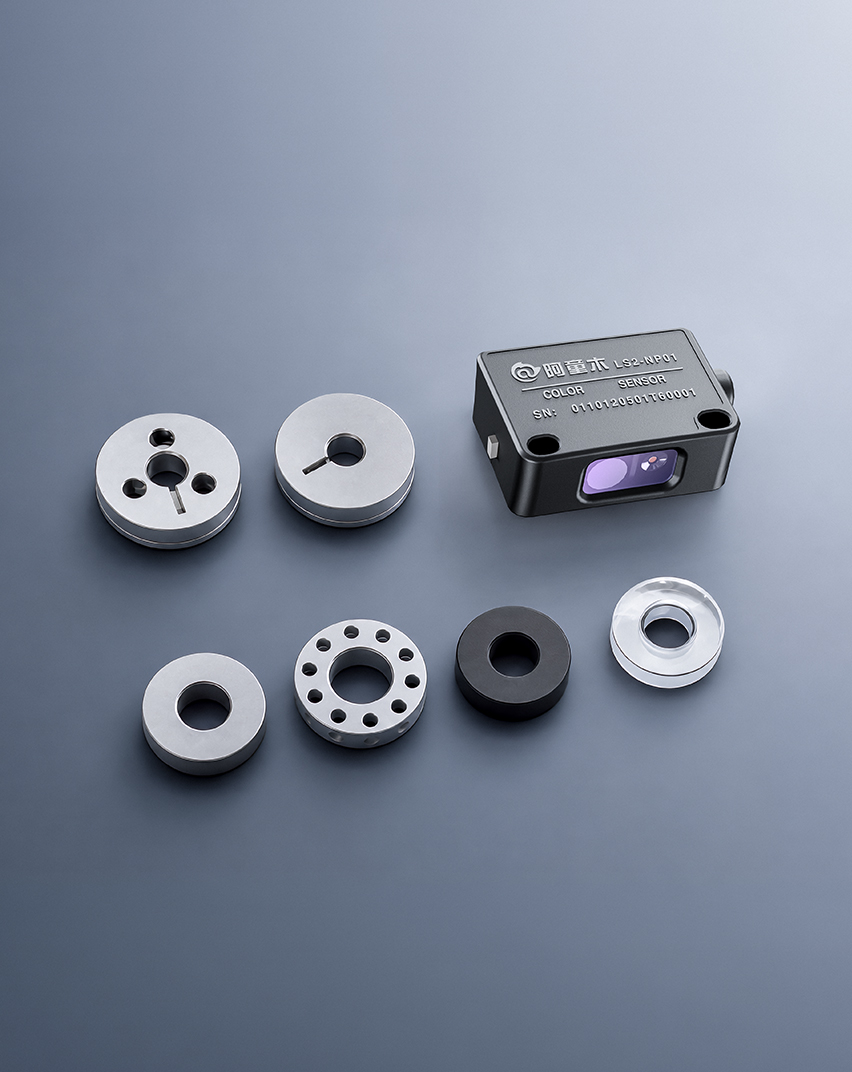
How to verify if the installation is correct after installation?
Run a three-step verification:
- Normal sewing, observe the detector indicator light - green light constantly on indicates normal detection
- Manually disconnect the bottom line and check if the machine stops within 1 second
- Change the specifications of the shuttle core and run again to confirm that the parameters can be tested normally without adjustment
Passing all three steps is considered complete. What if the machine doesn't stop in the second step - if the bottom line is broken, the sewing machine won't stop? First, check if the signal line is connected to the shutdown port, and then check if the output mode (NPN or PNP) matches the machine. These are the basic troubleshooting points. Wrong signal line connection is the most common installation error, accounting for over 70% of after-sales problems.
Summary
sewing machineBottom line disconnection shutdown deviceThe installation is not as complicated as imagined. External fixed, two signal lines connected to the shutdown port, and equipped with adaptive algorithms, ready to use after installation - without dismantling, changing the circuit, or picking up the machine. More and more factories in Foshan are mass installing, with short installation cycles and low debugging costsBottom line self stop deviceThe reason for the rapid popularization in the past two years. When selecting, the focus should be on calibration free, speed coverage, and oil resistance, while the installation process is not the bottleneck.
You May Be Interested
-
Atorm has been awarded ISO three system certification, safeguarding quality and sustainable development with international standards
2026-10-12
-
Atonm MDSC-9000T Dual-Channel, Single-Sensor Metal Double-Sheet Detector
2025-12-05
-
Non-Contact “One-to-Four” Double-Sheet Detector 1600S: A New Cost-Reduction and Efficiency Solution for Stamping Lines
2025-11-20
-
Provincial Auto Industry Research Tour | Atonm Engages with the Automotive Supply Chain, Empowering Smart Manufacturing through Sensors
2025-10-11