

2026-06-30
Why has the acceleration of lithium battery lamination process become a new bottleneck for feeding inspection?
Key points:
Stacking technology is replacing winding as the mainstream assembly method for square and soft pack batteries. A high-speed production line of 0.2 seconds per piece has been achieved, which is 50% -70% faster than three years ago
The "double sheet" problem in the feeding process is a hidden quality bottleneck - the thickness of the positive electrode after coating is 100-200 μ m, and the separator is only 7-25 μ m. Static electricity or oil film can cause double sheets to mix in
The core requirements for high-speed laminating detection systems are: sensor response * *<10ms * *, signal processing window within 50ms, and communication delay * * ≤ 10ms**
Electromagnetic induction and ultrasonic are currently the two mainstream technology routes, suitable for polar and diaphragm detection scenarios respectively
Stacking technology is replacing winding and becoming the mainstream assembly method for square and soft pack batteries. The reason is not complicated: the space utilization rate of the laminated structure is higher, the energy density can be further increased, and the consistency of the pole ear welding is better.
But the laminating process has an "invisible cost" that winding does not have - quality control in the feeding process.
Winding is continuous feeding, and with tension control in place, materials generally do not stack together. Stacking is done one by one: positive electrode, separator, negative electrode, separator, positive electrode... each piece needs to be taken and placed separately. The faster the stacking speed, the narrower the time window left for detection between each piece.
This is where the problem lies.
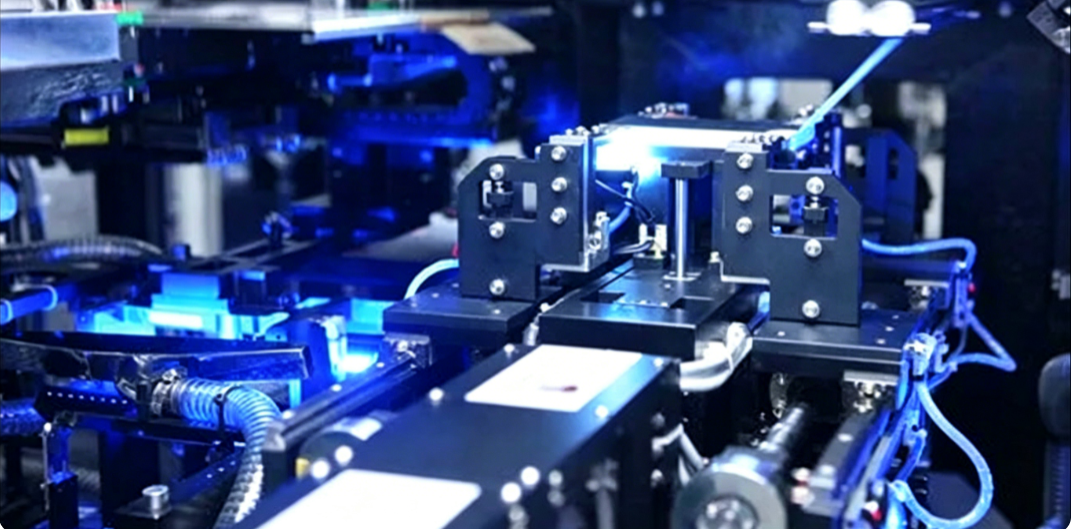
The "double sheet" problem in the feeding process
The so-called 'double sheet' means that one piece should have been taken, but two pieces were stacked together and sent in.
It may sound like a low-level error, but its occurrence rate is not low on high-speed production lines. The electrode and separator are both very thin (the thickness of the positive electrode after coating is usually 100-200 μ m, and the separator is even thinner, only 7-25 μ m), and the surface energy is high and easy to adsorb. Static electricity, oil film, temperature and humidity changes, any one of these factors can cause two pieces of material to stick together.
When picking up the material with a suction nozzle, there is almost no difference to the naked eye whether it is one or two.
What will happen after mixing two sheets?
Stacking process: Two positive electrode sheets are stacked together without a separator in between. After the subsequent liquid injection and formation, this position becomes an internal short circuit point.
Extreme ear welding: Two layers of extreme ears are stacked together for welding, and the laser energy is dispersed. The first layer may have been welded through, and the second layer may not have formed an effective connection, resulting in virtual welding. The contact resistance of virtual solder joints may be several times or even tens of times higher than that of normal solder joints.
Bar welding: If copper or aluminum bars are mixed with double sheets before welding, the same problems will occur - welding energy dispersion, poor fusion interface, and high contact resistance.
These defects are difficult to detect through visual inspection after welding and stacking. But the hidden danger has already been buried inside.
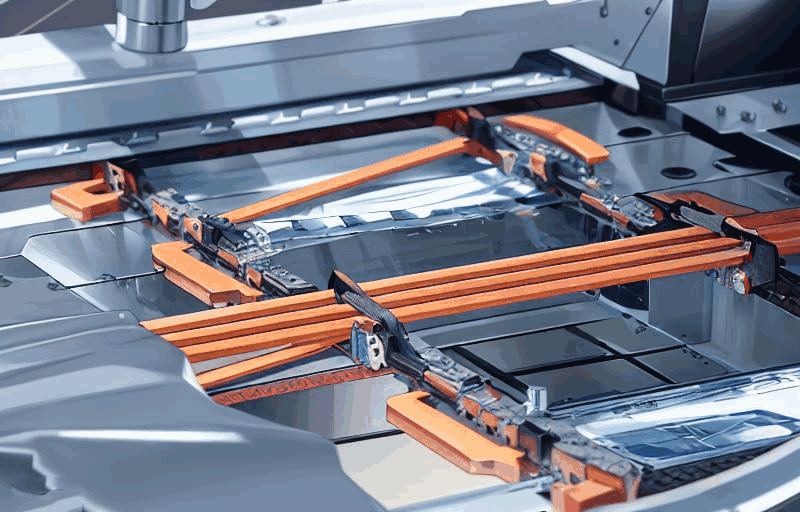
The faster the speed, the harder it is to detect
Three years ago, the mainstream laminating machine had a tempo of 0.5-0.6 seconds per piece. The detection system has sufficient time to make judgments - sensor detection, signal processing, output signals, PLC response, the entire chain takes 0.1-0.2 seconds to complete.
Now then? The head laminating machine has achieved a speed of 0.2-0.3 seconds per piece and is still moving towards a speed of 0.15 seconds per piece.
The time window left for detection has been compressed from 200ms to 50ms or even shorter. This is not just a matter of 'being faster', but the response logic of the entire detection chain needs to be redesigned.
The sensor response speed should be fast enough. The response time of electromagnetic induction detectors usually needs to be controlled within 10ms, while the response time of ultrasonic schemes is slightly longer but in the range of 30-50ms. If the response of the sensor itself is slow, there will be no time for subsequent signal processing and PLC actions.
Signal processing needs to keep up. The time for the sheet material to pass through the sensor may only be a few tens of milliseconds, and the signal acquisition window is extremely short. If the sampling frequency is not sufficient and the filtering algorithm cannot keep up, it is possible to filter out the dual signal as noise or misjudge the normal signal as dual.
Communication delay should be minimized. After the sensor detects double sheets, the signal needs to be transmitted to the PLC, which then controls the laminating machine to stop. If using traditional IO signals, the transmission delay may be 5-10ms; if using RS485/Modbus communication, one communication cycle may be 20-50ms - on a 0.2 second/chip production line, this delay may mean that an extra chip has already been stacked in.
So the requirements for the detection system in high-speed laminating production lines are: fast sensor response, fast signal processing, and low communication delay. All three must be fast, and missing one is not enough.
Mainstream detection technology route
There are currently two main technical routes in the industry for dual sheet inspection in the feeding process of lithium battery laminates:
Electromagnetic induction type. Use the change in inductance caused by the metal sheet passing through the detection area to determine whether it is a single or double sheet. High sensitivity to metal materials (copper foil, aluminum foil, polarizer), fast response speed (up to 10ms), suitable for high-speed production lines. However, the detection capability for non-metallic membranes is limited.
Ultrasonic type. Use the attenuation difference when ultrasonic waves penetrate materials to determine. Can detect both metals and non metals, unaffected by material color and surface condition. However, the response speed is relatively slow (30-50ms), and the signal difference is small on ultra-thin materials (<10 μ m membranes), making resolution a challenge.
Both schemes have applicable scenarios. Polar plates (metal substrates) are usually made using electromagnetic induction, while membranes are usually made using ultrasonic waves. There are also some schemes that combine the two.
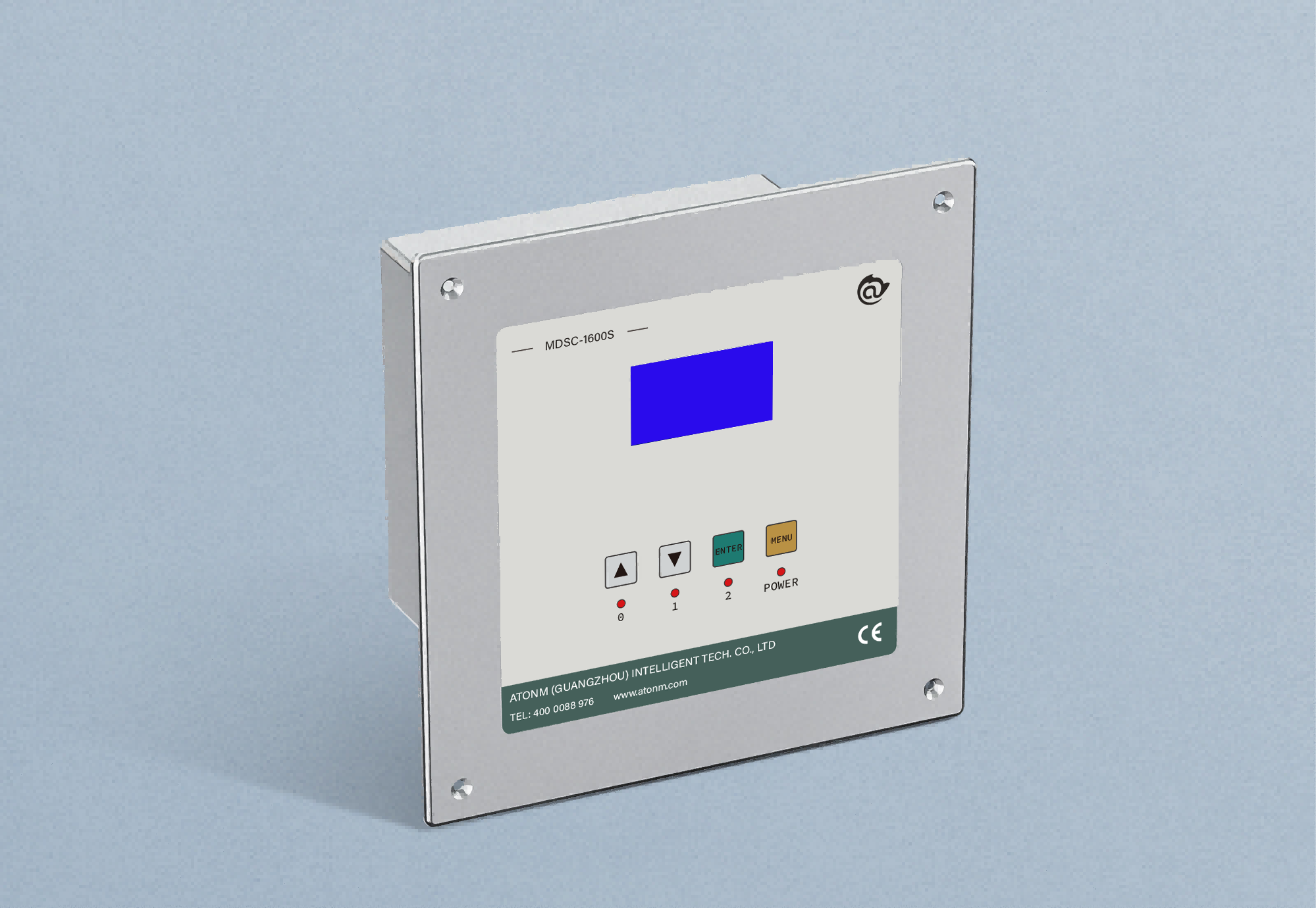
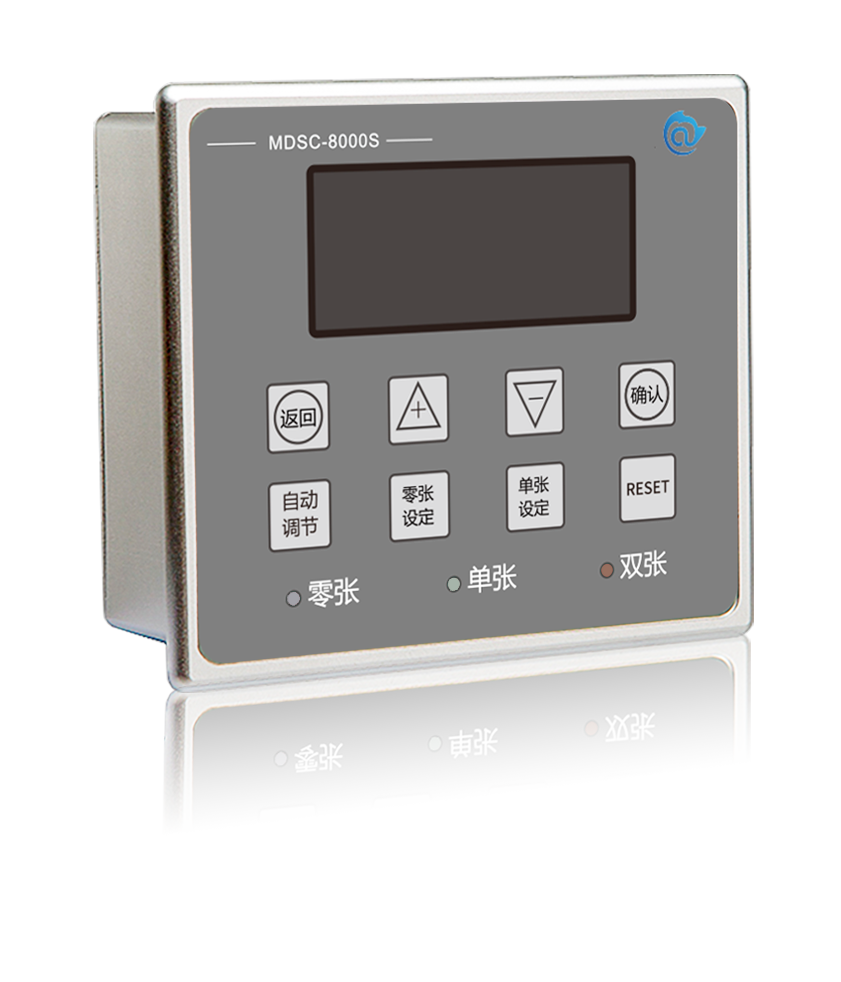
Taking electromagnetic induction as an example, there are currently specialized models available on the market for lithium battery scenarios. For example, Atorm's MDSC-1000L is a lithium battery specific version that has been optimized for electrode detection parameters; MDSC-2100L is a single probe solution suitable for workstations with limited space; The MDSC-8500S uses M18 small probes specifically designed for detecting thin and small pieces of material.
Core parameters to consider when selecting: whether the detection speed matches the production line rhythm, whether the probe size is compatible with the sheet material specifications, the detection sensitivity of the target material, and the communication method with the PLC system.
Several experiences in industry practice
Double sheet inspection before welding is already standard. Almost all legitimate lithium battery factories have deployed dual sheet testing before welding the electrode ears. This is already an industry consensus, there is no need to discuss the issue of whether or not to do it.
The pre welding inspection of the bar plate is being supplemented. Compared to Jie'er, Ba Pian is smaller and thinner (made of copper/aluminum material, 0.3-2mm), making detection more difficult. Many production lines do not have a systematic double sheet inspection scheme before welding. But as the new national standard upgrades the requirement for thermal runaway from "5-minute warning" to "no fire, no explosion", the error prevention requirements on the manufacturing side will only become higher and higher.
The detection data should be traceable. The head battery factory is no longer satisfied with just "detecting it is enough". The detection data needs to be connected to the MES system, which can trace back to which specific piece, time point, and equipment had problems. This puts forward requirements for the communication capability and data format of the detection system.
The efficiency of changeover is crucial. The same production line may produce different types of battery cells at different times, with varying electrode materials, thicknesses, and sizes. The detection system needs to be able to quickly switch parameters, rather than spending half an hour recalibrating every time the model is changed.
In conclusion
The acceleration of the lamination process is essentially an inevitable choice for the lithium battery industry to pursue higher energy density and lower manufacturing costs. But the speed increase not only brings upgrades to the mechanical structure and control system, but also re examines the quality control of the feeding process.
The logical shift from "detecting defects" to "preventing defects from occurring" may be a direction worth paying attention to in the next iteration of the laminating process.
You May Be Interested
-
Atorm has been awarded ISO three system certification, safeguarding quality and sustainable development with international standards
2026-10-12
-
Atonm MDSC-9000T Dual-Channel, Single-Sensor Metal Double-Sheet Detector
2025-12-05
-
Non-Contact “One-to-Four” Double-Sheet Detector 1600S: A New Cost-Reduction and Efficiency Solution for Stamping Lines
2025-11-20
-
Provincial Auto Industry Research Tour | Atonm Engages with the Automotive Supply Chain, Empowering Smart Manufacturing through Sensors
2025-10-11