



2026-03-25
Avoiding pitfalls in the renovation of automobile stamping lines: purchasing based solely on price, and ultimately paying for downtime
Recently, I went to several automobile manufacturers to research stamping workshops and talked with procurement directors. I found that everyone has a common dilemma: the more advanced the automated production line is, the more frequent the shutdown accidents caused by "stacking" and "double tension". Once the mold is damaged, not only is the repair cost expensive, but the delayed delivery time is also a headache. Many times people attribute the reason to "workers not checking well" or "equipment aging", but the root cause is often hidden in the initial equipment procurement process.
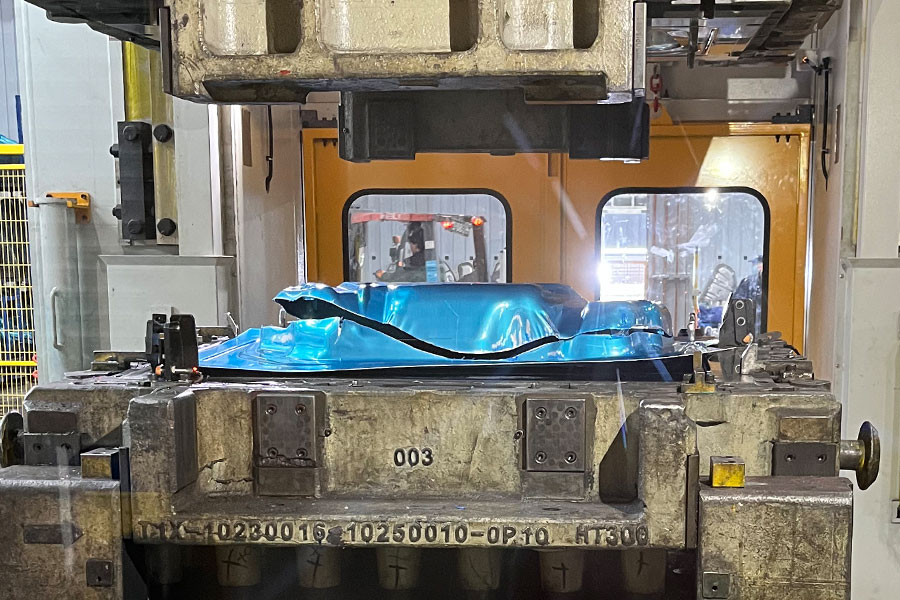
The tighter the budget, the longer the 'hidden bills' in the later stage
At the bidding conference for automotive stamping parts, many purchasing partners tend to focus on the initial procurement cost. For various sensors and detectors, I subconsciously think that 'as long as they can alarm, it's enough'. After all, a set of stamping molds can easily cost hundreds of thousands or even millions, and the proportion of testing equipment in the entire project budget is extremely small, so it can be saved as much as possible.
But the real situation on site is often cruel:
In order to save thousands of yuan, I chose the basic sensor. However, when encountering aluminum or galvanized sheets with oil stains, the false alarm rate skyrocketed, and the production line could stop more than ten times a day.
The production line changes types extremely frequently, and for each type of board, workers have to manually adjust the thickness and tolerance, which takes half an hour. Once the operator forgets to adjust, it directly leads to damage to the wire stamping die.
After tracing the incident, the specific thickness data that was just detected cannot be found in the system, so we can only rely on guessing and have no clue about the quality analysis.
We have calculated that if a large stamping line is shut down for one hour, the loss will start at least in five figures; If the mold is damaged, the repair cycle plus spare parts cost is even more astonishing. This later 'invisible bill' has long exceeded the equipment price difference saved in the beginning.
Three 'hard thresholds' that determine the stability of the production line
In the high-intensity environment of automated stamping, the logic of choosing a dual sheet detection system is completely different from buying ordinary sensors. It's not just adding icing on the cake, it's the 'last line of insurance' for the entire mold. After years of industry experience accumulation, we recommend that procurement directly consider these three core technical points when evaluating solutions:
Hard threshold one: Can it adapt to "extreme materials"?
Nowadays, lightweighting is the trend, and more and more aluminum alloys and high-strength steels are being used. A regular dual detector can measure ordinary carbon steel without any problem. However, when encountering aluminum plates with high conductivity or materials coated with oil or extremely thin (such as 0.5mm or less), the signal will wander randomly. A truly mature system must have multimodal detection algorithms that can stably output alarm signals regardless of material changes, even for silicon steel sheets.
Hard threshold 2: Can we keep up with the pace of the "bus era"?
In the past, all that was needed was to provide a high-level switch signal. But now the stamping lines are all controlled by PLC centralized control. If the sensor cannot be directly connected to mainstream industrial networks such as Profinet and EtherCAT, it means it is a 'data island'. It can only tell you that there is a problem, but cannot transmit real-time thickness values and alarm records to the upper computer. Unable to trace data is unacceptable in modern quality systems.
Hard threshold three: Can changeover debugging be "de manual"?
Do we have to have workers carry samples to recalibrate three sets of molds a day? An excellent detection system should be able to store the parameters of different boards, such as thickness and material compensation, in the equipment. The PLC issues a formula number, and the detector automatically switches parameters, which minimizes the probability of human error.
Verified solutions by numerous car companies:Atorm MDSC-9000T dual channel metal dual material detector
That's also why many new energy vehicle companies and top stamping factories, after suffering several losses, ultimately locked in the dual detection standard on the Atorm metal dual detector MDSC-9000T. This is not some mysterious black technology, but an industrial grade dual material testing product polished from the pain points on site.
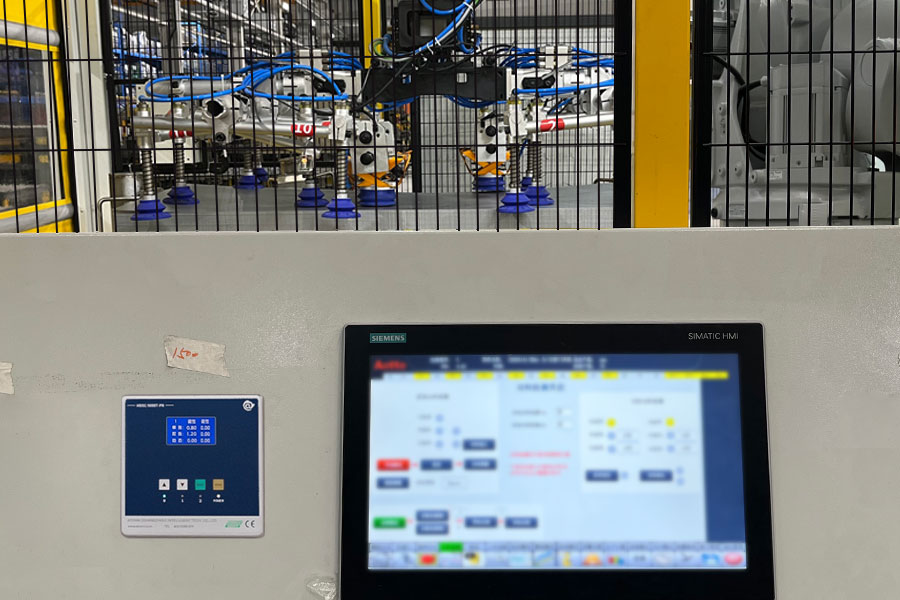
For procurement and engineering managers,9000TThe value is very straightforward:
Completely bid farewell to material anxiety: adopting eddy current technology and dual channel design, designed for metal materials, one host can accommodate low-carbon steel, stainless steel, aluminum plate, and even copper plate. No matter how the engineering department changes the material white paper, this equipment can be tested without repeated investment.
Seamless integration into the automation brain: Built in with mainstream industrial communication protocols, whether it's Siemens Profinet, EtherCat, 485, direct communication with just one Ethernet cable. The thickness curve and alarm logs can all be uploaded to the large screen, and the quality traceability is traceable.
Foolish formula management: supports storing 999 sets of product parameters. When changing materials on the production line, the PLC directly retrieves the corresponding formula without any manual intervention, greatly improving the efficiency of mold changing and eliminating the risk of mold collision caused by incorrect parameter adjustment.
Intuitive visual interface: The screen displays the current thickness and setting range intuitively, making it easy for on-site operators to understand at a glance, reducing training costs.
The stamping workshop cannot afford any mistakes, and the selection needs to be based on actual working conditions
Many parameters on the bidding documents may seem similar, but in stamping sites with oil stains, high vibrations, and alternating complex materials, the performance may vary greatly. The hidden cost of selecting the wrong equipment ultimately lies in the efficiency and profit of the workshop.
If you are planning a new stamping line or are troubled by the frequent false alarms of the current double sheet, please feel free to contact us. Atorm's technical team can help you conduct a free selection evaluation to avoid small issues such as "sensor alarms" that may affect the delivery of the entire project in the later stage.
Appointment for Senior Technical Engineer to Conduct On site Survey and Evaluation → 133-4281-4291
You May Be Interested
-
Atonm MDSC-9000T Dual-Channel, Single-Sensor Metal Double-Sheet Detector
2025-12-05
-
Non-Contact “One-to-Four” Double-Sheet Detector 1600S: A New Cost-Reduction and Efficiency Solution for Stamping Lines
2025-11-20
-
Mold damage, production delays? Atonm MDSC-8200T metal double-sheet detector protects automotive stamping lines
2025-10-30
-
Provincial Auto Industry Research Tour | Atonm Engages with the Automotive Supply Chain, Empowering Smart Manufacturing through Sensors
2025-10-11