



2026-03-05
Why are engineers increasingly favoring the 9000T contact-type single-probe detector on automotive stamping lines?
In automotive stamping shops, the last thing engineers want to hear is:“The mold is damaged again due to double-sheet feeding.”
For automated production lines, this not only means hundreds of thousands in mold repair costs, but also a catastrophic production shutdown that can last hours or even days.Traditional through-beam sensors are mature, but they often struggle in applications such as automotive body panels where installation space is limited and sheets are handled by robots.That is why more and more OEMs and Tier 1 suppliers are switching to the 9000T contact-type single-probe metal double-sheet detector.
Today, we skip empty parameters and focus purely on solving real engineering problems to explain exactly why it performs better.

1. Single-Probe Design: Greater Flexibility for Robot Sheet Handling
In automated automotive stamping lines, robot end-effectors handle sheet metal at high speeds.
Traditional double-sided sensors require mounting brackets on both the top and bottom of the sheet. At the high-speed moving end of a robot, this not only increases payload weight but also restricts motion paths and risks interference with molds or other tooling.
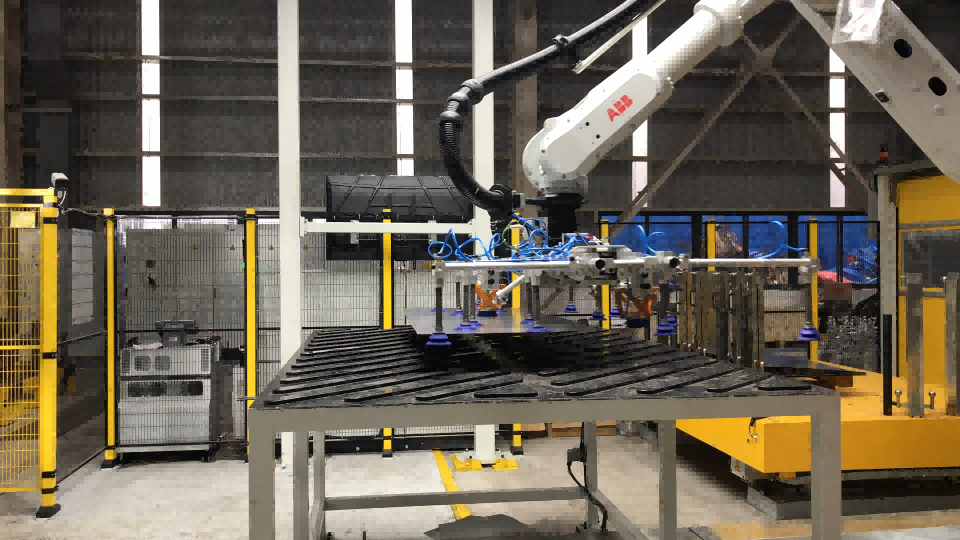
The 9000T series features a single-probe design perfectly suited for robot sheet handling.It only needs to contact one side of the sheet, with no receiver required on the opposite side.
This allows the sensor to be easily integrated into the end-effector like a vacuum cup.
No matter how the robot rotates or moves, the probe stays in contact with the sheet for real-time detection, completely eliminating space interference caused by double-sided installation.
2. Contact Thickness Measurement: Absolute Accuracy Through Physical Contact
Why emphasize “contact”?
In electromagnetic induction, the distance (air gap) between the sensor and the target is the biggest variable affecting accuracy.
Even 1 mm of sheet vibration during transfer can create signal fluctuations equivalent to a change in sheet thickness, leading to false triggers in non-contact sensors.
The 9000T takes a practical approach:
If vibration is unavoidable, keep the probe constantly in contact with the sheet.
Its key advantage is that it directly measures the absolute thickness of the sheet.
This makes it more than just a double-sheet prevention device — it also serves as an online quality monitoring tool that accurately distinguishes between:
•Two overlapping sheets (Double Sheet)
•A single sheet that is out of thickness tolerance
Q: Will the contact probe scratch automotive outer panels?
A: This is one of the top concerns for engineers.
The contact surface of the 9000T probe uses a special wear-resistant, low-friction material, and contact pressure is precisely calibrated.
Verification in the “four main processes” at several German and Japanese joint-venture automakers has confirmed no scratching on Class A surfaces (outer body panels).
3. Field Performance: Superior Anti-Interference
Automotive stamping operations involve the extensive use of drawing oils and cleaning fluids, which represent a critical limitation for photoelectric sensors. The reflective nature of oil films can mislead photoelectric switches, and the thickness of these oil films is inherently inconsistent due to the fluidity of the liquids.
We have compared a set of on-site test data:
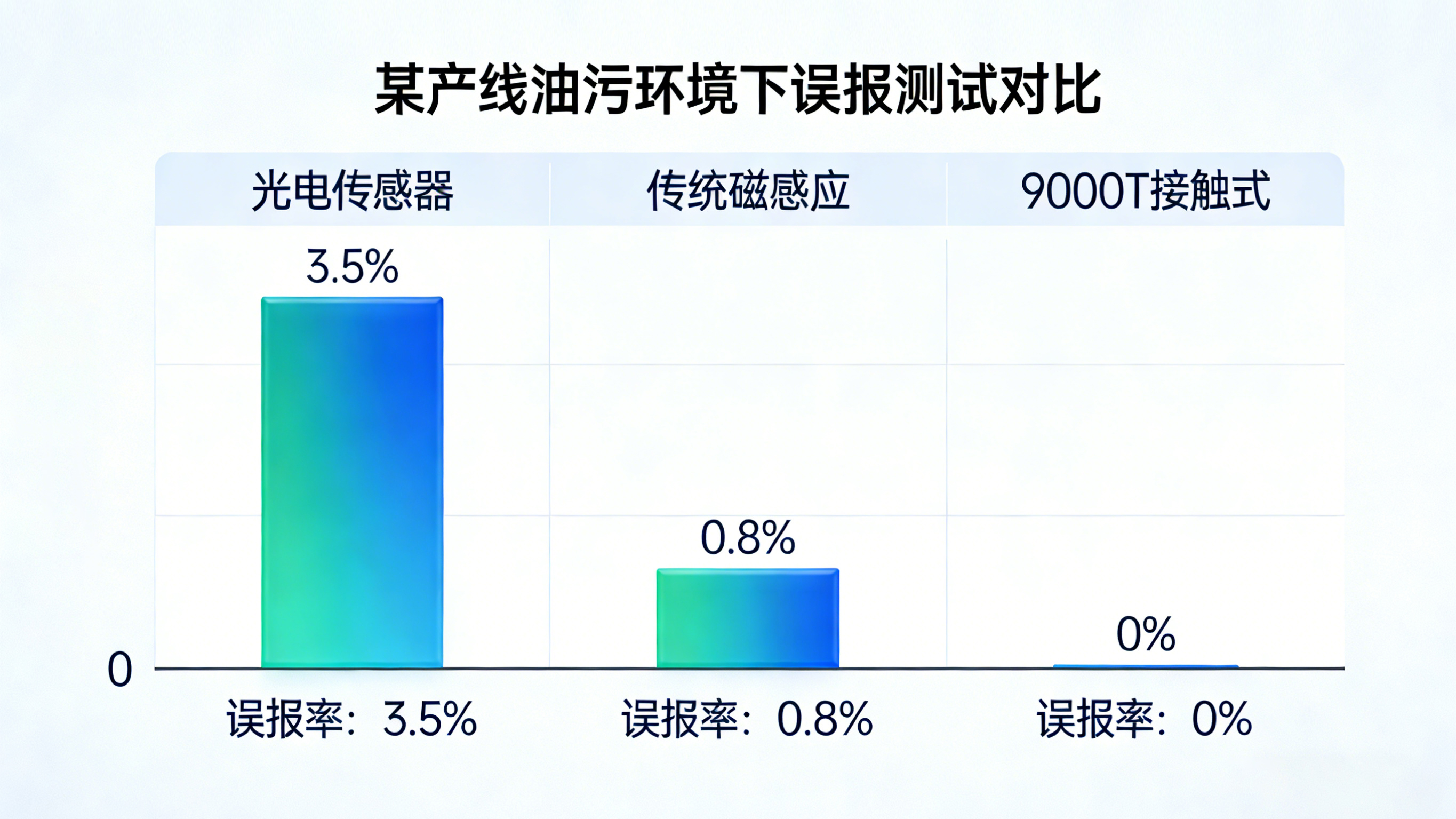
Thanks to its contact-based operating principle, the probe directly penetrates the oil layer to make contact with the metal surface, physically eliminating the influence of oil contamination. The 9000T maintains stable detection performance for carbon steel (SPCC), galvanized steel (SGCC), and aluminum alloy sheets, which are commonly used in new energy vehicles today.
4. Selection Advice for Engineers
We recommend the 9000T contact single-probe solution if your line meets any of these conditions:
1.Single-side installation: Access limited to only one side of the sheet.
2.Robot loading: Sensors must follow the robot, with strict weight and size constraints.
3.High vibration: Severe sheet movement makes non-contact detection unreliable.
4.High precision requirements: Must detect double sheets AND reject out-of-tolerance single sheets.
Need Technical Specifications?
If you are planning sensors for a new line or struggling with “impossible installation” in retrofits,
contact us for detailed 9000T installation drawings (Step/CAD) and electrical parameters.
Contact us (133‑4281‑4291) to get the 9000T series selection guide.
We can provide samples for on-site testing with support from the Atonm technical team.
You May Be Interested
-
Atorm has been awarded ISO three system certification, safeguarding quality and sustainable development with international standards
2026-10-12
-
Atonm MDSC-9000T Dual-Channel, Single-Sensor Metal Double-Sheet Detector
2025-12-05
-
Non-Contact “One-to-Four” Double-Sheet Detector 1600S: A New Cost-Reduction and Efficiency Solution for Stamping Lines
2025-11-20
-
Provincial Auto Industry Research Tour | Atonm Engages with the Automotive Supply Chain, Empowering Smart Manufacturing through Sensors
2025-10-11