

Project Services
Solution Design
Application Validation Support
Parameter Optimization Guidance
Commissioning Support
By clicking on the button “I accept” or by further usage of this website you express consent with usage of cookies as well as you grant us the permission to collect and process personal data about your activity on this website. Such information are used to determine personalised content and display of the relevant advertisement on social networks and other websites. More information about personal data processing can be found on this link Cookie Policy.
Agree


Single Sensor
Double Sensor
Image Sensor
2026-08-25
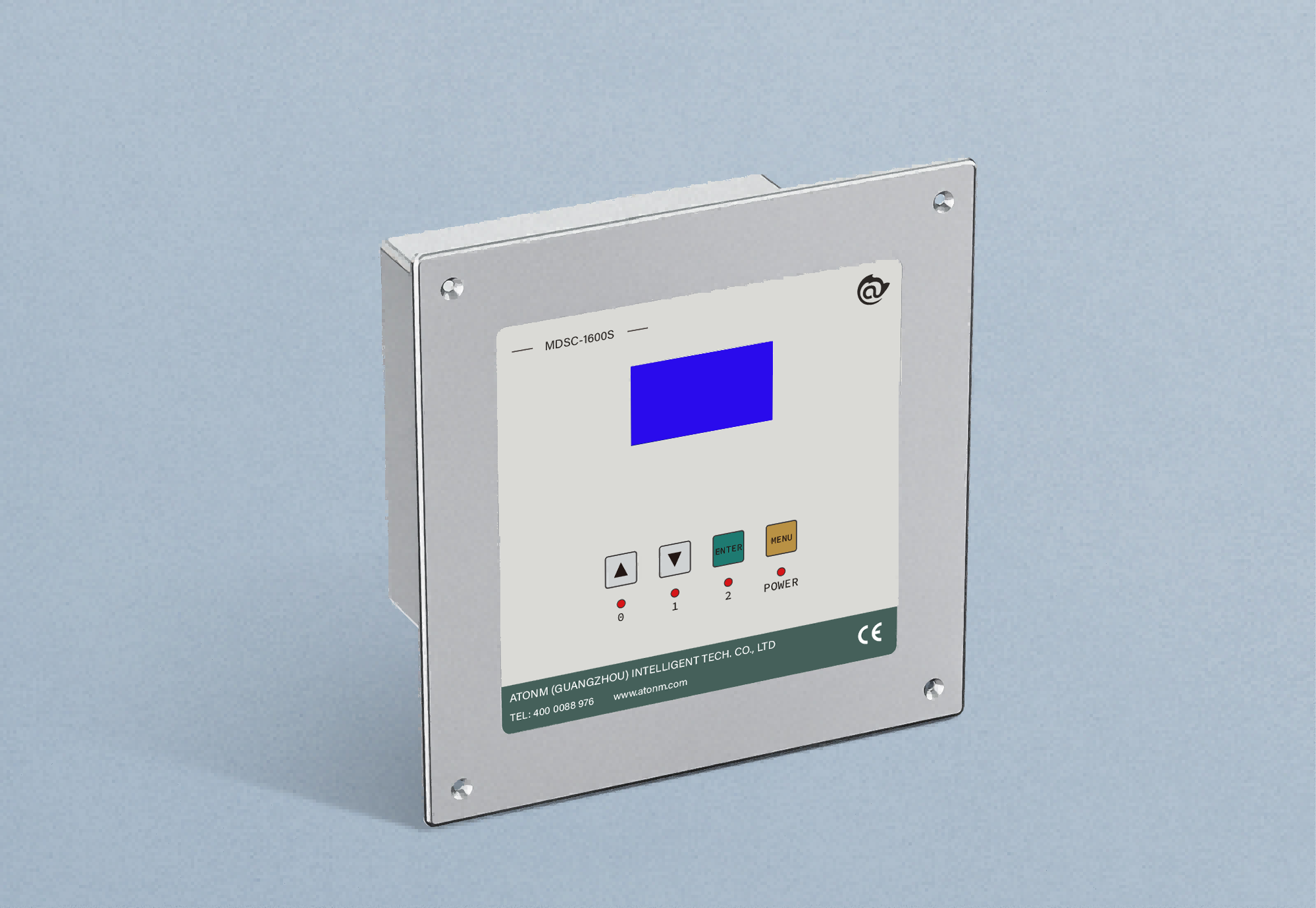
A certain automotive parts factory relies on manual inspection for the welding production line of iron stamping parts, which occasionally leads to stacking problems. On average, there are 8 defective stacking products per month, resulting in rework and equipment loss. The annual comprehensive loss is 180000 to 250000 yuan. After deploying the AtonmMDSC-1000B dual detector, the stacking issue was resolved and the daily rework time was reset to zero.
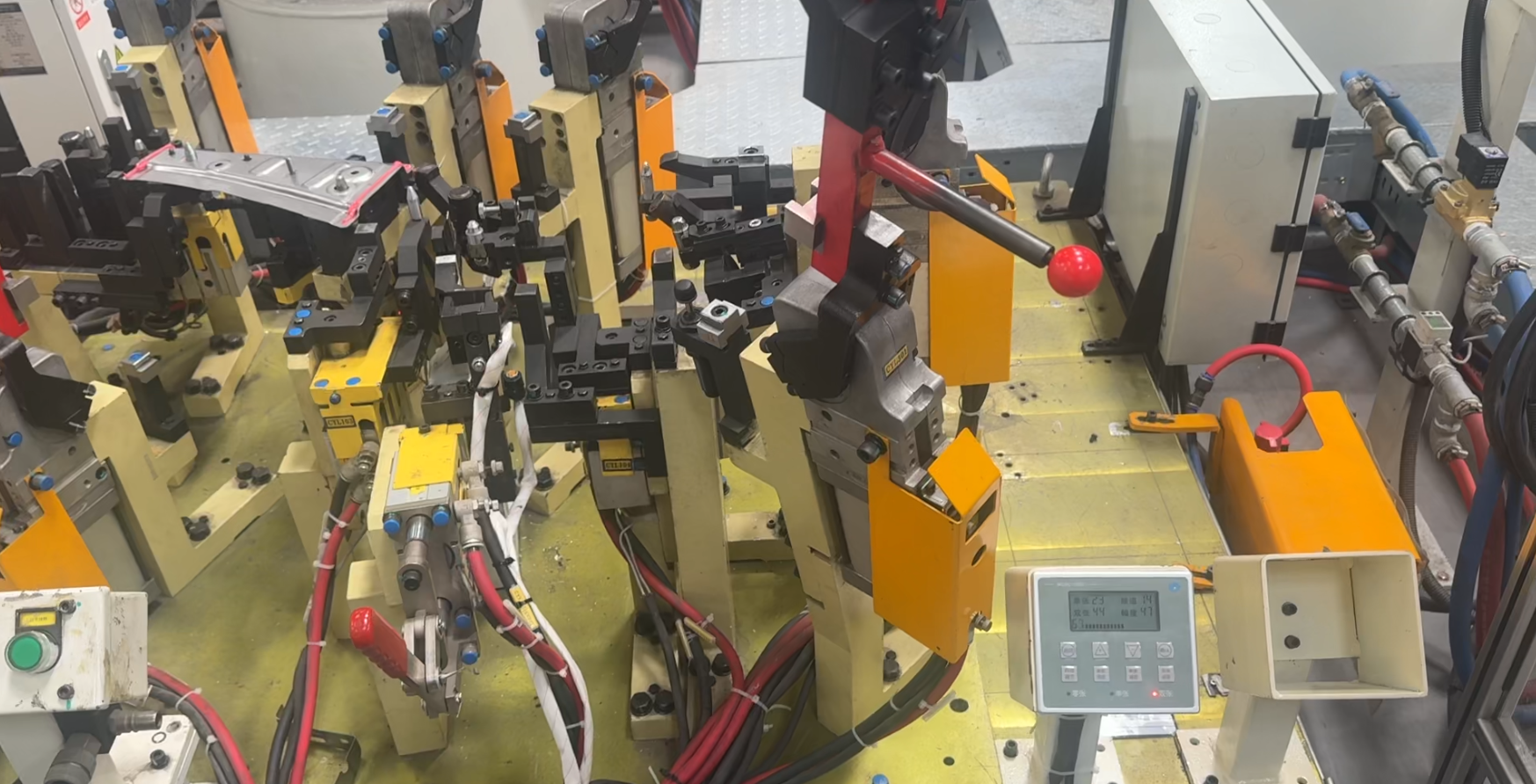
The customer specializes in stamping and welding iron parts for automotive chassis and body structures. The production line has an average daily capacity of 200 pieces and adopts a manual feeding+robot welding mode. The material thickness is 1.0-3.0mm.
Affected by the adsorption of stamping oil film and electrostatic adhesion, iron materials often have double or triple layered materials, which cannot be accurately identified by manual material extraction. The stacked materials are directly welded on the machine, causing quality problems such as insufficient weld penetration, welding spatter, and substandard workpiece strength. The interception rate of the manual visual inspection+flanging inspection mode is only 70%, and the problem of missed detection is more serious during the dry and static electricity prone period in winter.
If the batch of stacked workpieces cracks during the customer's road test weld after leaving the factory, the factory will bear the responsibility of rework and line stoppage fines, which will cause serious losses.
1. Materials are prone to adhesion: residual stamping oil combined with static electricity results in tight adhesion of thin iron materials, which cannot be effectively separated and identified manually;
2. Inefficient manual testing: Repetitive tasks can lead to fatigue, with a surge in missed detections in the second half of the shift and a lack of standardized testing data;
3. Defect chain loss: Stacking causes abnormal welding current, accelerates electrode cap burning, fixture positioning deviation, and causes batch quality fluctuations;
4. Extremely high hidden costs: multiple losses of scrap, rework, equipment consumables, and maintenance hours, resulting in continuous loss of profits;
5. Insufficient system compliance: Manual testing without data traceability cannot meet the IATF 16949 audit error prevention record requirements.
3.1 Core advantages of equipment selection
After comparing schemes such as manual visual inspection and magnetic separator, Atorm was ultimately chosenMDSC-1000B dual detectorAdapt to complex working conditions in welding workshops:
-Accurate and stable: not affected by oil stains, oxide films, or static electricity;
-Working condition adaptation: 0.2-4.5mm large range, fully covering production line 1.0-3.0mm iron material specifications;
-Strong anti-interference: all metal shell+dedicated anti-interference circuit, shielding electromagnetic interference in welding workshop;
-Efficient adaptation: 1200pcs/min ultra-high response, millisecond level detection, does not occupy production pace;
-Traceability: NPN/PNP dual signal output, can be connected to PLC to meet audit requirements.
3.2 Minimalist Installation Plan
Adopting a dual probe layout of tooling and welding table, without the need to modify the original production line structure:
-The host is compact (132 × 116 × 48mm) and embedded in the control cabinet for installation;
-Take the conventional DC24V power supply from the workshop and deploy it quickly;
-Intelligent linkage: Upon detecting double tension, the fixture is immediately locked, and a buzzing alarm is sounded to prevent abnormal workpieces from being installed on the machine.
3.3 Standardized testing process
Manual loading and positioning → Equipment magnetic induction automatic detection → Single material automatic locking welding → Stacking alarm locking, manual reset and retrieval, fully automated error prevention, zero manual intervention detection.
one Quality zeroing: The monthly average of 8 stacking defects has been reduced to 0, and defects such as virtual welding and insufficient melting depth have been completely eliminated;
2. Cost reduction and efficiency improvement: The electrode cap replacement cycle has been extended by three times, and the daily rework time of 1.5 hours has been completely reduced to zero;
3. Compliance closed-loop: The detection data is retained throughout the process to meet the traceability audit requirements of the IATF 16949 system;
4. Non destructive rhythm: millisecond level detection response, suitable for all day production capacity, without affecting the original production efficiency.
Q1: Will there be false detection due to high electromagnetic interference in the welding workshop?
A: Exclusive anti-interference circuit+all metal shielding shell, tested for 6 months of continuous operation with zero false alarms and zero omissions.
Q2: Do oil stains and oxide films on the surface of iron affect the detection?
A: Adopting the principle of magnetic induction thickness detection, it is not affected by the surface state of the material and is suitable for the working conditions of stamping and welding workshops.
Q3: What are the advantages of comparing imported equipment?
A: Compared to imported products in terms of detection accuracy, it has lower procurement costs, faster after-sales response, lower maintenance costs, and extremely high cost-effectiveness.
Solution Design
Application Validation Support
Parameter Optimization Guidance
Commissioning Support