

Project Services
Solution Design
Application Validation Support
Parameter Optimization Guidance
Commissioning Support
By clicking on the button “I accept” or by further usage of this website you express consent with usage of cookies as well as you grant us the permission to collect and process personal data about your activity on this website. Such information are used to determine personalised content and display of the relevant advertisement on social networks and other websites. More information about personal data processing can be found on this link Cookie Policy.
Agree


Single Sensor
Double Sensor
Image Sensor
2026-04-02
Overview: This case study discussesWhy did a gantry machining center replace the glass grating ruler with a new oneIncremental magnetic grid reading headFocus on on-site pollution, long-distance installation, A/B/Z signal matching, and which machine tool scenarios are suitable for this modification.
This batch of machine tools is mainly used for processing steel parts and castings. There are three characteristics on site: a large amount of cutting fluid, fine iron chips, and frequent axial movement. In theory, the accuracy of glass grating rulers is not bad, but theory and workshop are often not the same thing. As long as the protective details are slightly loose, oil mist and dust will slowly enter the reading area, followed by intermittent alarms, unstable zeroing, and repeated wiping and troubleshooting by maintenance personnel.
The customer initially suspected it was a servo parameter issue, but later discovered it after several consecutive troubleshooting attempts. The problem mainly occurred in the feedback stability after pollution and vibration superposition. In other words, it is not that the control system does not give awesome, but that the feedback components are not suitable for this working condition.
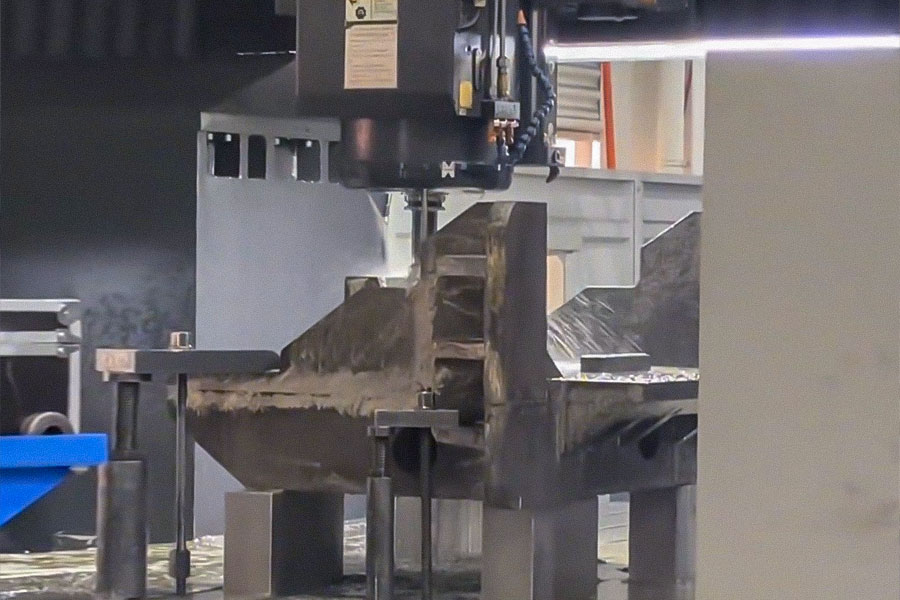
The customer ultimately chose incremental instead of absolute formulamagnetic grating rulerThe reason for the reading head is very practical.
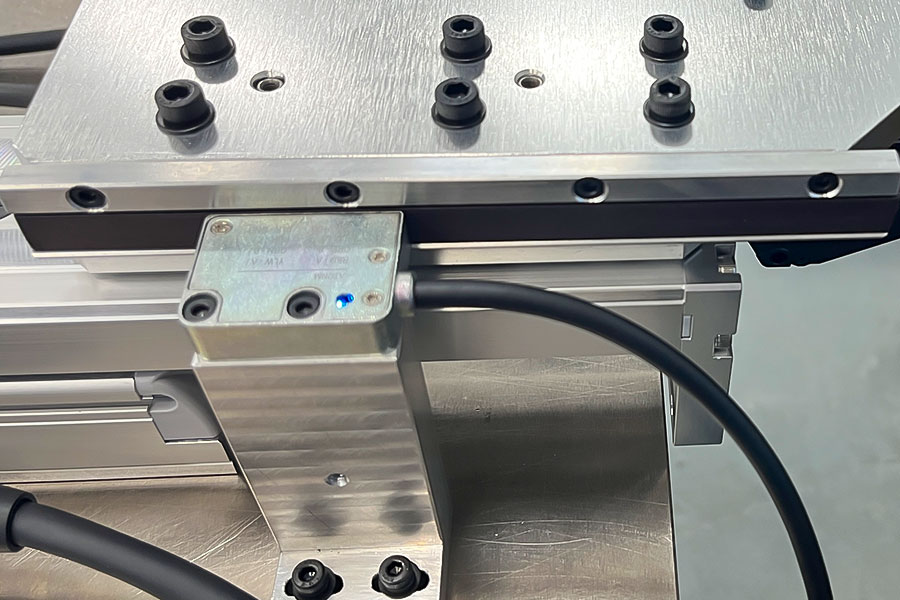
The customer has chosen a reading head solution with a 5mm magnetic pole spacing matching, which has a relatively wider installation spacing tolerance and is suitable for controlling consistency during batch assembly in machine tool factories. The output end is matched with differential pulses according to the controller interface to avoid repeated rework for signal compatibility in the later stage.
On the surface, it appears that the glass grating ruler has been replaced with a magnetic grating rulerreading headFrom an engineering perspective, the change is the implementation method of the entire displacement feedback system. The customer reorganized the installation reference on the Y-axis, fixed the magnetic strip in a more easily protected position, and reserved a stable gap for the reading head to reduce the space for assembly personnel to rely on experience for "feeling".
Atorm's incremental systemMagnetic grid ruler reading headSupports A/B/Z phase output, with a power supply range of 5-24VDC. The most important thing here is not the beautiful parameters, but the clear wiring: if the controller eats 5V differential, it should be done according to 5V differential; Do not use on-site diagrams to save time, as the 24V power supply is directly connected to the low-level interface. Many machine tool projects end up with problems not at the mechanical end, but at the electrical matching end.
After this renovation, the most intuitive feeling for customers is not that the parameters are higher, but that the site has become much quieter. In the past, when encountering a location alarm, maintenance personnel first suspected the ruler, then the line, and then the drive; Now there are significantly fewer fault points and the pace of machine adjustment is smoother. According to the on-site trial operation records of the customer, there have been no feedback alarms caused by oil contamination entering the reading area for two consecutive months, and the repeated processing time in the assembly and commissioning process has also been significantly reduced.
| Customer concerns | Actual changes after renovation |
|---|---|
| Is feedback stable in polluted environments | During the on-site trial operation, there were no more reading alarms caused by oil stains and iron filings |
| Is it easy to install shafts over 2 meters | The magnetic stripe scheme is more suitable for batch assembly, making it easier for machine tool factories to unify the installation rhythm |
| Should frequent disassembly and inspection be required for later maintenance | The maintenance focus has shifted from cleaning the optical reading area to checking the installation spacing and wiring status |
Let's start with the conclusion:If your device can return to zero normally and there are cutting fluid, dust, vibration, and long-distance installation issues on site, thenIncremental magnetic grid ruler reading headWorth priority evaluation. On the other hand, if the device must immediately know its current location after power failure and is not allowed to return to the reference point, then do not rigidly apply such solutions.
So, the value of this case is not just about "changing the product", but about clarifying the selection logic. The magnetic grid ruler reading head is not the standard answer for all devices, but in scenarios such as CNC machine tools that require high usage, heavy pollution, and can return to zero, it is indeed closer to on-site reality than traditional optical solutions.
If you are also evaluating the displacement feedback scheme of CNC machine tools, at least four things should be checked first: axis length, installation spacing, controller interface, and power level. Clarify these four items first, and then discuss accuracy and price, so as not to easily go astray.
Solution Design
Application Validation Support
Parameter Optimization Guidance
Commissioning Support