



2022-06-27
1-Minute Guide to Stamping Robots
Stamping robots are devices developed to automate stamping production; with rising labor costs their adoption is becoming increasingly widespread.
The introduction of stamping robots can replace tasks on stamping lines such as material stamping, handling, and loading/unloading.
Fully automated stamping production lines are far more efficient than previous manual processes.

Because stamping robots are automated equipment, they significantly reduce labor costs, improve operator and equipment safety, and help maintain consistent production capacity, quality and process stability.
Flexible automated stamping lines typically consist of a double-acting or multi-link single-acting press and 4 to 5 single-acting presses. These lines are commonly used to produce large body panels and covers, offering high safety and good stamping accuracy.
The production line includes automatic feeding robots; the entire automated stamping line integrates uncoilers, degreasers, feeders, robotic arms, and shuttle/transfer systems to complete the process from blank feeding to finished stamped parts.
Stamping robots substantially raise the automation level of industrial production.
Single-station stamping robots can be classified as single-position or multi-position. Single-position robots are suitable for large sheet stamping production and are generally used with sheet feeders. Multi-position robots are better suited for small parts requiring multiple stamping processes and are typically combined with automatic feeders and rotary material handling.

Key features of stamping robots include:
1. High-performance servo motors as the primary drive;
2. Fast positioning, lifting and transfer motions;
3. Specially designed horizontal translation and auxiliary lifting structures;
4. Microcomputer control with press interlock, operated via touchscreen and configurable parameters;
Double-sheet feeding issue in stamping robots
Due to surface tension between metal sheets, it can be difficult to separate sheets correctly. Under certain conditions, overlapping double sheets may be fed, and these thicker-than-standard sheets can cause the press to malfunction, leading to die jams or breakage and severe production disruptions.
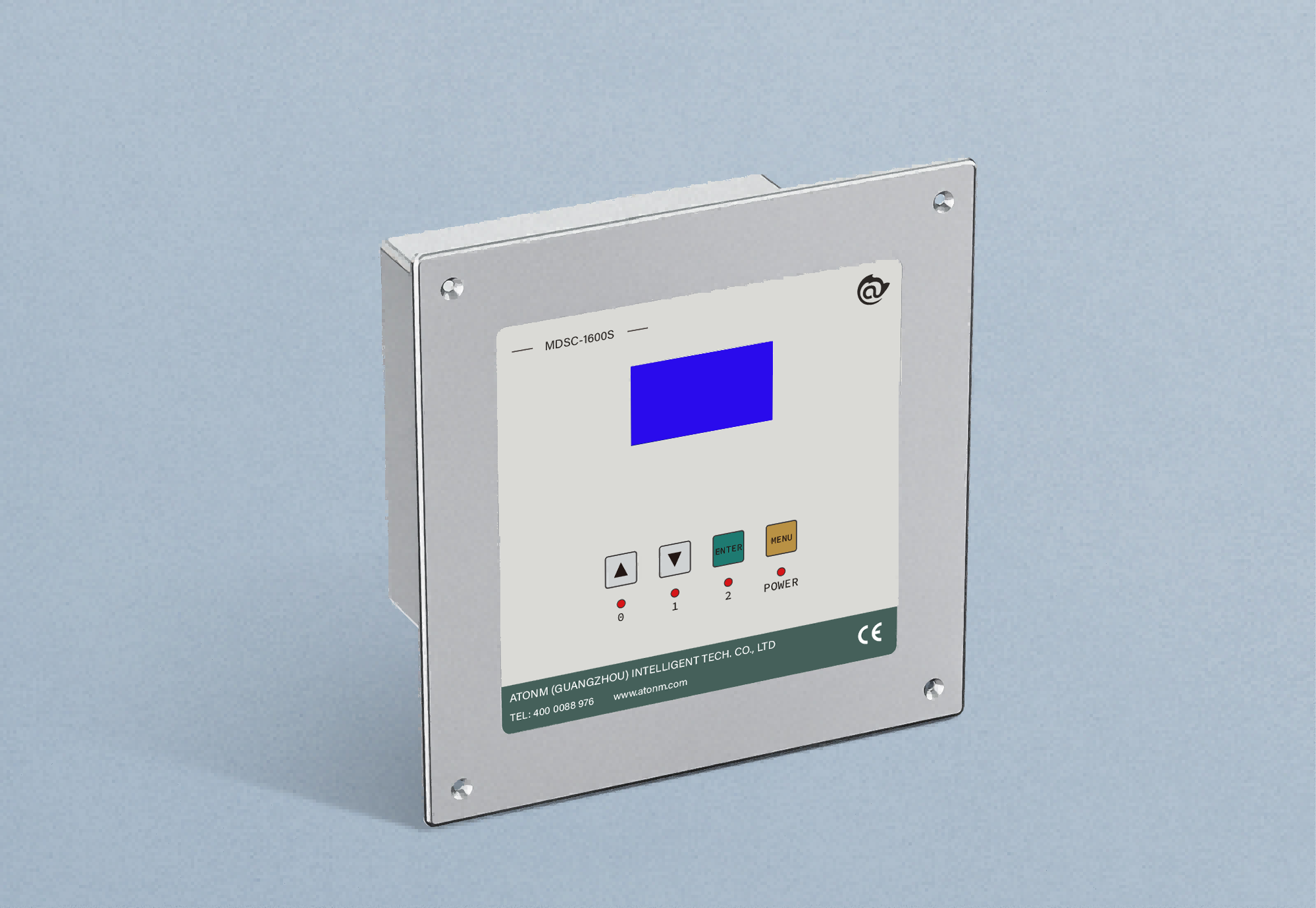
Atonm metal double-sheet detectors specialize in detecting single and double metal sheets. They solve overlapping feed issues in automatic feeding systems, protect dies, increase production efficiency, reduce material waste, and lower production costs.

You May Be Interested
-
Atorm has been awarded ISO three system certification, safeguarding quality and sustainable development with international standards
2026-10-12
-
Atonm MDSC-9000T Dual-Channel, Single-Sensor Metal Double-Sheet Detector
2025-12-05
-
Non-Contact “One-to-Four” Double-Sheet Detector 1600S: A New Cost-Reduction and Efficiency Solution for Stamping Lines
2025-11-20
-
Provincial Auto Industry Research Tour | Atonm Engages with the Automotive Supply Chain, Empowering Smart Manufacturing through Sensors
2025-10-11