



2025-07-17
Types of Sensors and Their Applications in Industrial Fields
Common Types of Sensors
There are many types of sensors. According to their detection targets and functions, they can be divided into multiple categories, each playing a unique role in different scenarios.
Temperature Sensors: These are among the most widely used sensors, capable of accurately measuring temperature changes of objects. They sense temperature levels and convert them into electrical signals for monitoring and control. Common types include thermocouples and resistance temperature detectors (RTDs). Thermocouples are suitable for high-temperature environments, while RTDs perform excellently in medium- to low-temperature measurements.
Pressure Sensors: These sensors detect the pressure of gases, liquids, or other media. They convert pressure signals into recognizable electrical signals and are widely used in applications requiring pressure monitoring. Based on their working principles, there are strain gauge pressure sensors and piezoelectric pressure sensors. Strain gauge sensors offer high accuracy, while piezoelectric sensors provide fast response.
Humidity Sensors: Specifically designed to detect environmental humidity levels, they measure the water vapor content in the air and convert it into electrical signals. Common types include capacitive and resistive humidity sensors. Capacitive sensors feature a wide measurement range and high accuracy.
Flow Sensors: Used to measure the flow rate of fluids (liquids or gases), these sensors monitor real-time flow velocity and total volume, providing essential data for material control in production processes. For example, electromagnetic flow sensors are suitable for measuring conductive liquids, offering accurate measurements and resistance to interference.
Displacement Sensors: These sensors detect changes in an object’s position and displacement. They convert mechanical movement into electrical signals for precise monitoring and control. Common types include inductive and photoelectric displacement sensors. Inductive sensors offer high accuracy and stability. Atonm displacement sensors, leveraging advanced technology, excel in precision and response speed, adapting to complex industrial conditions and providing reliable support for the accurate operation of automated equipment.

Vibration Sensors: Primarily used to monitor equipment vibration. They detect parameters such as vibration frequency and amplitude during operation, and by analyzing these parameters, potential faults in the equipment can be identified. Piezoelectric vibration sensors are a typical example, offering high sensitivity and fast response.
Vision Sensors: Essentially give equipment “eyes,” enabling the recognition and detection of object shapes, colors, positions, and more. They convert visual information into electrical signals through image acquisition and processing technologies and are widely used in automated production for quality inspection, object recognition, and other applications.
Color Sensors: Capable of detecting and identifying the color of objects, they sense light wavelengths and convert color information into electrical signals. They can distinguish different colors and even subtle variations in color intensity. Common types include photoelectric color sensors. Atonm color sensors use high-precision optical sensing components, maintaining stable detection performance even under complex lighting conditions. They can accurately identify both subtle color differences and fast-moving objects, greatly improving the efficiency and reliability of color detection in industrial production.

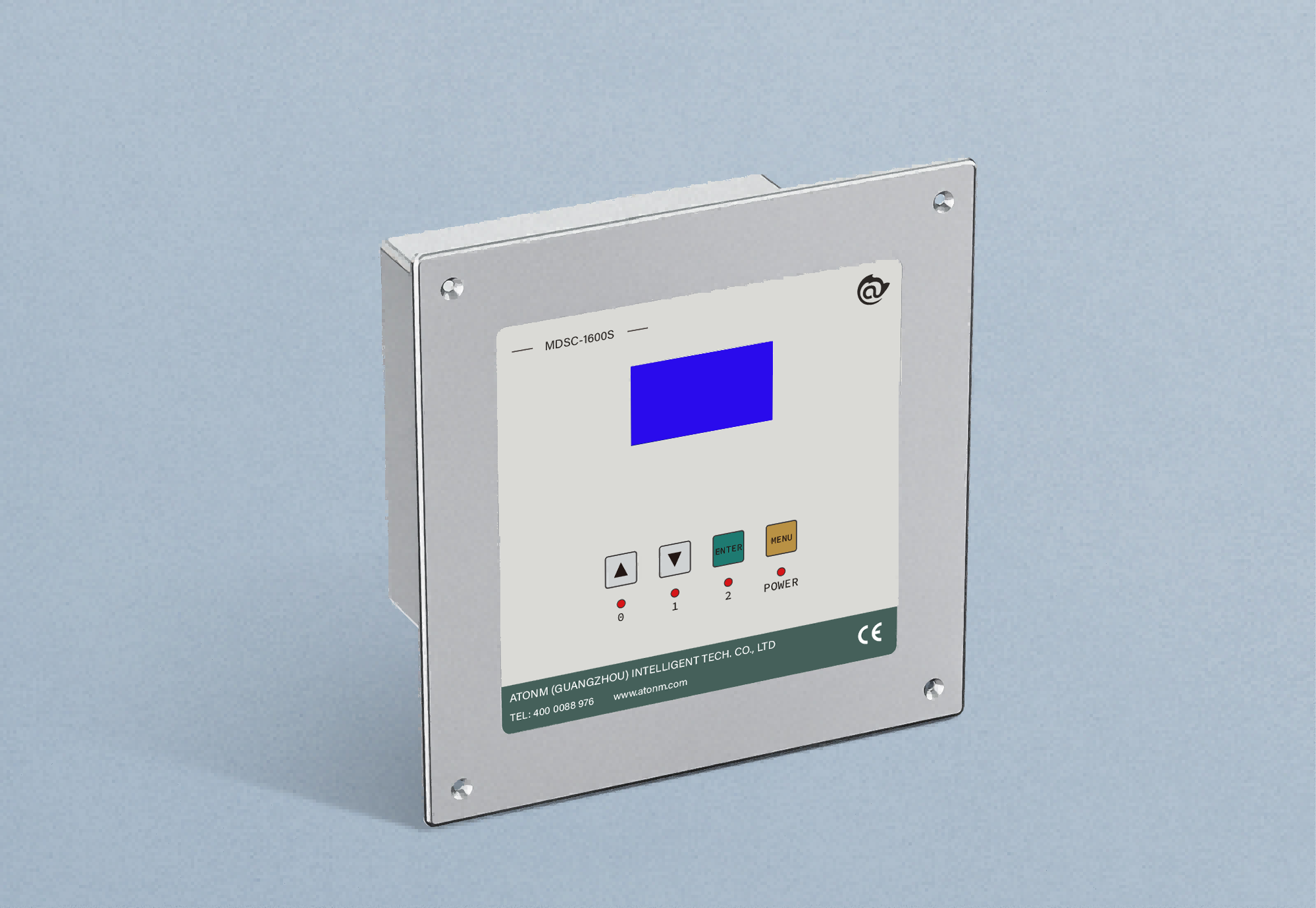
Double-Sheet Detectors: These are primarily used to detect whether materials such as paper, films, or metal sheets overlap during the conveying process. They use specific detection principles—such as ultrasonic, photoelectric, or magnetic induction—to determine the number of layers. Among these, magnetic induction is particularly suitable for metal materials, as it precisely detects overlaps by sensing differences in how multiple metal sheets affect the magnetic field. When double or multiple sheets are detected, a signal is triggered to prevent issues in subsequent processing caused by overlapping materials. Atonm’s metal double-sheet detectors, leveraging advanced magnetic induction technology, excel in metal sheet processing scenarios, efficiently and accurately detecting overlaps and ensuring smooth industrial production.

Applications of Sensors in the Industrial Field
In the industrial sector, sensors are key to achieving automated and intelligent production. They penetrate every stage of manufacturing, providing strong support for efficient, safe, and stable operations.
Production Process Monitoring and Control: On industrial production lines, temperature sensors are installed in equipment such as reactors and furnaces to monitor internal temperatures in real time. If the temperature exceeds the set range, the sensor sends a signal, and the control system automatically adjusts heating or cooling devices to ensure the process remains within the proper temperature range. For example, in steelmaking, temperature sensors continuously monitor molten steel temperature to ensure product quality.
Pressure sensors play a critical role in chemical production, installed in pipelines, reaction vessels, and other locations to monitor internal pressure changes. When pressure becomes too high or too low, sensors quickly relay information, allowing the control system to adjust valve openings and maintain stable pressure, preventing safety incidents caused by abnormal pressure.
Equipment Status Monitoring and Fault Warning: Vibration sensors are mounted on large equipment such as motors, pumps, and machine tools to continuously monitor vibrations. Under normal operation, vibration patterns are consistent. When faults occur—like bearing wear or loose components—vibration parameters change. By detecting these anomalies, vibration sensors enable predictive maintenance, allowing technicians to repair equipment in time and avoid production losses caused by unexpected shutdowns.
Product Quality Inspection: Vision sensors are widely used in industrial quality control. On automotive production lines, they inspect parts for surface scratches, dents, or deformation. In electronics manufacturing, they check whether components on circuit boards are properly soldered or missing, greatly improving inspection efficiency and accuracy.
Color sensors also play a significant role in quality inspection. In packaging, they verify that printed colors meet standards, ensuring consistent packaging colors. In plastic manufacturing, they detect uneven color distribution caused by inconsistent raw material mixing, maintaining product quality. Atonm color sensors, with their high-precision detection capability, accurately monitor product color, reducing the number of defective products.
Automation Production and Robotics Applications: On automated production lines, displacement sensors precisely control robotic arm positions to ensure accurate picking and placing of workpieces. Vision sensors help robots recognize workpiece types and positions, guiding complex operations. For example, in automated logistics sorting systems, vision sensors read barcodes or QR codes on packages, while displacement sensors control robotic arm movement for fast and accurate sorting. Atonm displacement sensors provide micron-level position control, enabling highly precise and efficient robotic operations suitable for high-precision assembly and other complex production tasks.
Double-sheet detectors are essential in automated processes in printing, packaging, and paper industries. On printing machines, they monitor paper feeding in real time; if double sheets are detected, a signal is triggered to pause or adjust equipment, preventing misalignment, equipment damage, or production errors. In film processing lines, they detect overlapping films, avoiding issues in cutting, laminating, or other downstream processes. In metal processing, such as steel or aluminum sheet production, Atonm metal double-sheet detectors use precise magnetic induction technology to reliably detect overlaps, preventing mold damage and scrap caused by double sheets entering stamping equipment, significantly enhancing production safety and efficiency.

In summary, different types of sensors each perform their specific roles in the industrial field. Working together, they form the “sensory nervous system” of industrial production, driving operations toward greater efficiency, intelligence, and safety. With the advancement of Industry 4.0, sensor applications in industrial settings will become even more widespread and sophisticated. Leveraging its technological advantages, Atonm Technology will continue to contribute significantly to the development of industrial sensors.
You May Be Interested
-
Atorm has been awarded ISO three system certification, safeguarding quality and sustainable development with international standards
2026-10-12
-
Atonm MDSC-9000T Dual-Channel, Single-Sensor Metal Double-Sheet Detector
2025-12-05
-
Non-Contact “One-to-Four” Double-Sheet Detector 1600S: A New Cost-Reduction and Efficiency Solution for Stamping Lines
2025-11-20
-
Provincial Auto Industry Research Tour | Atonm Engages with the Automotive Supply Chain, Empowering Smart Manufacturing through Sensors
2025-10-11