



2024-01-20
Considerations for Planning Stamping Automation Lines
In manufacturing, planning a stamping automation line is key to ensuring efficient production and excellent quality. Successful planning must consider multiple factors to meet product design, production capacity, and quality standards. This article presents Atonm's considerations on several key factors.
1. Whether to adopt synchronization technology
Synchronization technology is widely recognized in stamping automation for its role in improving production efficiency.
In traditional stamping automation, presses typically run in a "single-cycle" mode. The unloading manipulator must wait until the press completes the full stamping cycle and the slide returns to top dead center and stops before acting. The feeding manipulator waits for the unloading manipulator to fully exit the press work area before starting. This constraint lengthens cycle times and reduces overall efficiency.
Synchronization uses a "continuous" mode that synchronizes manipulators with the press slide through precise timing. The unloading manipulator starts picking when the slide returns to a certain angle (before top dead center), and the feeding manipulator completes delivery before the slide reaches a specified descent angle. With interference avoidance, this provides manipulators enough time to transfer parts to downstream operations. Maintaining an appropriate phase difference between adjacent presses keeps manipulator cycles efficient.
For high-volume production of large body panels, high-speed stamping lines combined with synchronization offer clear advantages over approaches like single-slider multi-station presses.

2. Key press parameter — slide stroke
Among press parameters, slide stroke is critical, directly affecting automation feasibility and complexity. It requires careful consideration during planning.
Slide stroke selection relates to the draw depth of parts and grabber height. Ensure manipulators maintain sufficient clearance between the grabber, the lower limit of the upper die, and the highest point of the lower die during horizontal movement.
Because large body panel draw depths often exceed 200mm, slide strokes for large high-speed lines typically exceed 1000mm, ensuring applicability and providing a solid base for safe, efficient automation.

3. Die and grabber structural shapes
To obtain better interference curves, besides focusing on slide stroke and speed-acceleration characteristics, consider die and grabber geometry. Proper designs can compensate for automation limitations and improve feasibility.
Also consider: keep die closed heights consistent across the line; install part-in-place sensors on lower dies where feasible; standardize die mounting slot locations to reduce automatic clamps and cost; ensure scrap can be discharged from the workbench and add ejection devices for difficult discharge positions; provide part ejection mechanisms such as ejector pins or cylinders, and prefer rotary wedges over large inclined wedges. These measures help optimize the stamping process.

4. Requirements for sheet metal stacks
Compared with manual lines, automated stamping requires more strictly regularized sheet stacks. Irregular stacks can reduce magnetic separator effectiveness (causing double-feed issues) and affect depalletizer pick accuracy. Before deploying automation, define clear requirements for stack regularity to meet production targets.
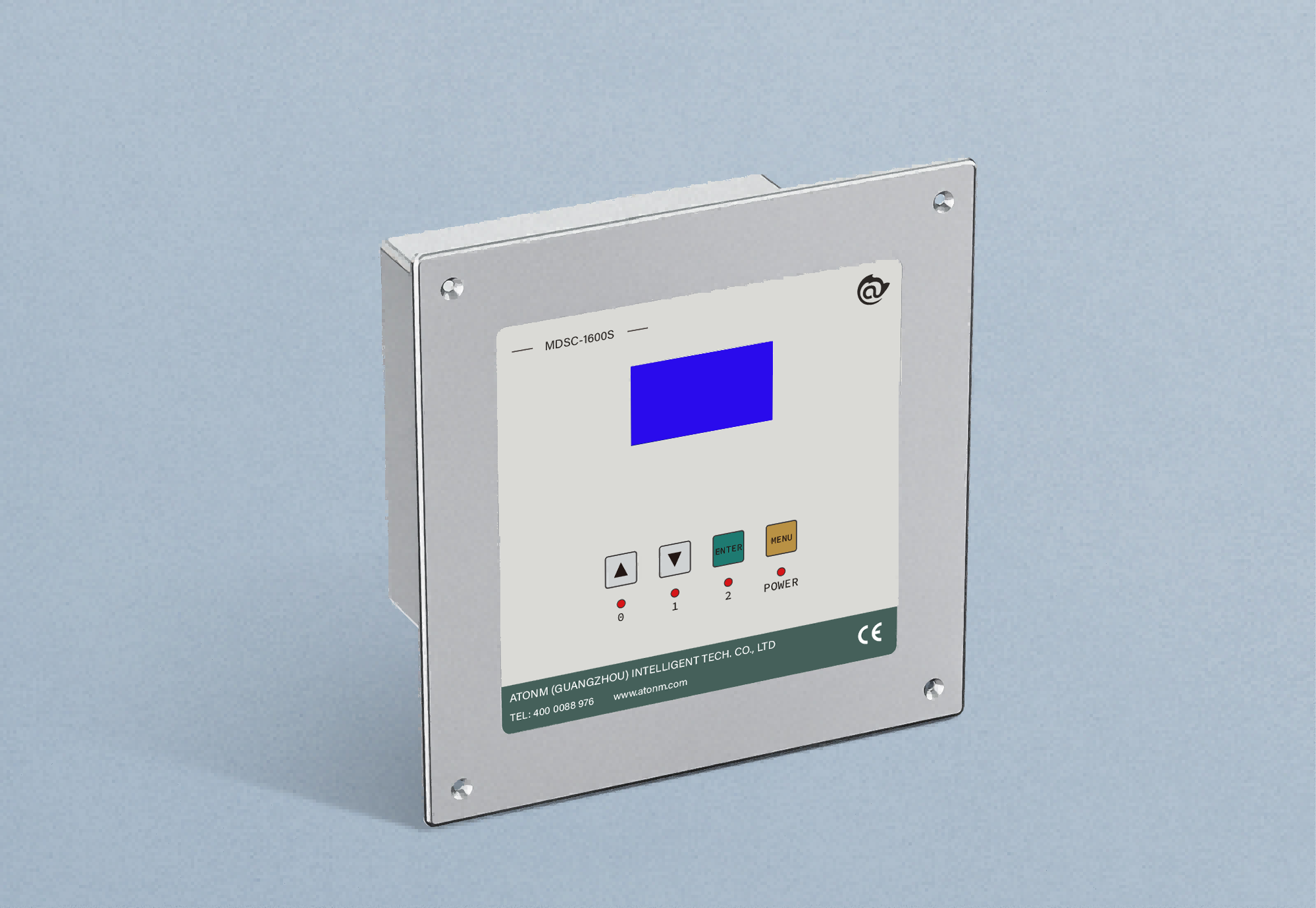
Additionally, automotive lines use double-sheet detectors. Previously, imported products were common, but Atonm has developed domestic alternatives with localized features that better fit specific user needs.

5. Requirements for part process layout
(1) Align the feeding center of the die with the production line center as much as possible;
(2) Minimize rotation during part transfer—especially on high-speed and multi-station lines—to avoid Z-axis rotation and maintain stability;
(3) Keep feed surface heights consistent across the same process to reduce cycle loss.
You May Be Interested
-
Atorm has been awarded ISO three system certification, safeguarding quality and sustainable development with international standards
2026-10-12
-
Atonm MDSC-9000T Dual-Channel, Single-Sensor Metal Double-Sheet Detector
2025-12-05
-
Non-Contact “One-to-Four” Double-Sheet Detector 1600S: A New Cost-Reduction and Efficiency Solution for Stamping Lines
2025-11-20
-
Provincial Auto Industry Research Tour | Atonm Engages with the Automotive Supply Chain, Empowering Smart Manufacturing through Sensors
2025-10-11