



2022-05-13
Progressive Die vs Multi-Station vs Series Stamping — Comparison of Advantages
Automated stamping production lines mainly include: progressive die stamping, multi-station stamping and series (linked) stamping. Each has characteristics that make it suitable for producing different sheet metal parts. Their respective advantages play important roles in automotive automation and high-efficiency production systems. Below is a comparative analysis of these three line types.

Progressive die stamping line
A progressive die stamping line typically consists of an uncoiler and feeder, a press, a progressive die and an automatic blanking line. A single progressive press can complete a full set of stamping operations for a product. The progressive die contains multiple stations arranged in process order. Typical operations include punching, trimming, flanging, forming and blanking. Because multiple processes are integrated into one die, progressive presses are generally used for small parts and offer very high processing speed.
During operation, one stroke of a progressive press can simultaneously perform multiple process tasks. After each stroke, the strip advances by one station, so a full set of processes can be completed within one reciprocating cycle.

Features: high production efficiency, easy to automate, suitable for high-speed presses, safe operation, small floor footprint; lower material utilization.
Multi-station stamping line
A multi-station line places multiple independent die sets (typically 3–5) on one large-tonnage press. It can use uncoilers and depalletizers for feeding, automatic transfer rods for part indexing, and conveyors to collect finished parts.

Characteristics:
❖ Relatively high processing flexibility; supports both coil and blank feeding.
❖ Uses automatic rod feeding; throughput is lower than progressive die lines but higher than traditional series lines.
❖ Requires careful control of part height and stamping direction; process monitoring is important.
❖ When processing blanks, double-sheet overlaps may occur; install double-sheet detection sensors for single/double detection.
Series (linked) stamping line
Multiple presses are arranged in sequence according to process order to form an automated line. Each press has its own die (one process per press) and automated robots perform loading/unloading.

Features:
❖ Wide processing range: can handle diverse part sizes, shapes and thicknesses.
❖ Dies are independent per press: easier die setup and tuning.
❖ Large floor area: traditional series lines often include 4–5 presses.
❖ Prone to double-sheet overlaps when using robotic feeders; double-sheet detectors are recommended.
Summary:
Progressive die lines: commonly used for small stamped parts.
Advantages: high stroke rate, high efficiency, small footprint.
Disadvantages: low material utilization, limited to small parts, complex overall die tuning.
Multi-station lines: suitable for medium-sized parts with high demand.
Advantages: relatively high stroke rate, moderate footprint, good material utilization.
Disadvantages: high die cost, poor line interchangeability, complex setup, prone to overlapping feed issues.
Series (linked) lines: multiple presses arranged by process and served by robots; suitable for diverse product types.
Advantages: supports most product varieties, flexible loading/unloading, quick product changeover, simple tuning;
Disadvantages: lower stroke rate, large footprint, possible double-sheet overlaps.

Because multi-station and series stamping lines are prone to double-sheet overlaps when processing stamped blanks, these overlaps can damage dies if they enter the die. To prevent overlaps from entering the stamping process, install a Metal Double-Sheet Detector at the feed front end.
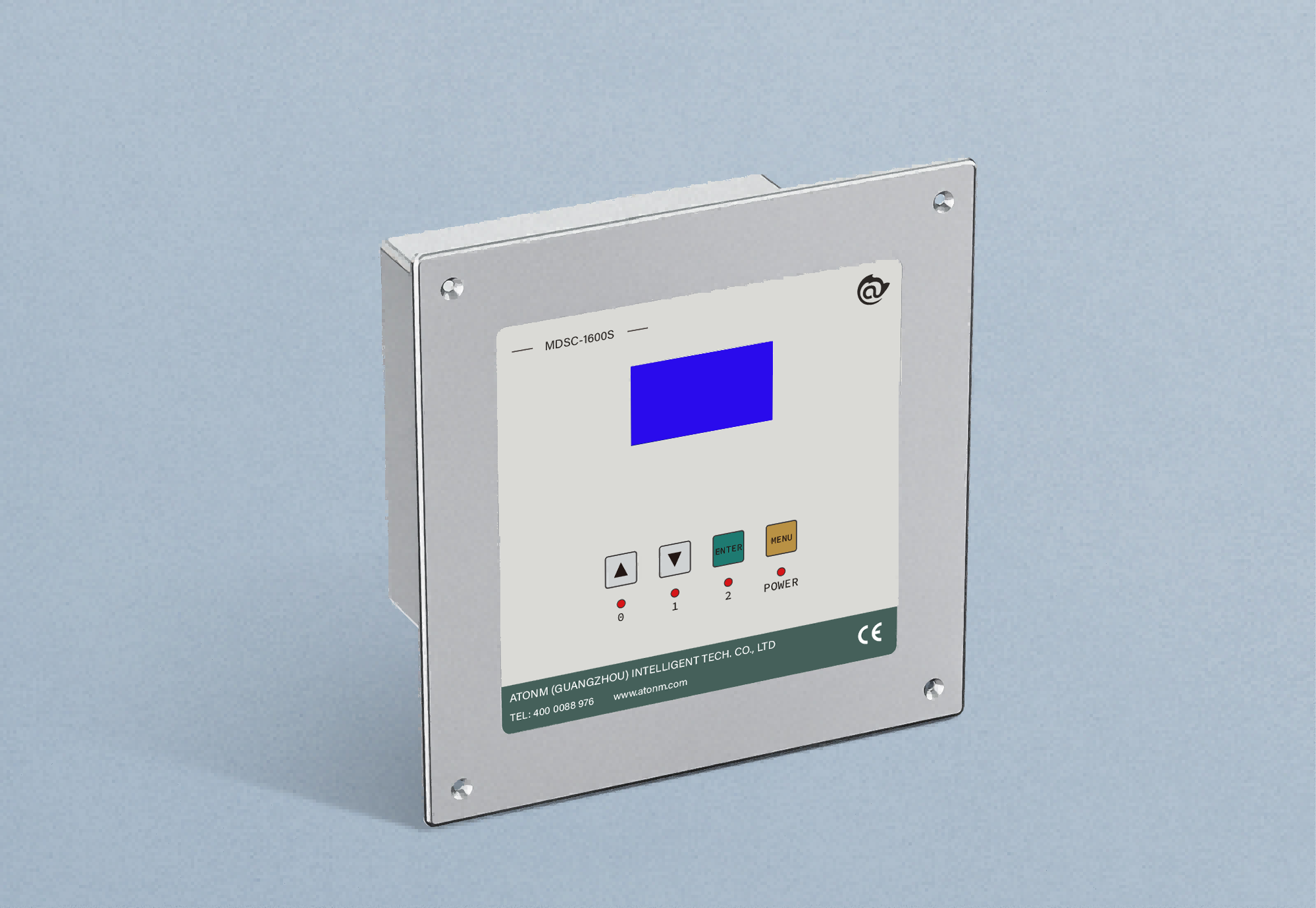
Atonm Metal Double-Sheet Detector is an electromagnetic-based metal overlap sensor with double-sheet detection and part counting functions, suitable for a wide range of stamping blank detection requirements.
MDSC-1000C Communication Version Metal Double-Sheet Detector has significant advantages in metal stamping applications

❖ Handles various metals and thickness changes
❖ Non-contact detection that does not damage part surface accuracy
❖ RS485 communication, suitable for highly integrated automated lines
❖ Detection speed up to 1200 pcs/min, exceeding typical feeding requirements
❖ Excellent anti-interference performance, validated by electromagnetic compatibility and reliability/environmental testing; 30 days continuous operation without false or missed alarms
You May Be Interested
-
Atorm has been awarded ISO three system certification, safeguarding quality and sustainable development with international standards
2026-10-12
-
Atonm MDSC-9000T Dual-Channel, Single-Sensor Metal Double-Sheet Detector
2025-12-05
-
Non-Contact “One-to-Four” Double-Sheet Detector 1600S: A New Cost-Reduction and Efficiency Solution for Stamping Lines
2025-11-20
-
Provincial Auto Industry Research Tour | Atonm Engages with the Automotive Supply Chain, Empowering Smart Manufacturing through Sensors
2025-10-11