

Project Services
Solution Design
Application Validation Support
Parameter Optimization Guidance
Commissioning Support
By clicking on the button “I accept” or by further usage of this website you express consent with usage of cookies as well as you grant us the permission to collect and process personal data about your activity on this website. Such information are used to determine personalised content and display of the relevant advertisement on social networks and other websites. More information about personal data processing can be found on this link Cookie Policy.
Agree


Single Sensor
Double Sensor
Image Sensor
2026-09-17
This case is aimed at the mass production line of 210 × 250mm cold-rolled steel plate in the automotive parts stamping workshop, which solves the common industry pain points of frequent false alarms, complicated production adjustment, poor adaptability to dust and oil pollution environment, and high risk of missed detection and mold collision in traditional photoelectric sensor dual sheet detection. The production line adopts a medium production cycle and multi material thickness switching production (0.8mm-2.5mm). By replacing the AtonmMDSC-1500S magnetic induction non-contact dual sheet detector, zero wear detection, low false alarms, second level production changes, and mold safety protection can be achieved. It is suitable for the upgrading needs of intelligent and digital production lines in factories and is the optimal detection and transformation solution for multi specification cold-rolled steel plate stamping production lines.
The original dual sheet detection in the workshop adopted a photoelectric sensor scheme, relying on the principle of optical reflection to identify the sheet metal. The adaptability was extremely poor, and four major problems have long constrained the production capacity and safety of the production line under stamping oil stains, dust, and sheet metal irregular working conditions:
• Large working condition interference, frequent false alarms and shutdowns: Cold rolled steel plate surface stretching oil, slight rust, and feeding warping can change the reflective effect, causing fluctuations in the photoelectric signal, with 3-5 false alarms per day, and a single shutdown lasting several minutes, resulting in long-term production capacity loss.
High maintenance costs and heavy labor burden: Workshop oil mist and dust are prone to adhere to photoelectric lenses, requiring regular manual wiping and maintenance. Failure to maintain in a timely manner immediately leads to false alarms and missed detections, continuously increasing operation and maintenance costs.
Low production efficiency and complicated debugging: The production line produces multiple thick materials, and each time 0.8mm-2.5mm boards are switched, the photoelectric installation position and signal threshold need to be readjusted. A single debugging takes more than ten minutes, seriously affecting the production cycle.
High safety risk and easy damage to molds: The stability of photoelectric detection is poor, and there are still hidden dangers of missed detection after debugging. There have been incidents of double sheet stacking entering the mold, causing mold corner breakage and tens of thousands of yuan in repair losses, posing a major production safety hazard.
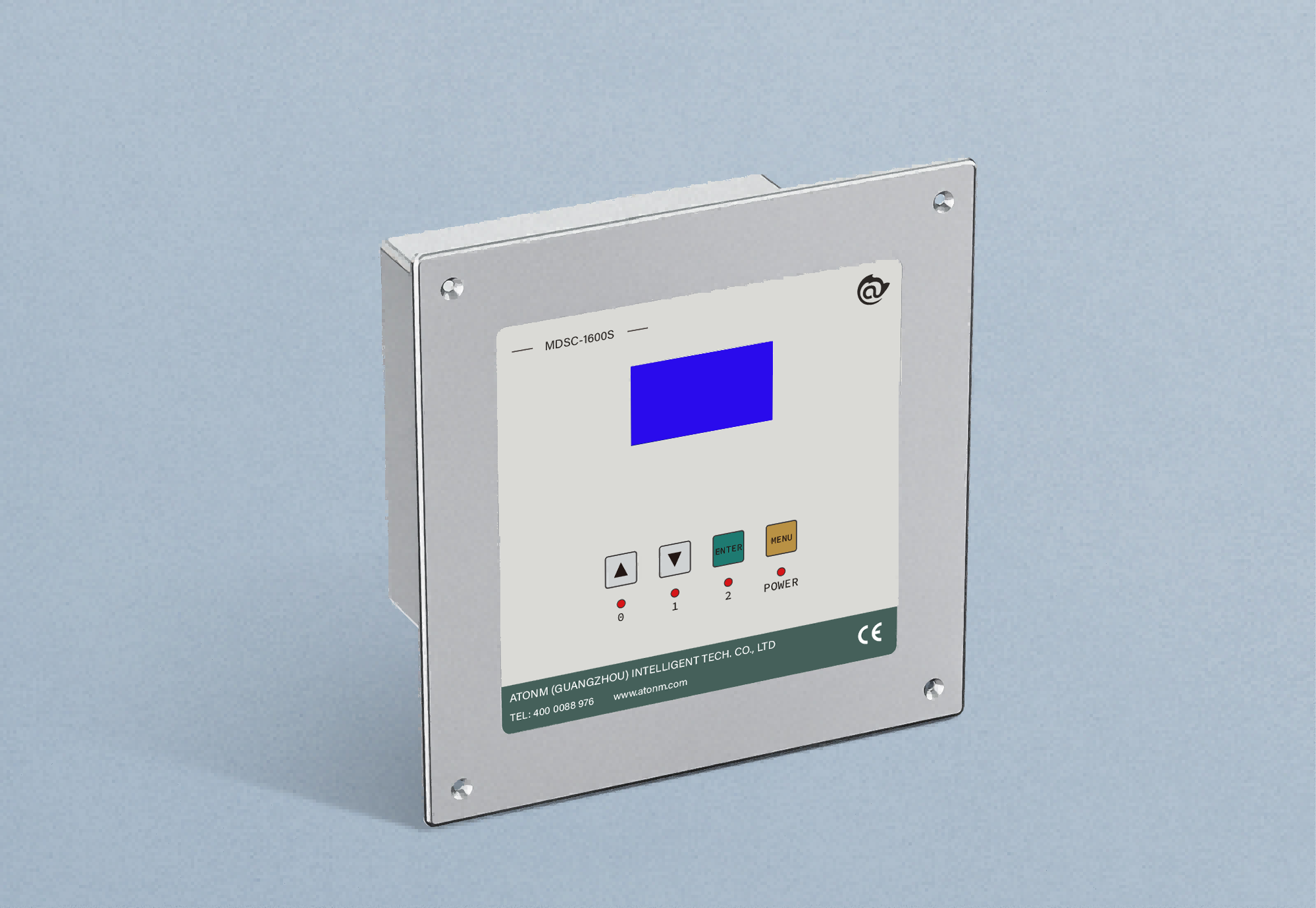
Based on the workshop production conditions, expansion needs, and intelligent production line renovation plan, the AtonmMDSC-1500S non-contact magnetic induction dual detector was ultimately selected to effectively avoid the shortcomings of the photoelectric detection principle and adapt to all scene metal stamping detection.
(Industry wide range, suitable for the renovation of new and old production lines)
• Detection principle: Magnetic induction through beam detection (non-contact)
• Compatible with all metal materials including iron, stainless steel, copper, and aluminum
• Thickness testing: 0.2-5mm (covering the entire workshop with a production material thickness of 0.8-2.5mm, with reserved margin for expansion)
• Response speed: ≤ 80ms, suitable for medium and high-speed stamping cycles
• Probe layout: Dual probes for split shooting, suitable for compact production line space
Communication method: Profinet industrial bus+I/O dual output, supporting MES digital docking
Strong anti-interference ability, suitable for harsh stamping conditions: Abandoning the principle of optical detection, it is not affected by oil stains, rust, warping, workshop dust and oil mist, and solves the problem of false alarms from the root.
• Calibration free and fast production change, improving efficiency and reducing costs: supports storage of multiple sets of material thickness parameter formulas, eliminating the need for repeated debugging during production change. With a touch screen for one click call, the debugging work can be compressed from ten minutes to three seconds.
Non contact, no wear and tear, no frequent maintenance: The material can be detected by passing through the middle of the probe, without physical contact wear and tear, and does not require frequent manual wiping and maintenance, greatly reducing operation and maintenance costs.
Intelligent communication, compatible with digital factories: supports Profinet bus docking with PLC and MES systems, enabling real-time collection and retention of detection data to meet the needs of intelligent production line data management.
Strong universality and long-term reusability: 0.2-5mm ultra wide detection range, covering the vast majority of metal stamping products, no need to replace equipment for subsequent new product expansion.
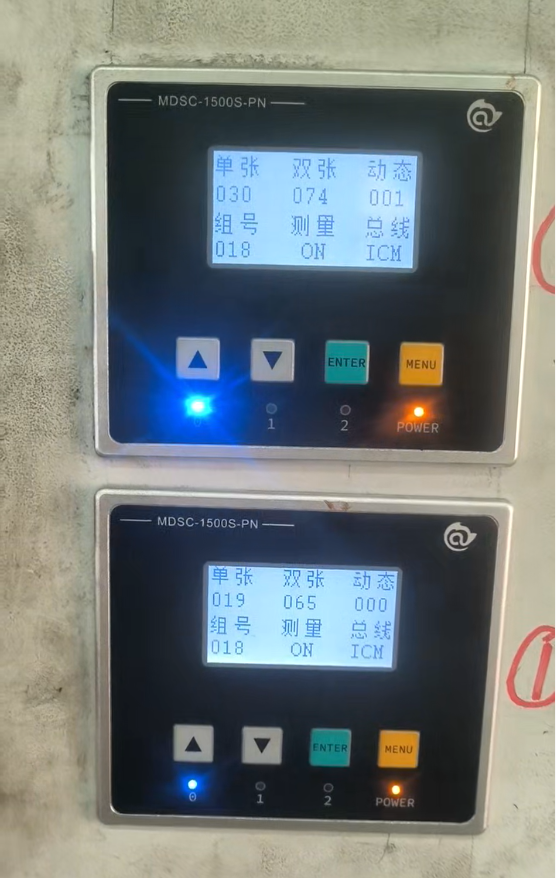
This renovation adheres to the principles of low cost, fast implementation, and no major changes, and is adapted to the original production line structure:
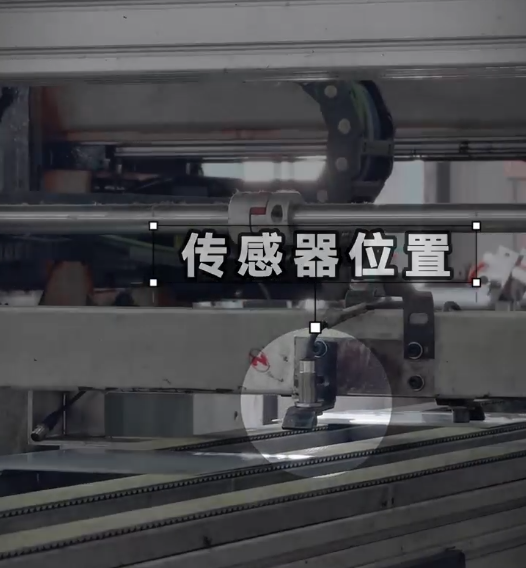
1. Installation position: The equipment is fixed at the conveying station before entering the mold, intercepting double stacked materials in advance to prevent defective materials from entering the mold and protect the mold in all directions;
2. Installation method: Adopting an upper and lower split type small probe, suitable for compact space on the production line, without the need to modify the original rack;
3. Wiring debugging: Supports NPN direct connection to PLC, while reserving Profinet bus interface to adapt to subsequent MES system upgrades;
4. Landing cycle: The entire process of dismantling old equipment, installing new machines, and parameter debugging only takes half a day, which does not affect normal production scheduling.
The equipment has been running online for three months, and the stability, production efficiency, and safety production level of the production line have been comprehensively upgraded. The effect can be quantified:
• Significant improvement in production efficiency: Switching between multiple thick materials does not require manual debugging, with one click formula retrieval. Multiple daily production changes save a lot of downtime and significantly increase production capacity;
• Achieving zero risk of mold collision: With a rapid response time of 80ms, it perfectly matches the average pace of the production line. Since its launch, there have been no double sheet missed inspections or mold damage accidents;
• Significantly reduced operation and maintenance costs: non-contact, wear-resistant, resistant to oil and dust, no need for frequent manual maintenance, saving a lot of labor and spare parts costs.
For production lines such as automotive parts and metal stamping, the selection of dual detector should prioritize four core standards to avoid pitfalls and reduce losses:
1. Check the detection principle: For oil stains, dust, and reflective working conditions, priority should be given to magnetic induction non-contact solutions, and photoelectric detection that is prone to interference should be eliminated;
2. Check the range margin: not limited to the existing production material thickness, priority should be given to selecting wide range equipment to adapt to subsequent product iteration and expansion;
3. Look at intelligent communication: Equipment that supports bus communication and MES data collection must be selected for the renovation of new production lines, to adapt to the digital upgrade of factories;
4. Check local after-sales service: Prioritize choosing brands with local technical support to ensure timely equipment debugging and fault response.
Q1: Can the magnetic induction dual detector detect materials such as aluminum plates and stainless steel?
A: Okay. MDSC-1500S supports the detection of all metal materials including iron, stainless steel, copper, and aluminum, and is compatible with multi material mixed production stamping production lines.
Q2: Will oil, rust, and slight warping on the surface of the board cause false alarms?
A: I won't. Magnetic induction detection is not affected by the surface condition, light, or reflection of the sheet, making it perfectly suitable for harsh production conditions in stamping workshops.
Q3: Does the renovation and installation require significant changes to the original production line rack?
A: No need. The split type probe is compact in size and can be directly installed on existing racks. It can also be flexibly adapted to narrow space scenarios without the need for large-scale renovation costs.
Q4: Does the equipment support MES data collection for intelligent production lines?
A: Support. Equipped with Profinet industrial bus, it can interface with PLC and upper level MES system to achieve real-time recording, statistics, and traceability of detection data.
Q5: Do I need to recalibrate the parameters for multi material thickness replacement?
A: No need. The device can store multiple sets of exclusive parameter formulas in advance, which can be easily accessed on the touch screen during production changes without the need for repeated on-site debugging and calibration.
For automotive stamping production lines that require multi material thickness switching, moderate cycle time, and pursue stability and intelligent upgrades, the AtonmMDSC-1500S magnetic induction dual sheet detector is a reliable upgrade solution to replace traditional photoelectric detection. Effectively addressing core pain points such as frequent false alarms, inefficient production changes, complicated operation and maintenance, and easily damaged molds, while balancing short-term efficiency and cost reduction with long-term digital production expansion needs, it is suitable for the vast majority of cold-rolled steel sheet metal stamping scenarios.
Free samples, on-site surveys, and technical debugging can be consulted at 133-4281-4291
Brand: Atorm Sensor | Focused on the research and development of intelligent detection equipment for stamping production lines and its implementation
Tags: Atorm sensor, stamping double sheet detection, magnetic induction double sheet detector, cold-rolled steel plate detection, production line anti-collision die, intelligent stamping transformation
Solution Design
Application Validation Support
Parameter Optimization Guidance
Commissioning Support