

Project Services
Solution Design
Application Validation Support
Parameter Optimization Guidance
Commissioning Support
By clicking on the button “I accept” or by further usage of this website you express consent with usage of cookies as well as you grant us the permission to collect and process personal data about your activity on this website. Such information are used to determine personalised content and display of the relevant advertisement on social networks and other websites. More information about personal data processing can be found on this link Cookie Policy.
Agree


Single Sensor
Double Sensor
Image Sensor
2026-09-10
This project is a new construction of a large tonnage high-speed automated stamping line for a high-end new energy manufacturing base in China. The entire line realizes unmanned closed-loop operation of the entire process of unpacking, loading, conveying, stamping, and unloading. It undertakes the co production of large exterior coverings and small and medium-sized structural components for multiple vehicle models, as well as mixed flow stamping production tasks for steel plates and aluminum alloy sheets.
The high-speed and highly flexible domestically produced main stamping equipment places extremely high demands on the reliability of front-end sheet feeding. Once stacked/double sheet metal flows into the press, it can cause high-value mold damage, batch parts scrap, and unplanned downtime of the entire line. The original single point detection mode has problems such as missed detection at the source and blind spots in mid stage control, making it difficult to match the production characteristics of high cycle and fast mold changing on the production line.
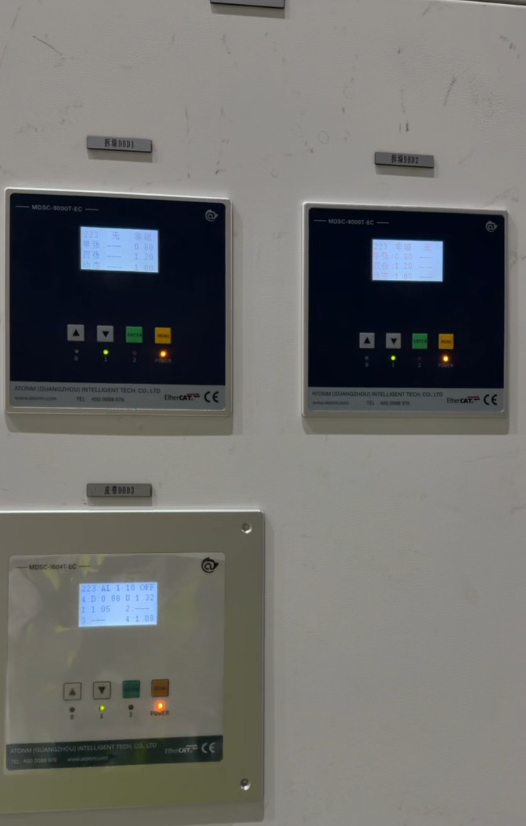
The project ultimately adopts a dual station closed-loop solution of "source interception+middle section review" using Atorm MDSC-9000T robotic arm follow-up detection+MDSC-1604T belt line multi-channel detection. It deeply integrates with the PLC control system of the entire stamping line to achieve full chain double tension risk prevention and control from sheet metal grabbing to belt conveyor, and completes the coordinated landing of domestic testing equipment and domestic high-end stamping mainline.
This automated stamping production line has three major features: high-speed continuous stamping, multi category flexible mixed production, and fully automated unmanned circulation:
1. High cycle continuous production: The large tonnage press operates in continuous mode, with a high cycle time for the entire line. The mechanical arm disassembles and grabs the stack, and the belt conveyor action is interlocked, and the detection process is not allowed to occupy additional production cycles;
2. Steel aluminum hybrid line and high-frequency mold changing: It is necessary to produce large steel aluminum exterior panels such as car doors and engine covers, as well as various small and medium-sized body structural components. The sheet materials and thickness span are large, and production switching is frequent;
3. Complex workshop conditions: Dust in the stamping workshop, high-frequency vibration of equipment, strong magnetic environment, and stretched oil film on the surface of the sheet can easily cause signal drift of ordinary sensors, resulting in false alarms or missed detections;
4. Strong linkage safety requirements: The production line is equipped with customized stamping molds worth millions of yuan. Sound and light alarms alone are not enough to avoid risks. It is necessary to achieve millisecond level linkage of the press and conveyor line emergency shutdown after detecting abnormalities;
5. Quality digitalization demand: According to the IATF16949 quality system requirements of the host factory, complete records and retention of stacking and plate abnormal events are required to support traceable production quality.
Customized integrated solution: dual station closed-loop protection architecture
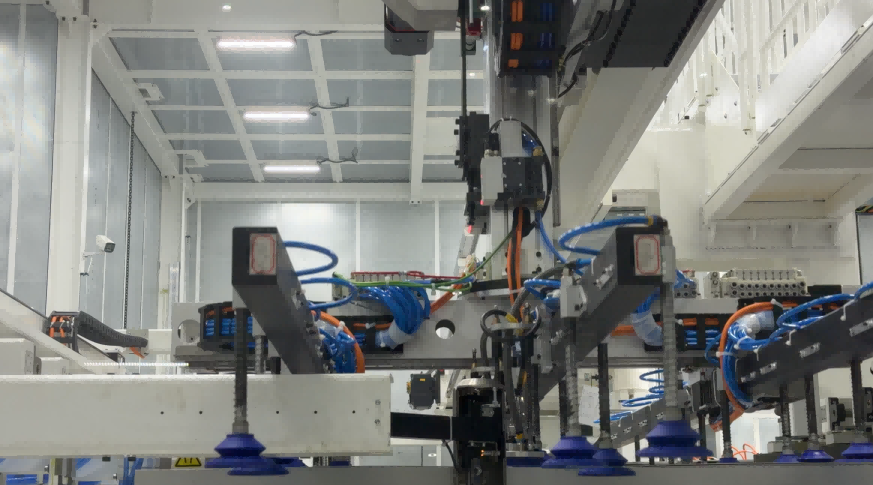
This project combines the original mechanical and electrical interfaces of the production line unstacking robot and the belt conveyor section, and sets up two lines of defense, namely the first line of defense at the source of unstacking and the second line of defense for the review of the middle section of the belt conveyor. The two sets of equipment work together to form a closed-loop protection.
| Deploy workstations | Device Model | Hardware deployment method | Core Integrated Logic |
| Dismantling robot end picker (source) | MDSC-9000T (2 units) | Directly integrated into the end effector body of the unpacking robot arm, synchronously moving with the suction cup | Parallel detection of sheet metal is completed with the grabbing action of the robotic arm, without adding independent cycle time consumption. For large steel and aluminum coverings, the number of layers is determined at the moment of grabbing, and the stacking risk is intercepted from the source of the material stack; The detection signal is directly connected to the robot PLC, and the detection of double sheets can directly instruct the robotic arm to discard the material and retrieve it. |
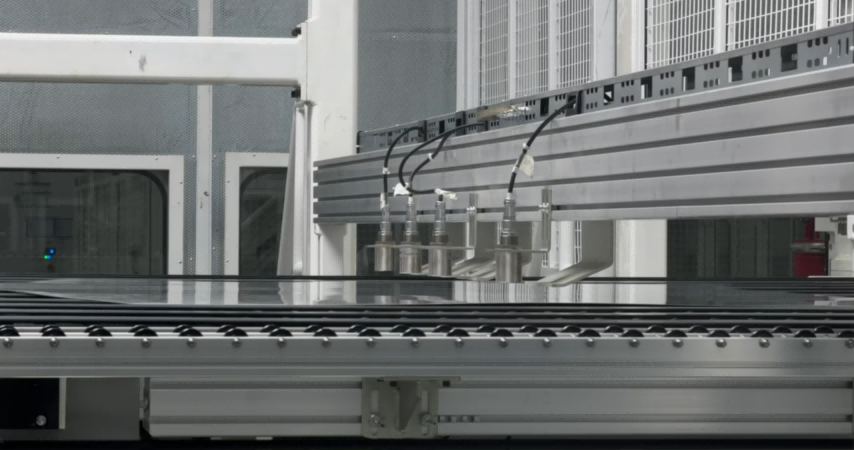
| Belt Conveyor Section (Mid section Review) | MDSC-1604T (1 unit) | Installed above the belt conveyor line, multi-channel full area scanning | For small and medium-sized components in mixed line production, conduct a secondary review of the transported boards; Adapt to high-frequency mold changing, one click call for vehicle formula; As the second safety barrier, it intercepts abnormal boards leaked from the source and directly links the emergency stop link of the entire line. |
1. Zero invasive adaptation to domestic stamping mainline
Fully compatible with the electrical protocol of the entire production line, PN signal docking with the PLC of the production line, without the need for large-scale hardware modifications to the press body and robot body. Equipment installation and debugging are completed within the production line planning window, without delaying the project production node.
2. Resistant to complex industrial environments, balancing low false alarms and zero false negatives
Our self-developed anti-interference algorithm filters signal disturbances caused by vibration, dust, and oil stains on the surface of sheet metal in the stamping workshop; Conduct physical demonstration calibration for steel plates and aluminum plates produced on site, store parameters of different materials and thicknesses of plates in formula form, and easily call for vehicle model changes without the need for repeated manual debugging.
3. Two level abnormal handling logic, graded to ensure production safety
MDSC-9000T in the unpacking area recognizes double sheets: prioritize triggering the mechanical arm to discard materials, re grab the sheets, and try to avoid the entire line shutdown to ensure production continuity;
Belt line MDSC-1604T detects stacking (bottom protection): millisecond level output NG signal, linkage conveyor line and press emergency stop, completely preventing stacking from entering the mold and protecting valuable stamping molds.
4. Digital quality traceability capability
All detection events, abnormal alarms, and recipe switching records can be output, supporting integration with workshop MES systems to include dual sheet detection data in the overall stamping quality file, meeting the process traceability requirements of the host factory's quality system.
After the full set of double loop closed-loop detection system was officially put into operation on the stamping production line, it was verified through multiple rounds of mixed production of steel and aluminum parts, high-frequency mold changing and continuous mass production, solving various hidden losses caused by stacking and achieving multi-dimensional benefits of safety, quality, efficiency and digitization:
1. Strong protection of mold assets to prevent major equipment accidents
Establish a two-level interception barrier to minimize the risk of stacked sheets entering the mold, avoid mold damage caused by double stamping, significantly reduce expensive mold maintenance and replacement costs, and eliminate long-term downtime accidents caused by mold damage.
2. Reduce unplanned downtime and unleash the real production capacity of large tonnage production lines
Eliminate unnecessary downtime caused by false alarms from traditional sensors; Prioritize the handling of abandoned materials by the robotic arm at the unpacking station to preserve the OEE of the entire line to the greatest extent possible; The unplanned downtime caused by stacking has significantly decreased, fully utilizing the design capacity of Jinan No.2 Machine Tool's high-speed stamping production line.
3. Adapt to steel aluminum flexible collinearity to reduce production switching and debugging time
Faced with multiple vehicle models and alternating production conditions of steel and aluminum, the formula can be switched with one click, and the mold changing process does not require recalibration and debugging of the detection equipment, reducing auxiliary production hours and adapting to the production mode of multi variety mixed lines in the host factory.
4. Reduce scrap of boards, lower costs, and improve the quality control chain
Eliminate batch parts scrap caused by double sheet stamping and save raw materials; At the same time, the complete retention of testing data and the completion of the digital quality control process for stamping front-end sheet materials have been achieved, shifting from "post mold repair and post rework" to pre preventive quality control.
Quantitative reference: After the project went online, there were no incidents of batch scrapping of parts or damage to molds caused by double stacking; The full traceability of abnormal events provides quantifiable data support for lean production management in the workshop.
This project is a typical practice of collaborative support between domestic high-end stamping host equipment and domestic intelligent detection equipment. In the past, many high-speed stamping production lines had advanced mainline equipment performance, but the front-end sheet anti double tension detection relied on imported equipment, which not only had high procurement and operation costs, but also had pain points such as long delivery cycles and slow local response.
The Atorm MDSC-9000T+MDSC-1604T dual station closed-loop solution is designed for the real working conditions of large tonnage flexible stamping production lines, without relying on single point equipment to gamble on reliability. It adopts a dual protection concept of "source grabbing detection+conveyor mid section review", taking into account multiple requirements such as rhythm, flexibility, safety, and digital traceability, achieving domestic substitution landing.
For newly built or upgraded vehicle stamping workshops, attention should not only be paid to the performance of the press and robot mainlines, but also to the closed-loop control of front-end small risk points such as sheet stacking. This is a key link that cannot be ignored in protecting millions of mold assets, stabilizing OEE, and achieving lean production.
Solution Design
Application Validation Support
Parameter Optimization Guidance
Commissioning Support